Wood vs Composite Shingles: What Homeowners Need to Know
Wood vs Composite Shingles: What Homeowners Need to Know
For most homeowners, composite shingles are the smarter default. They cost less upfront than wood, carry higher fire ratings, require far less maintenance, and are easier to insure, especially in wildfire-prone regions like Northern California. Wood shingles remain a legitimate choice, but only when aesthetics are the top priority, local codes permit them, and your insurer will cover them without a penalty.
Choose wood shingles if you:
- Own a historic home or are in a historic district where authentic materials are required or strongly preferred
- Live in a low-humidity, low-wildfire-risk area with a favorable insurance situation
- Want the natural weathering patina that no synthetic product fully replicates
Choose composite shingles if you:
- Live in a wildfire-prone or high-humidity region (most of California qualifies on both counts)
- Want lower long-term maintenance and predictable repair costs
- Need a Class A fire rating to satisfy your insurer or local building code
- Want the cedar look without the cedar upkeep
One caveat applies regardless of which material you prefer: always confirm local fire-zone restrictions, your insurer's material requirements, and any historic-district rules before you sign a contract.
How do wood and composite shingles compare side by side?
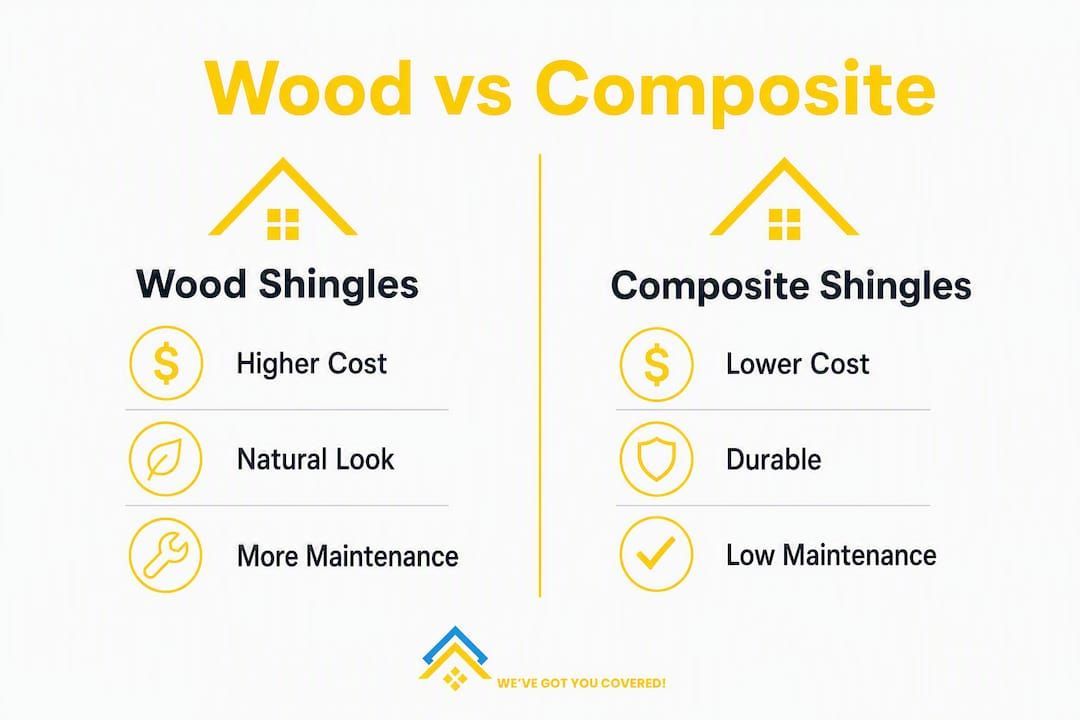
| Dimension | Wood Shingles | Composite Shingles |
|---|---|---|
| Upfront installed cost | typically higher than composite shingles | Varies; typically lower than cedar |
| Expected lifespan | 30–40 years (with proper maintenance) | 30–50 years |
| Maintenance level | High (treatments every 2–4 years) | Low |
| Fire resistance | Class C untreated; Class A with treatment | Class A standard on most products |
| Aesthetics | Authentic grain, natural weathering | Consistent color, cedar-texture replicas |
| Warranty | 20–30 years typical | 30–50 years typical |
| Climate performance | Vulnerable to moisture, rot, mold | Resistant to rot, mold, UV, and impact |
| Environmental footprint | Renewable resource; no recycled content | Often made from recycled materials |
The single biggest decision driver for U.S. homeowners right now is insurability. Headwaters Economics estimates that a significant number of assessed buildings still carry wood shake or shingle roofs, many of which are sitting in medium-to-high wildfire risk areas. In those zones, a wood roof can trigger higher premiums or outright non-renewal.
Lifespan at a glance: A well-maintained cedar shake roof commonly lasts 30–40 years; composite shingles are engineered to reach 30–50 years with significantly less intervention.
How long do wood and composite shingles actually last?
The honest answer: it depends heavily on how much maintenance you are willing to do. A cedar shake roof that gets cleaned, treated, and inspected on schedule can reach 30–40 years. Neglect it for a few seasons and you are looking at 15–20 years before rot or splitting forces a replacement.
Composite shingles are more forgiving. Because they resist warping, splitting, chipping, and twisting better than natural wood, they hold up in climates that would punish a cedar roof quickly. That resilience also means you rarely face the shingle-by-shingle replacement cycle that wood owners know well.
Common failure modes by material:
Wood shingles:
- Rot and decay from trapped moisture (especially in shaded or north-facing sections)
- Splitting and cracking from freeze-thaw cycles
- Moss and lichen growth that accelerates deterioration
- UV degradation in high-sun climates
Composite shingles:
- Fading or color inconsistency on lower-quality products after 15–20 years
- Impact damage from large hail (though most carry impact ratings)
- Adhesion failure on improperly installed products
Climate scenarios that favor composite: coastal salt air, humid Southeast climates, high-UV regions like Northern California, and anywhere with significant wildfire risk. Wood can perform well in dry, temperate climates with low humidity, but those conditions are increasingly rare in the Western U.S.
Lifespan reality check: The National Park Service's preservation brief notes that while historic straight-grain heartwood shingles have lasted over 60 years, 30–40 years is a more realistic lifespan for most premium modern wood shingle roofs with proper maintenance.
What does each roof actually cost over its lifetime?
Upfront cost is only part of the story. Cedar shake carries a significant price premium at installation, and the gap widens when you factor in maintenance, treatments, and the likelihood of an earlier replacement.
Installed price ranges
| Material | Typical installed cost (average home) | Labor note |
|---|---|---|
| Cedar shake | $28,000–$45,000+ | Requires skilled shake installers; fewer available crews |
| Composite shingles | Lower than cedar; varies by product tier | Wider installer pool; faster installation |
A simple lifecycle example
Say you install cedar shake at $36,000 and composite at $22,000. Over 30 years, cedar requires professional treatments every 2–4 years (roughly $500–$1,500 per treatment), periodic shingle replacements, and potentially higher insurance premiums. Composite needs occasional cleaning and an inspection every few years. By year 30, the total cost of cedar ownership can exceed composite by a wide margin, even before accounting for any insurance surcharge.
The insurance angle deserves its own line. In wildfire-prone areas, wood roofs often face insurer restrictions or higher premiums versus Class A materials. That annual premium difference, compounded over decades, can easily offset composite's higher product cost on premium product lines.
Pro Tip: Before you get a single roofing quote, call your homeowner's insurance carrier and ask directly: "Will you cover a wood shake roof at this address, and at what premium?" That one call can save you from a costly material decision.
What maintenance does each roof actually need?
Wood shingles demand a real commitment. Composite shingles mostly need you to stay out of the way.
Wood shingle maintenance schedule
- Annual inspection: Check for cracked, split, or missing shingles, especially after winter or high-wind events.
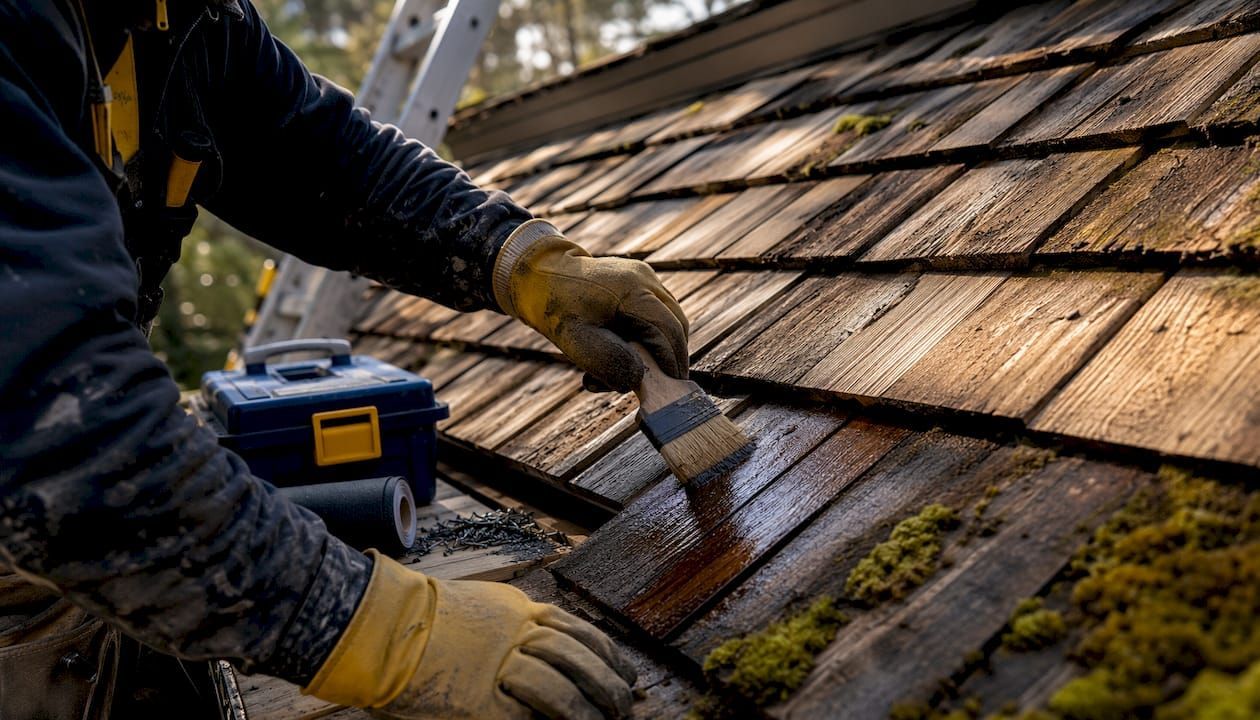
- Biennial cleaning: Remove moss, lichen, and debris buildup. Pressure washing can damage wood; soft washing is safer.
- Treatment every 2–4 years: Apply a wood preservative, water repellent, or fire-retardant treatment to maintain protection and, in some jurisdictions, to keep your fire classification current.
- Spot replacements: Replace individual damaged shingles before water infiltrates the decking beneath.
- Gutter maintenance: Wood roofs shed more debris; gutters clog faster and need more frequent clearing.
Composite shingle maintenance schedule
- Annual visual inspection: Look for cracked or lifted shingles, especially around flashing points.
- Periodic cleaning: Remove algae or debris every few years; most composites resist organic growth without chemical treatment.
- Flashing and sealant check: The shingles themselves rarely fail first; flashing and sealant joints are the more common leak sources.
A roofing maintenance plan extends the life of either material, but the payoff is larger for wood because the consequences of skipping a cycle are steeper.
Pro Tip: On a wood roof, the first sign of trouble is usually dark staining or soft spots near the eaves. Press gently on a shingle with your thumb — if it flexes more than a quarter inch, the wood beneath may already be compromised. Catching it early means a patch job; missing it means decking replacement.
Common repair costs vary by region and scope, but individual shingle replacements on a wood roof typically run more than composite because skilled shake installers charge a labor premium. When more than 25–30% of a wood roof needs replacement, a full re-roof is almost always more economical than patching.
How do wood and composite shingles look, and does it affect resale?
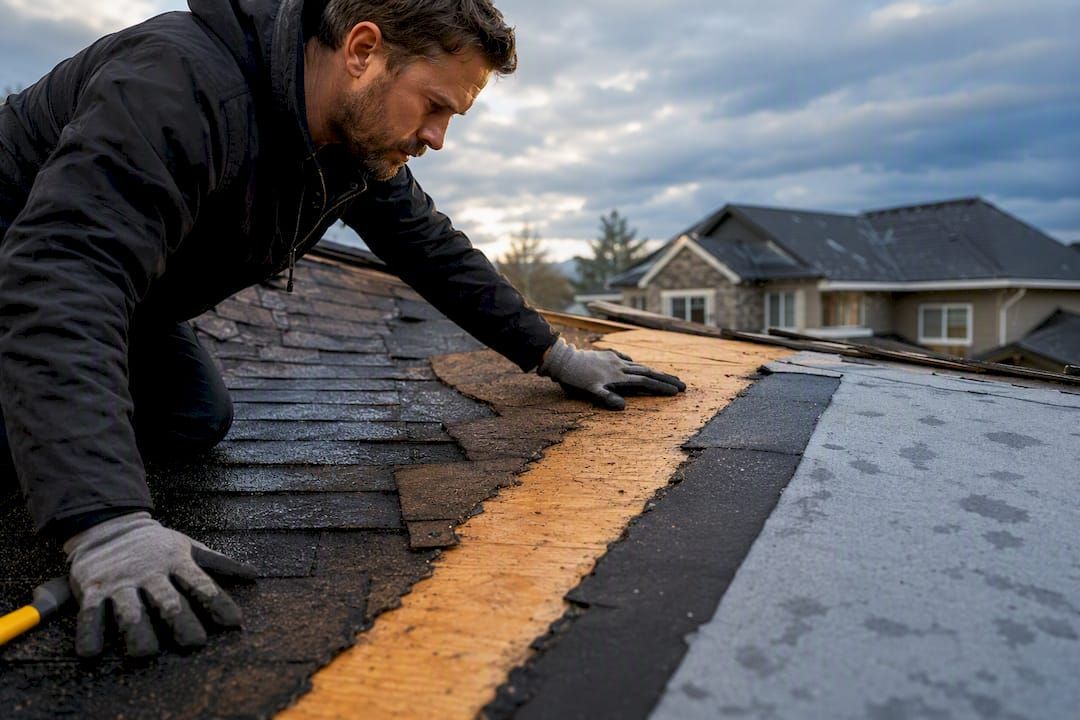
Wood shingles have a visual quality that composites genuinely cannot fully match. The grain variation, the way cedar weathers from honey-gold to silver-gray over years, the shadow lines created by hand-split thickness — these are things that architects and designers still prize for texture and design flexibility. For a craftsman bungalow or a shingle-style coastal home, wood is often the only material that looks right.
Composite shingles have closed the gap considerably. Manufacturers now use real cedar shakes as molds, producing textures that read as authentic from the street. Color is baked in throughout the material, so it does not fade unevenly the way surface-painted products do. You also get a wider palette: colors and profiles that wood simply cannot produce.
Resale note: Wood can boost curb appeal and command a premium on historic or architecturally distinctive homes. For most suburban buyers, composite is neutral to preferred because it signals lower future maintenance costs.
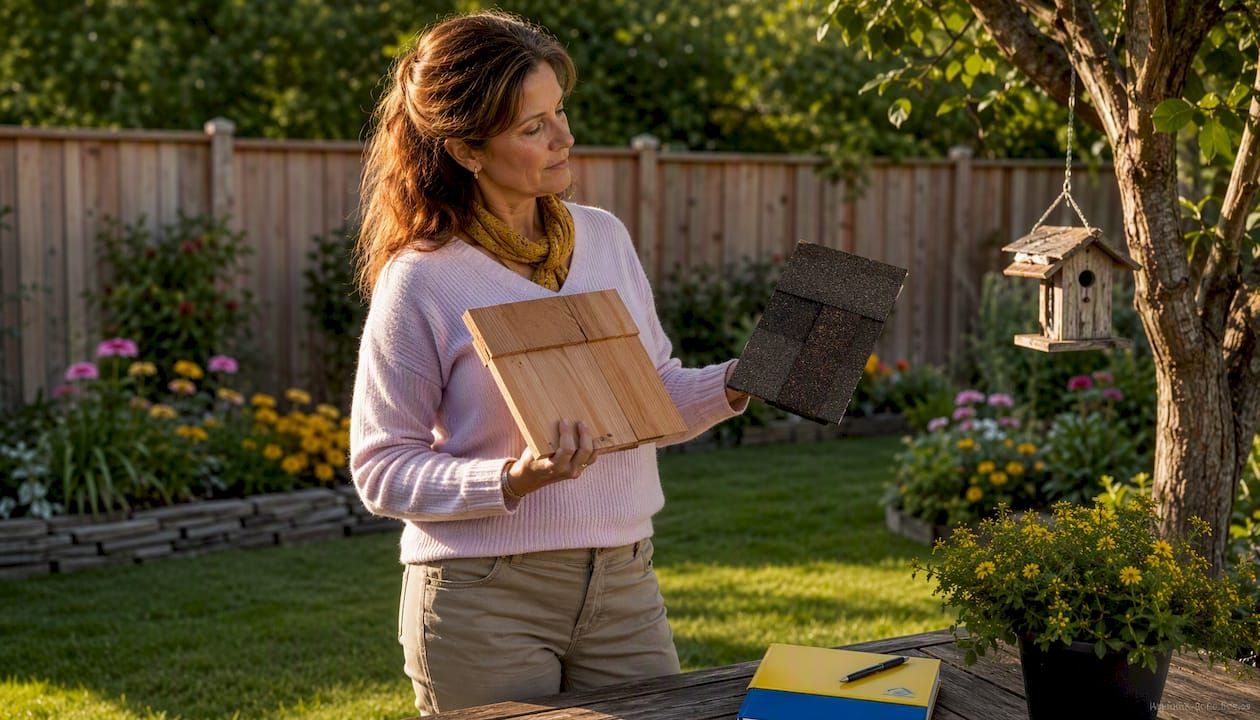
Before committing to either material, request physical samples and hold them against your home's siding and trim in natural light. Better yet, ask your contractor for a digital color mock-up on a photo of your actual house. The Upstate Roofing project gallery shows finished examples of different shingle materials if you want a real-world reference point.
Fire ratings, insurance, and environmental impact
This is where the wood vs composite shingles comparison often gets decided for California homeowners, and it is worth understanding clearly.
Fire classification basics:
- Class A: Highest fire resistance; required in many California fire-hazard severity zones. Most composite shingles qualify.
- Class B: Moderate resistance; some treated wood products reach this level.
- Class C: Lowest resistance; untreated wood shingles typically fall here.
The scale of the problem is significant. Headwaters Economics found that replacing the roughly 1 million wood-roofed buildings in medium-to-high wildfire risk areas with Class A asphalt would cost an estimated $6 billion. Insurers are well aware of this exposure, and many have responded by restricting or surcharging wood roof policies.
Insurance and code checklist before you decide:
- Does your current insurer cover wood shingles at your address?
- Will switching to composite unlock a lower premium or prevent non-renewal?
- Is your property in a state-designated fire-hazard severity zone?
- Does your local building department require a minimum fire classification for re-roofing?
- If you choose treated wood, how often must treatment be renewed to maintain the fire rating?
On the environmental side, wood is a renewable resource, but the comparison is more nuanced than that framing suggests. Many composite products are manufactured from up to 80% post-industrial recycled materials, reducing landfill burden and virgin resource extraction. Wood shingles, by contrast, are biodegradable at end of life but require ongoing chemical treatments that carry their own environmental cost.
Installation differences and what warranties actually cover
Wood and composite shingles are not interchangeable at installation. The skill sets, underlayment requirements, and structural considerations differ enough that choosing the wrong contractor for your material is a real risk.
Key installation differences:
- Wood shingles require experienced installers who understand proper spacing for expansion and contraction, open-sheathing versus solid-deck applications, and ventilation requirements to prevent moisture buildup beneath the roof.
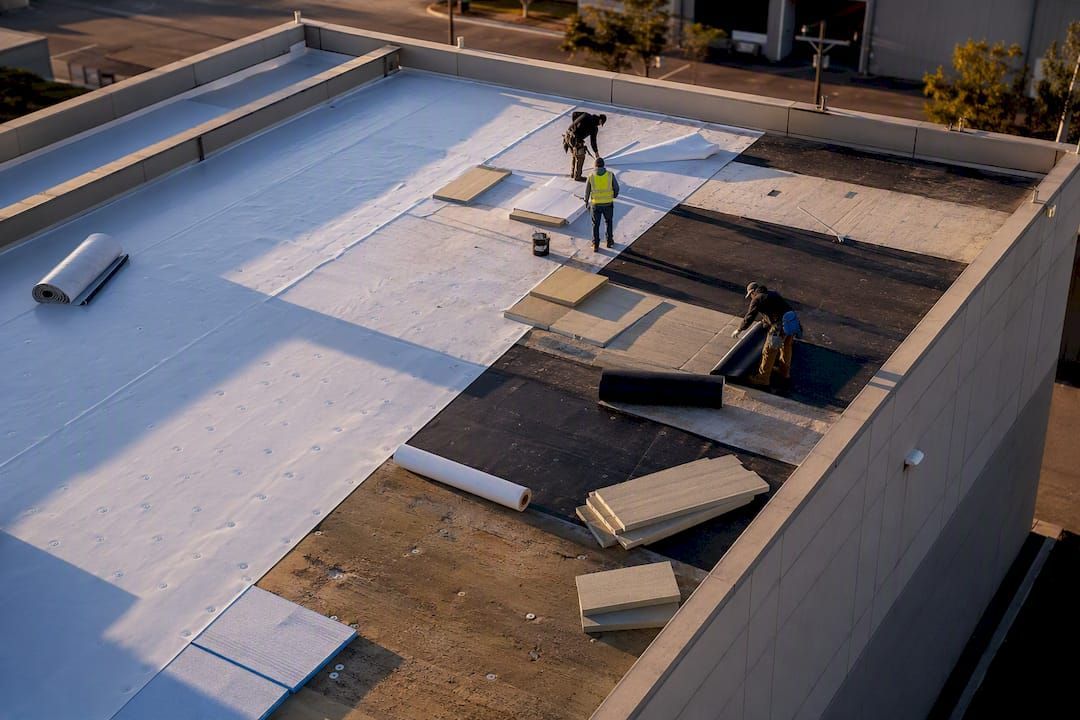
- Composite shingles install more like standard asphalt, with a wider pool of qualified crews and faster completion times.
- Wood is heavier than most composite products; older homes may need a structural assessment before a wood re-roof.
- Both materials require proper underlayment and flashing, but wood is less forgiving of shortcuts. The Cedar Shake & Shingle Bureau installation guidelines exist precisely because improper installation is the leading cause of premature failure.
Questions to ask about warranty coverage:
- Is the warranty from the manufacturer, the installer, or both?
- What voids the manufacturer warranty (improper installation, unapproved coatings, inadequate ventilation)?
- Does the workmanship warranty cover labor costs for repairs, or just materials?
- How long is the warranty, and is it prorated or full-replacement for the full term?
A roof inspection and warranty review before signing any contract is the fastest way to catch gaps in coverage before they become expensive surprises. Attic ventilation is worth a specific mention: inadequate ventilation voids many composite warranties and dramatically shortens wood roof life, yet it is one of the most commonly skipped checks during estimates.
A step-by-step checklist for choosing between wood and composite
- Define your priorities in writing. Aesthetics, cost, maintenance tolerance, fire safety — rank them before you talk to a single contractor.
- Call your insurer first. Ask specifically whether wood shingles are covered at your address and what the premium difference is versus a Class A material.
- Check local fire-zone and building-code requirements. Your city or county building department can confirm minimum fire classifications for re-roofing in your area.
- Request written quotes for both materials. A side-by-side quote makes the lifecycle cost comparison concrete rather than theoretical.
- Inspect your existing decking and ventilation. Ask each contractor to assess whether your current sheathing and attic ventilation meet the requirements for your chosen material.
- Compare lifecycle costs, not just sticker prices. Add estimated maintenance, treatment, and insurance costs over 25–30 years to each quote.
- Verify contractor experience with your chosen material. Ask for references from jobs using that specific material, completed within the last three years.
Red flags to watch for:
- A contractor who cannot name the specific fire rating of the product they are proposing
- Vague warranty language with no written manufacturer documentation
- No mention of permit responsibility in the contract
- Evasiveness when you ask about ventilation requirements or underlayment specs
What contractors see that product pages never mention
The wood vs composite shingles comparison looks different from a rooftop than it does on a spec sheet. A few patterns show up repeatedly on real jobs.
Homeowners who chose wood for a remodel in the 1990s often return 20 years later facing a full replacement, not because wood is a bad material, but because the maintenance schedule slipped. A missed treatment cycle, a few seasons of moss growth, and suddenly the decking beneath is compromised. The replacement cost at that point is higher than it would have been with composite from the start, because damaged decking adds labor and materials to the job.
The opposite pattern also exists. Homeowners who switched from wood to composite during a re-roof report that the lower maintenance burden was the biggest surprise. They expected to miss the wood look; most say the composite texture reads well enough from the street that they stopped thinking about it within a year.
Pro Tip: When reviewing a roofing contract, confirm four things in writing before signing: the exact product name and fire rating of the specified material, who pulls the permit, who is responsible for debris disposal, and the start-to-completion timeline. Vague contracts produce expensive disputes.
On installation quality, the details that matter most are nail pattern, underlayment type, and flashing at every penetration point. These are not visible after the job is done, which is why a mid-installation inspection matters. Ask your contractor when you can do a walk-through while the underlayment is still exposed.
Key Takeaways
Composite shingles are the practical default for most U.S. homeowners because they combine lower lifecycle cost, higher fire ratings, and minimal maintenance, while wood remains worth considering only when aesthetics and local code genuinely require it.
| Point | Details |
|---|---|
| Composite is the safer default | Higher fire ratings, lower maintenance, and easier insurability make composite the practical choice for most homeowners. |
| Wood lifespan is maintenance-dependent | A well-maintained cedar roof lasts 30–40 years; neglected, it can fail in 15–20 years. |
| Insurance decides it in fire zones | In wildfire-prone areas, wood roofs often face higher premiums or non-renewal; check with your insurer before choosing. |
| Lifecycle cost favors composite | Cedar installed costs run $28,000–$45,000+; add treatments every 2–4 years and the gap over 30–40 years widens significantly. |
| Upstateroofingpros handles both | Upstateroofingpros inspects existing roofs, quotes wood-to-composite upgrades, and manages full replacements across Northern California. |
The case for treating insurance as your first filter
Most homeowners approach this decision as an aesthetics question and treat insurance as an afterthought. That order should be reversed.
In Northern California, the insurance market has made the choice for many homeowners before they even sit down with a contractor. Carriers have non-renewed policies on wood-roofed homes in fire-hazard severity zones, and the trend is not reversing. Choosing wood in that environment is not just a maintenance commitment; it is a financial risk that compounds annually.
What gets overlooked is that composite shingles have genuinely closed the aesthetic gap. The best products today use real cedar shakes as molds. The texture reads as authentic from the street, the color holds for decades, and you are not giving up the look so much as trading the upkeep for it. For most homeowners, that is a trade worth making.
Wood shingles still belong on certain homes. A historic craftsman, a shingle-style coastal property, a building in a preservation district — these are cases where the authentic material is the right call, and where the maintenance commitment is understood going in. But for the average suburban re-roof, the risk-adjusted math points clearly toward composite.
Upstateroofingpros: inspections, estimates, and full replacements in Northern California
Choosing between wood and composite is easier when you have a licensed contractor walking your roof with you, not just quoting from the ground.

Upstateroofingpros serves homeowners across Sacramento, Roseville, and surrounding Northern California communities with full roof replacement services, including wood-to-composite upgrade projects. The team inspects your existing decking, ventilation, and flashing before recommending a material, so your quote reflects what your specific roof actually needs. Services include roof inspections, replacement, leak detection and repair, and ongoing maintenance plans. Every estimate includes the product fire rating, permit responsibility, and warranty documentation in writing. Schedule a roof inspection with Upstateroofingpros to get a written comparison of your options before you commit to a material.
Useful sources and further reading
These are the primary sources behind the claims in this article. Each is worth bookmarking if you want to verify a specific figure or dig deeper before your contractor conversations.
- Headwaters Economics: Wood Roofs Are a $6 Billion Wildfire Problem — The most cited data on the scale of wood-roof wildfire exposure in the U.S. and the cost of upgrading to Class A materials. Essential reading before any wood roof decision in a fire-prone area.
- The Roofing Brief: Cedar Shake vs. Asphalt Shingles — Covers installed cost ranges, lifespan data, fire risk, and insurance implications in one place. The source for the $28,000–$45,000+ cedar cost range cited above.
- National Park Service Preservation Brief 19 — The authoritative technical reference on historic wood shingle installation, lifespan expectations, and what distinguishes modern from historic products. Useful for historic-district projects.
- Architectural Digest: Why Are We Still So Obsessed With Wood Shingles? — Design-focused perspective on wood shingles' aesthetic appeal and the installation standards that protect longevity.
- The Roofing Brief: Roofing Material Market Share Report — Current market-share data showing asphalt and composite dominance and wood's niche position in U.S. residential roofing.
- Upstateroofingpros Roof Replacement — Service details and project examples for homeowners ready to schedule a replacement in Sacramento, Roseville, and nearby areas.
- Lucas Air: Roof Heat Barrier Guide for Warm Climate Homeowners — Practical background on how roof material choices affect attic temperatures and cooling loads, relevant if energy performance is part of your decision.
Recommended
Recent Posts