
$4–$18/Sq Ft: Commercial Roof Replacement Cost and Code Upgrades, U.S.
Commercial roof replacement runs $4.00 to $18.00 per square foot installed in 2026, with most single-ply projects landing between $5.50 and $8.00 per square foot. A 25,000 square foot roof at mid-range pricing lands near the mid six-figure range before permits or code-driven insulation upgrades.
TL;DR:
- Tear-off costs typically add $1.25 to $2.50 per square foot, while recover options can eliminate this expense but are often limited by codes and insulation conditions.
- Deck repairs due to rot or water damage can significantly increase project costs, especially if discovered after tear-off or during inspections.
- Permits, engineering, asbestos abatement, and rooftop equipment handling can add thousands of dollars, making itemized bids essential for accurate comparisons.
- Comparing bids requires detailed breakdowns of membrane type, insulation, flashing, warranty, and permit costs to avoid hidden expenses.
- The 25-year total ownership cost favors systems like metal and PVC, which offer longer service life and energy efficiency, despite higher upfront prices.
How Much Does Commercial Roof Replacement Cost Per Square Foot?
Material choice moves the number more than almost anything else on the job. A national installed cost range of $4.00 to $18.00 per square foot covers everything from a bare-bones recover job to a fully engineered metal system with heavy insulation upgrades. Here's how the common systems stack up:
Most quoted ranges assume a standard tear-off and disposal of one membrane layer. Multi-layer roofs, deck repairs, or code-mandated insulation thickness push the number toward the top of each range or past it entirely.
Here's the sample math for three common project sizes at a mid-range per square foot cost:
- A small roof: approximately tens of thousands of dollars
- A medium roof: approximately mid six-figures
- A large roof: several hundred thousand dollars
Add tear-off, permits, and any insulation upgrade to each of these before treating it as a real number.
What Drives the Price Difference Between Two Bids?
Two contractors can walk the same roof and hand you numbers $3.00 per square foot apart, and the gap almost always traces back to a handful of variables.
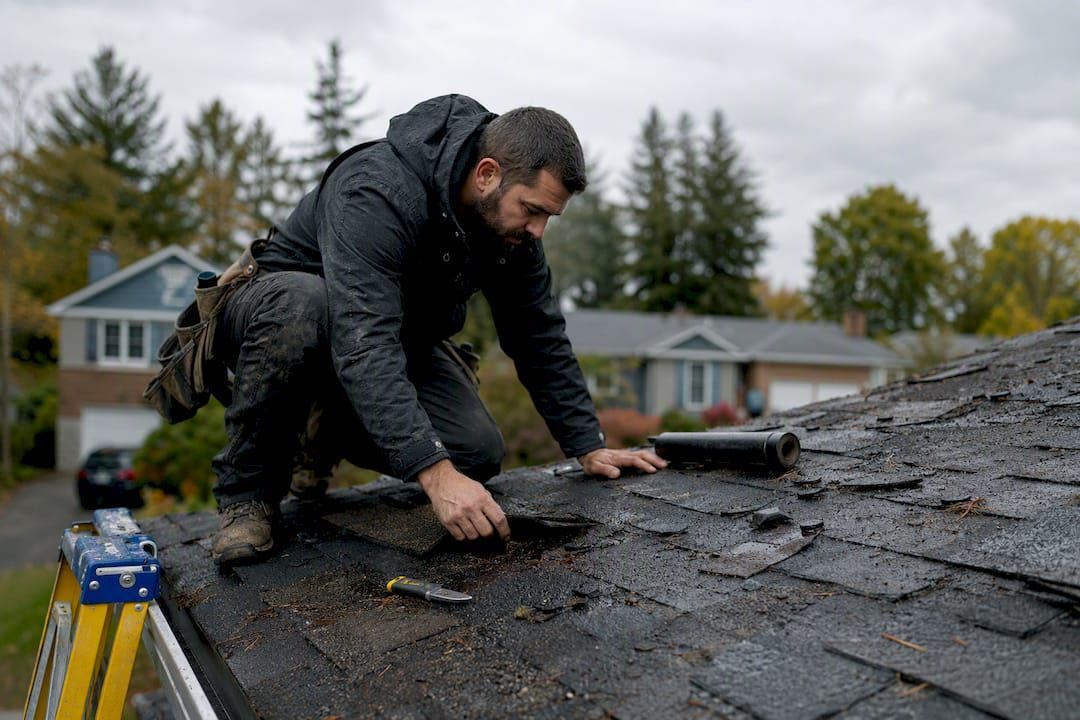
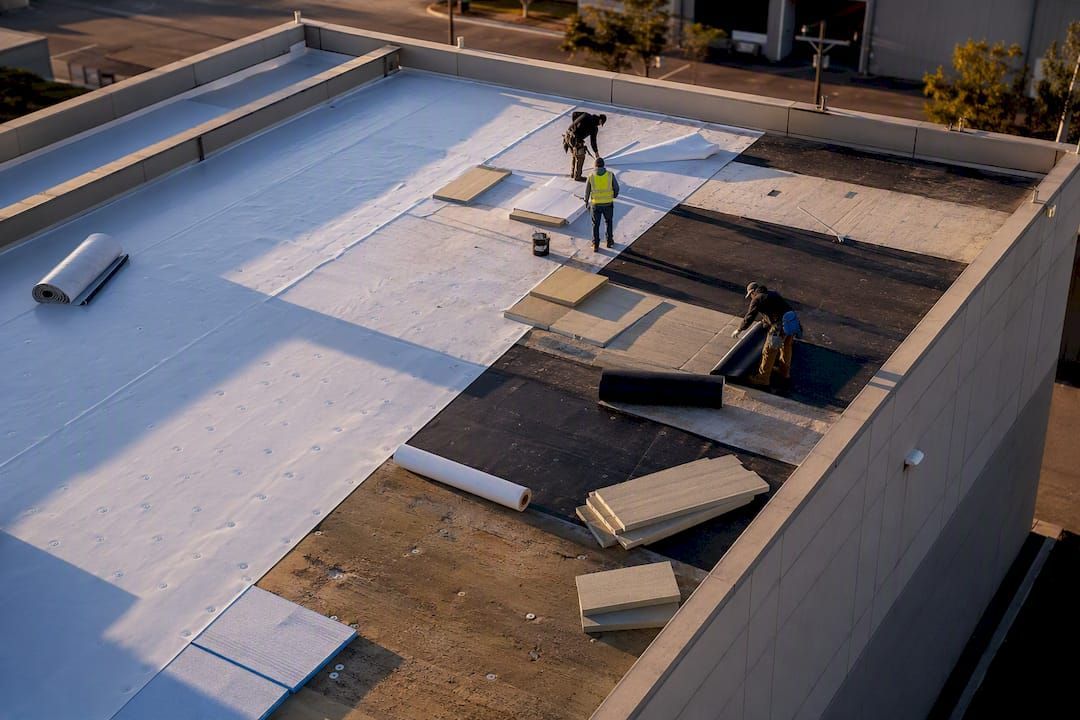
- Tear-off versus recover. Removing the old membrane and disposing of it typically adds $1.25 to $2.50 per square foot. A recover (installing new membrane over the existing one) skips that cost, but many jurisdictions and manufacturer warranties disallow recovers over wet insulation or more than one existing layer.
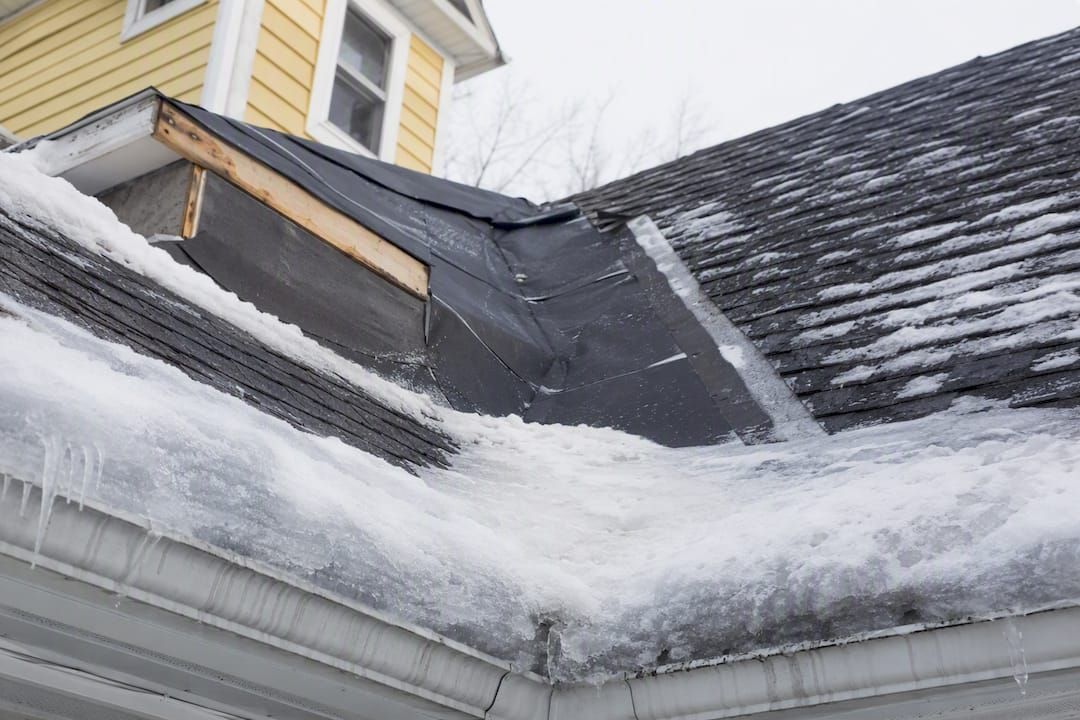
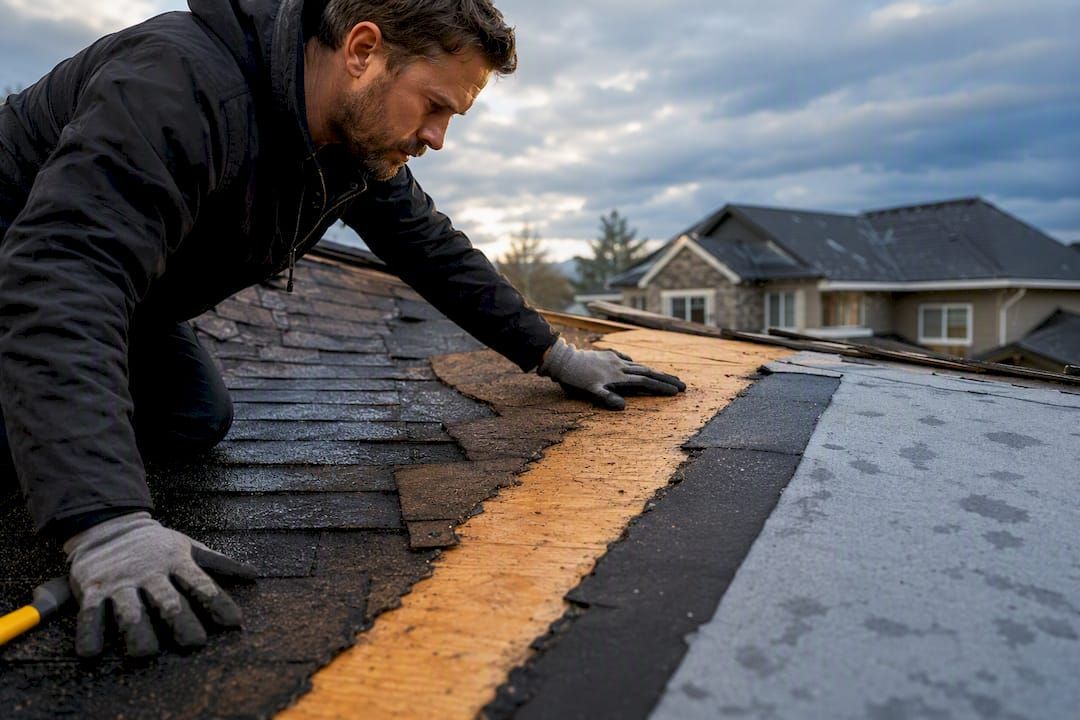
- Deck condition. Rotted decking, rusted metal deck panels, or water-damaged insulation boards get discovered only after tear-off. Deck repairs commonly add several thousand dollars on a mid-size roof, depending on how much area needs replacement.
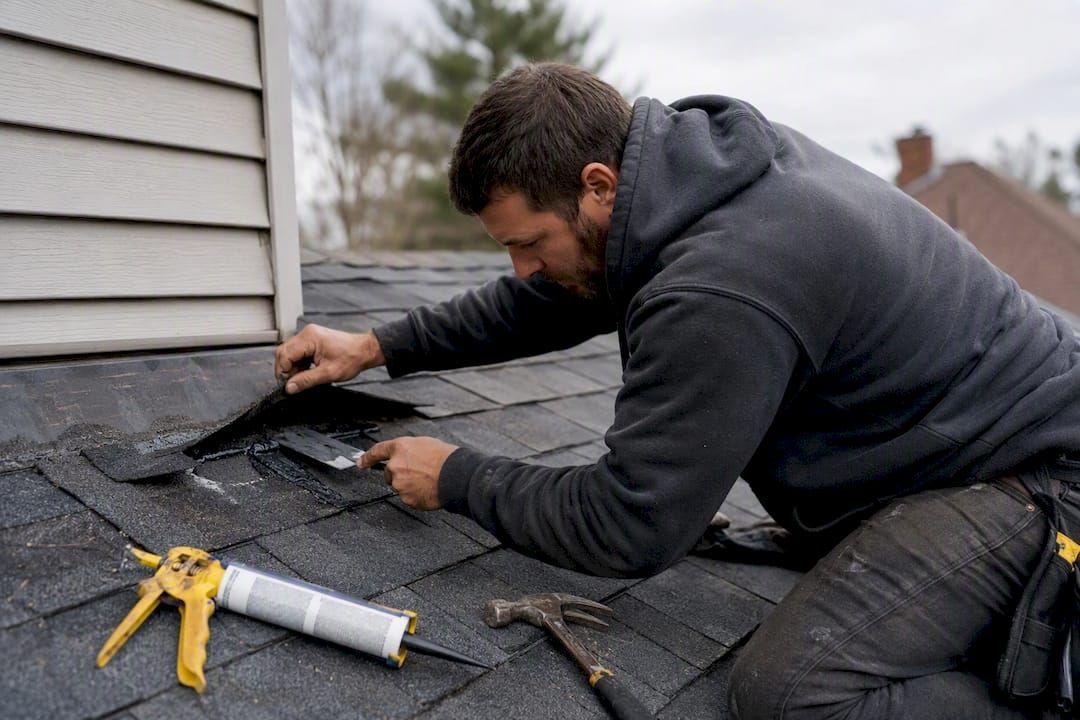
- Roof complexity and penetrations. Every HVAC curb, skylight, pipe boot, and drain adds flashing detail and labor hours that a simple flat rectangle never requires.
- Access and staging. Roofs without direct crane access, or those requiring hoisting materials through a building, add daily equipment and labor costs that a ground-level warehouse roof never sees.
- Insulation and code upgrades. Energy codes referenced by the NRCA and IECC now require continuous insulation values in the R-25 to R-35 range in many climate zones. Meeting that during a reroof means thicker insulation boards, taller flashing details, and more material cost than the last time that roof got replaced.
Pro Tip: Ask for a moisture survey before you get bids. A roof that tests wet in even 15% of its area usually means deck repairs, and knowing that number before bidding keeps every contractor pricing the same scope.
What Hidden Costs Should You Budget For?
The line items that blow up a budget rarely show up on the first page of a proposal.
- Permits and engineering. Fees range from $500 to over $8,000 depending on the jurisdiction, and cities requiring structural review often demand PE-stamped drawings before they issue a permit.
- Asbestos testing and abatement. Older built-up roofs installed before the 1980s frequently require NESHAP testing before demolition. If asbestos-containing material shows up, abatement can add $3 to $8 per square foot on top of the base replacement cost.
- HVAC and rooftop unit handling. Disconnecting and resetting RTUs during tear-off adds per-unit labor and crane time, and larger units may need a full disconnect from a licensed HVAC contractor.
- Temporary waterproofing. Multi-day tear-offs on occupied buildings usually need nightly tie-ins or temporary membrane to keep water out between work shifts.
Permit variability alone can swing a project budget by thousands of dollars before a single square foot of membrane goes down, which is exactly why itemized bids matter more here than on almost any other line item.
How Do You Compare Commercial Roofing Bids Line by Line?
A cheap bid and a complete bid are not the same thing, and the only way to tell them apart is to force every contractor onto the same template.
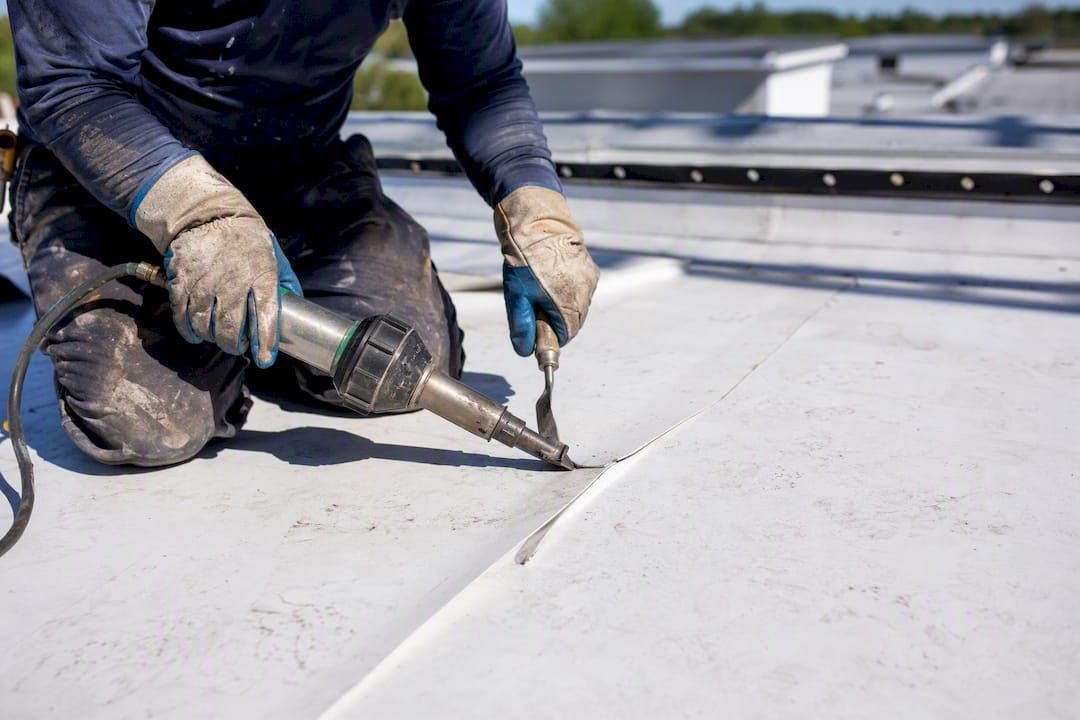
- Membrane type and thickness (mil). A 45 mil EPDM and a 60 mil EPDM are not interchangeable, and the price difference should be visible on the page.
- Insulation type, thickness, and R-value. This is where code compliance lives, and it should be spelled out, not buried in a lump sum.
- Tear-off and disposal. Ask whether this is priced separately or folded into the total, since that affects how you compare against a recover quote.
- Flashing and edge metal. These details fail first on most roofs, so the gauge and installation method deserve their own line.
- Warranty terms. Confirm manufacturer warranty length, whether it's NDL (no dollar limit), and whether the installer is factory certified for that system.
- Permits and engineering fees. These should appear as a line item, not an assumption baked into overhead.
Itemized bid comparisons cut down on change-order disputes later, mainly because everyone agreed on scope before signing.
Pro Tip: Convert every bid to a true cost per square foot, including tear-off, disposal, and permits, before comparing totals. A bid that looks $10,000 cheaper can flip once you add back what it left out.
Watch for these red flags: no line-item breakdown, unspecified membrane mil, no proof of manufacturer certification, and a warranty that charges extra for coverage the manufacturer usually includes free with certified installation.
Should You Buy the Cheapest System or the One With the Lowest 25-Year Cost?
First cost and true cost rarely point to the same system. A 25-year total cost of ownership calculation adds install cost, expected maintenance, energy performance, and how many replacement cycles a cheaper system might need over that same 25 years.
Trade cost data shows that higher-upfront systems like metal and PVC often win on lifecycle cost once you factor in reflectivity, energy savings, and a service life that can outlast two cycles of a cheaper EPDM membrane.
| System | Upfront cost tendency | 25-year TCO tendency |
|---|---|---|
| TPO | Moderate | Competitive, especially in hot climates |
| EPDM | Lower | Often needs a second replacement inside 25 years |
| PVC | Higher | Frequently wins on chemical exposure and roof life |
| Metal | Highest | Often lowest TCO due to long service life |
| SPF | Moderate to high | Strong on energy savings, needs recoat cycles |
Ask any contractor bidding your job for a lifecycle comparison, not just a first-year quote. Reflective membranes and energy-efficient roofing choices also shift your operating costs long after installation, which almost never shows up on the initial invoice.
What's a Realistic Timeline for Budgeting a Replacement?
- Schedule a moisture survey and roof inspection first. This is what turns unknowns into numbers.
- Move into engineering and permitting once scope is confirmed. Expect this stage to take several weeks depending on jurisdiction.
- Lock procurement and materials ordering before setting an install date.
- Build in 10% to 15% contingency for most buildings, and 15% to 20% for anything older than 30 years or with known deck issues.
- Request itemized bids from at least three contractors before signing anything.
Who's Behind This Guide, and What Does Upstate Roofing Actually Do?
[author_bio]
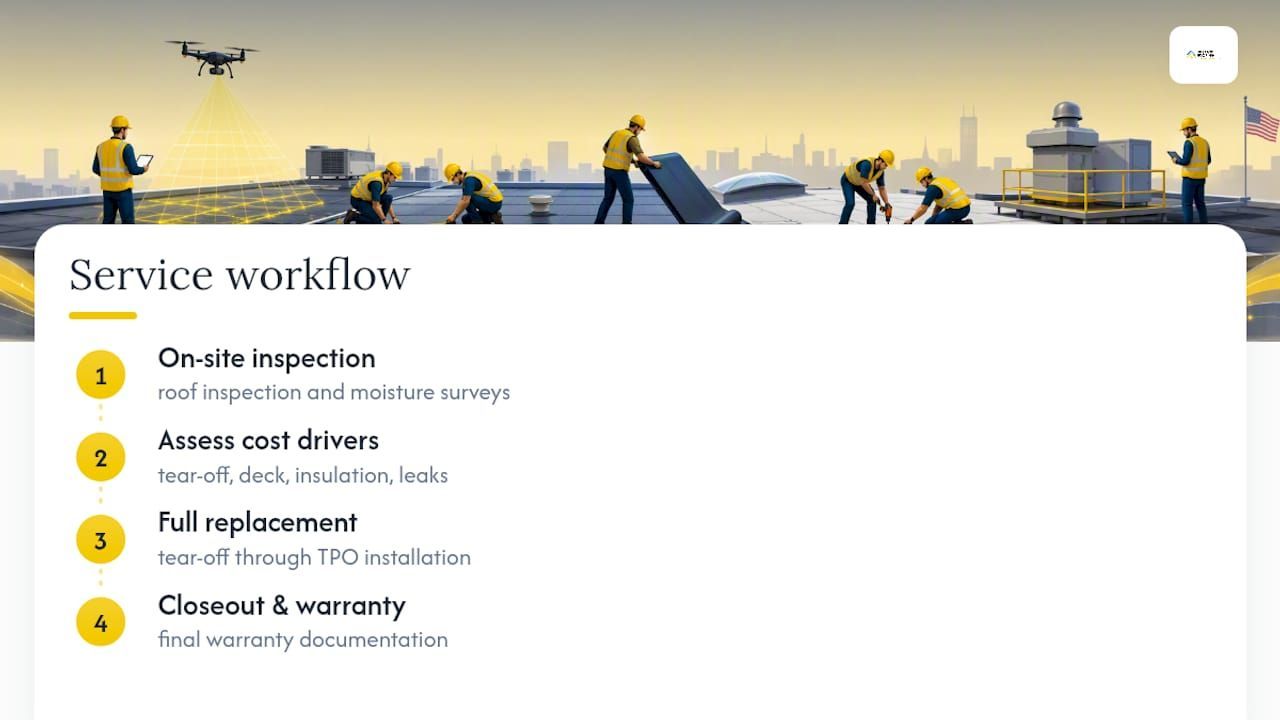
A local roofing contractor handles commercial roof inspections, moisture surveys, TPO installation, full replacement, and leak detection services in Northern California. That range matters here specifically because every cost driver covered above, tear-off, deck condition, insulation upgrades, starts with an accurate on-site inspection before any number becomes a real bid. Roof replacement services cover the full scope from tear-off through final warranty documentation.
[case_study_placeholder] [testimonial_placeholder]
What Actually Matters When You're Staring at a Six-Figure Roofing Bid
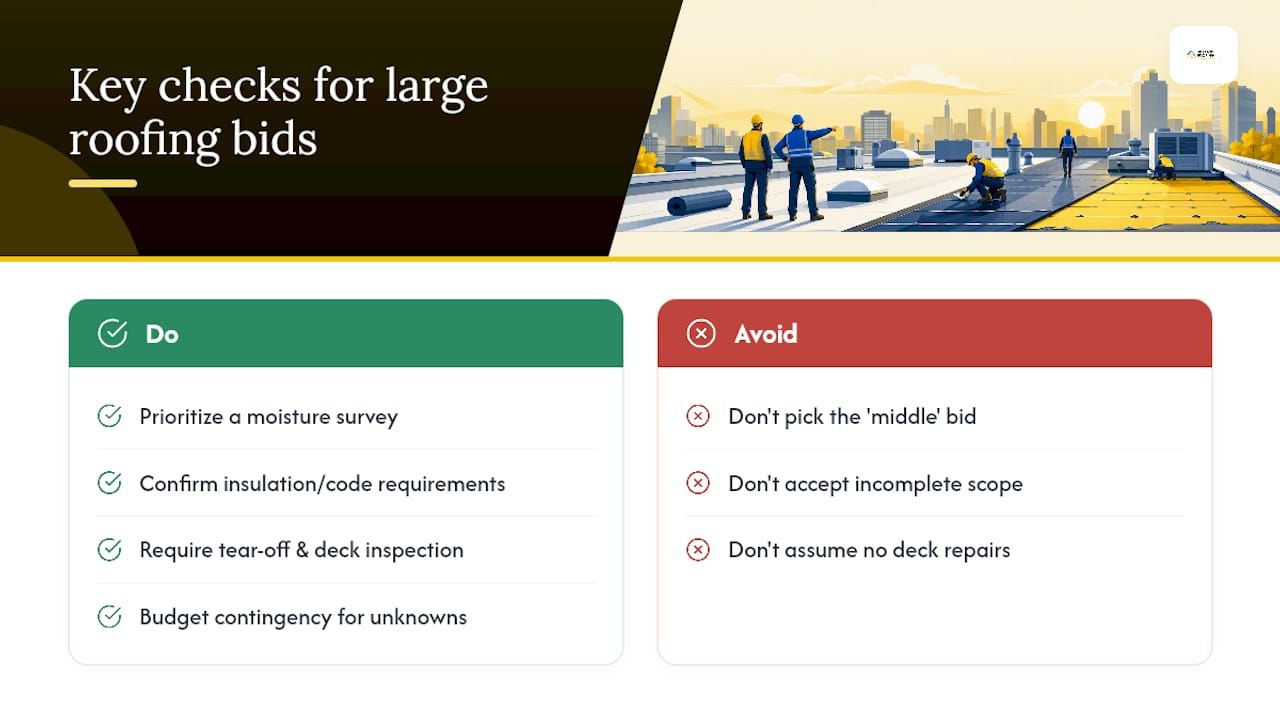
The conventional advice on this topic tells owners to "get three bids and pick the middle one." That's a mistake once you understand how much scope variance sits underneath a single per-square-foot number. A bid that skips tear-off disposal, ignores a likely insulation upgrade, or quietly assumes no deck repairs isn't cheaper. It's incomplete, and incomplete bids are the single biggest reason capital projects blow past their approved budget.
I'd argue the insulation code angle gets underweighted almost everywhere. Facility managers budget for membrane and labor, then get blindsided when a jurisdiction's IECC-referenced R-value requirement adds real material cost nobody flagged at proposal stage. That's not a contractor padding a bid. It's a code requirement that didn't exist the last time that roof got replaced.
Prioritize the moisture survey before anything else. Every other number on this page gets more accurate once you know what's actually happening under the membrane, and every contingency percentage you set is really just a hedge against not knowing that yet.
— Cesar
Ready for an Accurate Number Instead of a Range?
Every range in this guide gets narrower once someone actually walks your roof, and that's the gap Upstate Roofing closes for property owners across Northern California. Instead of guessing which end of the per-square-foot range applies to your building, you get a site-specific inspection that accounts for your deck condition, existing layers, and whatever insulation upgrade your jurisdiction actually requires.
Before a site visit, have your building plans on hand, along with any known history of the roof's existing layers and any spots where leaks or ponding have shown up before. That history alone can shortcut a chunk of the moisture survey. If you're ready to move from a budgeting range to a real number, schedule a roof replacement estimate and get an itemized bid built around your building instead of a national average.
Where to Verify These Numbers and Standards
- NRCA Codes and Standards: governing code references, including IECC-related insulation requirements that affect reroof budgets.
- NRCA Roofing Guidelines: broader installation and technical guidance used across the commercial roofing trade.
- Commercial Roof Cost Guide: national pricing data and lifecycle cost comparisons referenced throughout this article.
- Commercial Roof Estimate Guide: bid-comparison framework and itemized estimate standards.
- Roof Replacement Cost Overview: a complementary budgeting guide covering broader roofing cost context.