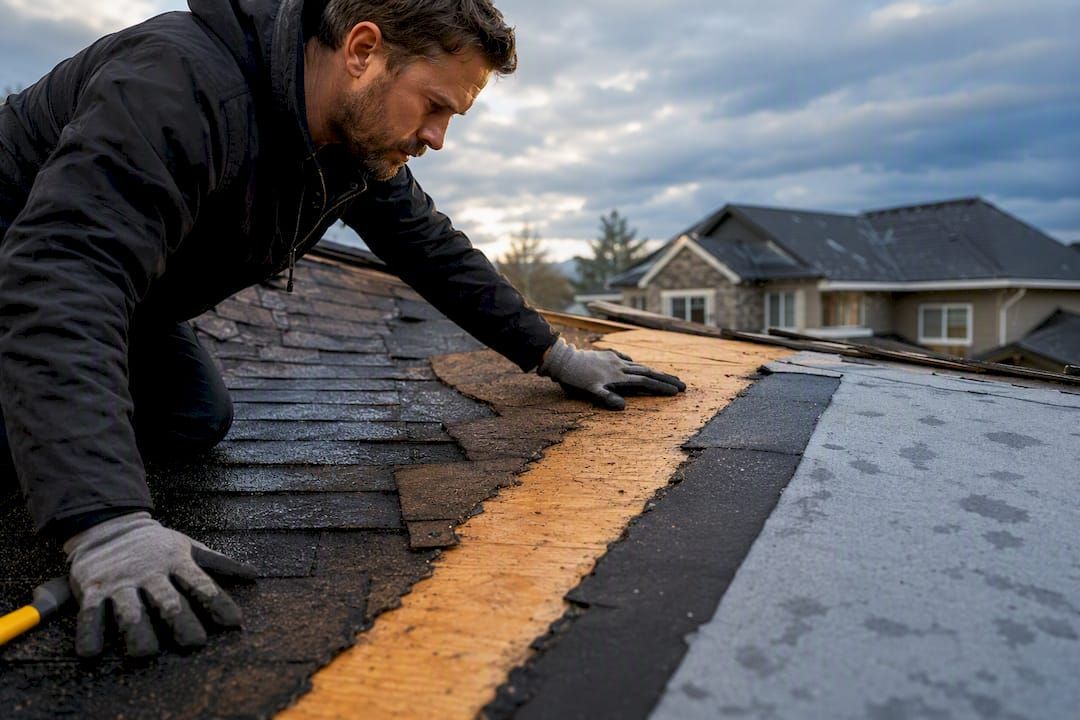
2026 U.S. TPO Roofing Cost: $5.50–$14 Per Sq Ft, 45, 60, 80 mil Specs
TPO roofing installed in the United States runs about $5.50 to $9.00 per square foot for standard mechanically attached systems, climbing to $10 to $14 per square foot for fully adhered, high-mil assemblies. A 1,500 sq ft roof typically lands between $6,500 and $24,000, a 10,000 sq ft commercial roof falls in the $55,000 to $90,000 range, and a 30,000 sq ft roof can cost a significant amount depending on specifications and location. Membrane thickness, attachment method, insulation spec, and whether you're tearing off an old roof all swing that number hard.
TL;DR:
- Thicker membranes, especially 80-mil fully adhered TPO, significantly increase costs by up to $4 to $5 per square foot compared to 45-mil options.
- Larger roofs, such as 10,000 or 20,000 square feet, cost less per square foot due to fixed setup costs spreading over more area.
- Upgrading insulation and adding cover boards offers better long-term value by reducing puncture risk and extending roof lifespan, often outweighing membrane thickness choices.
- Attachment method impacts costs: fully adhered systems are more expensive but provide better wind resistance and longer warranties than mechanically attached systems.
- Proper bid itemization of tear-off, insulation, flashing, and scope details helps avoid hidden costs and ensures accurate project budgeting.
TPO Roofing Cost Per Square Foot by Thickness and Attachment
The mil thickness you choose sets the floor for your TPO roofing cost, and the attachment method sets how much labor gets stacked on top of it. TPO membranes come in three common thicknesses, each aimed at a different risk tolerance and budget.
- 45-mil : The entry-level option, typically priced on the lower end among TPO membranes. It works fine on low-traffic, low-slope roofs with minimal rooftop equipment, but it has thinner puncture resistance and shorter practical service life.
- 60-mil : The most commonly specified thickness for commercial buildings, typically $7 to $9 per square foot when mechanically attached. It balances cost against wind uplift resistance and manufacturer warranty eligibility.
- 80-mil : The heavy-duty choice for roofs with foot traffic, HVAC servicing, or harsh weather exposure, running $10 to $14 per square foot when fully adhered.
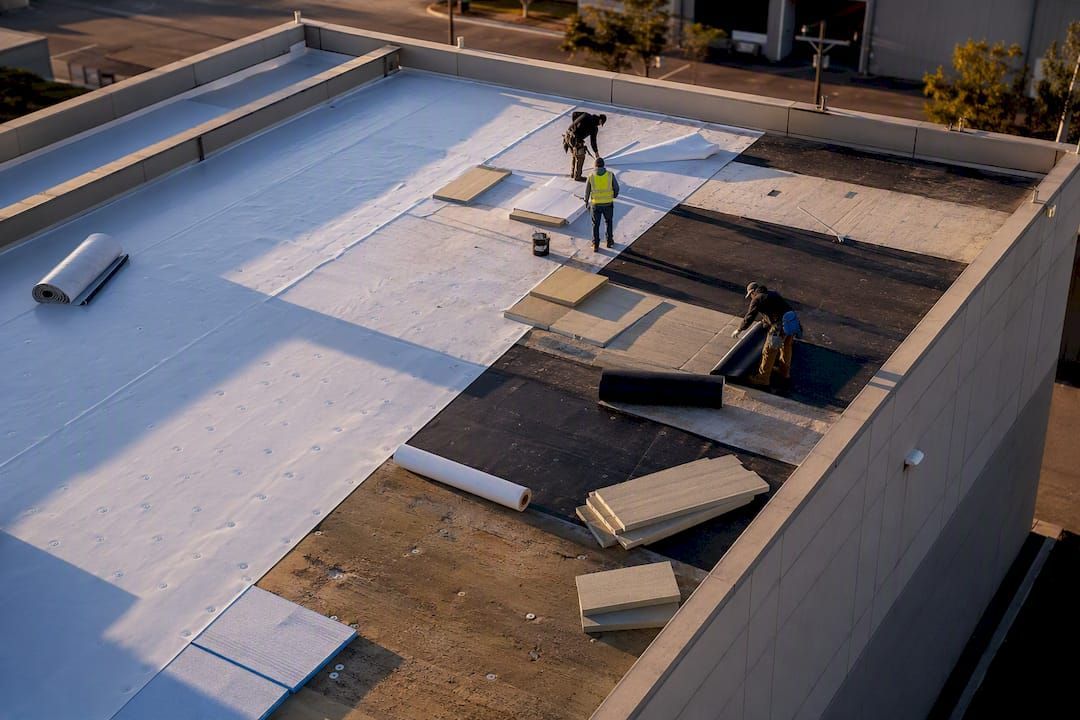
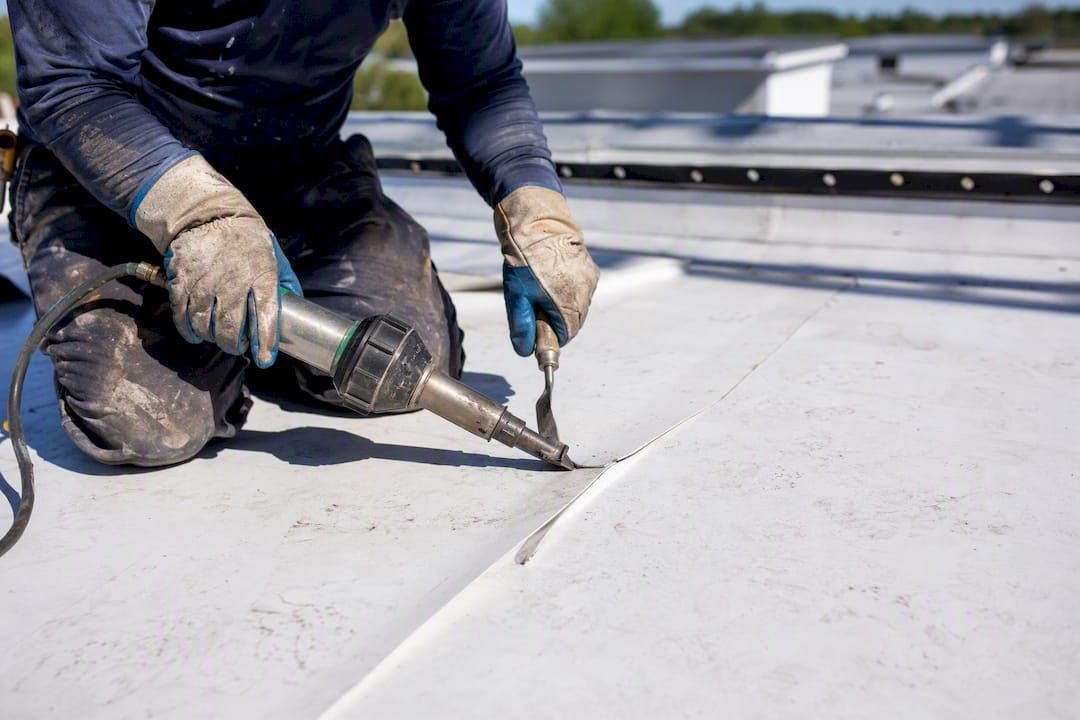
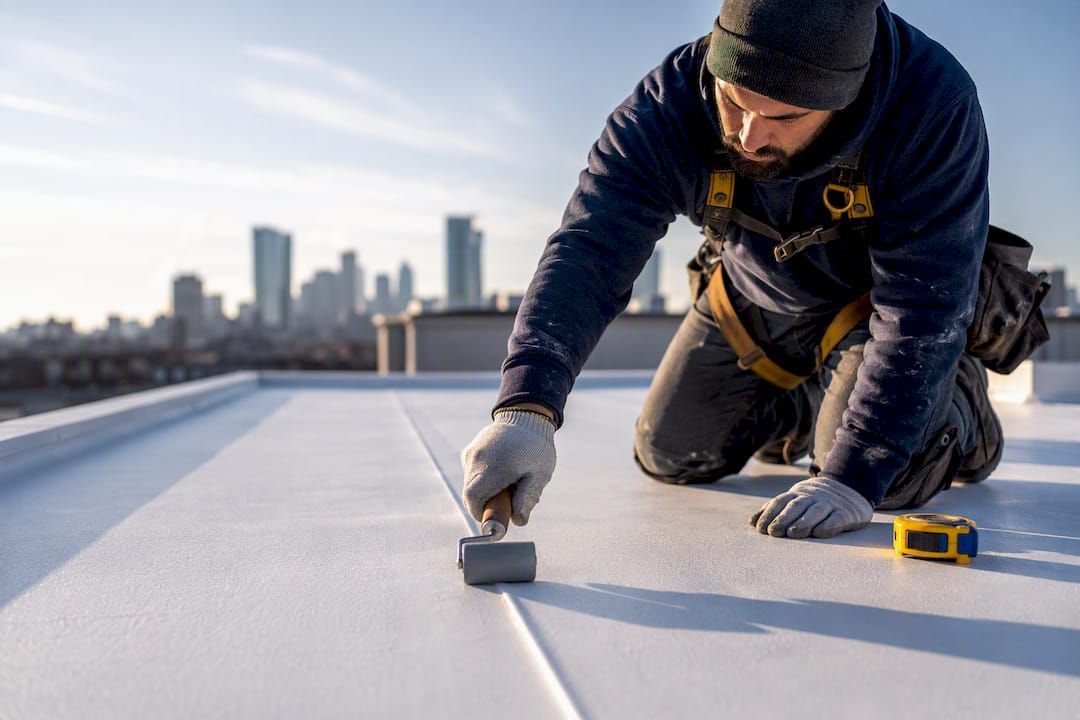
Attachment method matters as much as thickness. Mechanically attached systems use fasteners driven through the membrane into the deck, which keeps labor costs lower but adds visible seams. Fully adhered systems use bonding adhesive across the whole substrate, which costs more in labor and materials but produces a cleaner, more wind-resistant finish. Ballasted systems, where stone or pavers hold the membrane down, cost less upfront but rarely show up on new commercial builds anymore because of the dead-load penalty and inspection headaches. Paying more for 60-mil or 80-mil, fully adhered assemblies buys you longer warranty terms, better puncture resistance, and fewer callback repairs over the life of the roof.
How Roof Size Changes Your TPO Roof Cost Per Square Foot
Bigger roofs almost always cost less per square foot, not more. Once a crew mobilizes, sets up safety equipment, and starts running membrane rolls, the fixed costs get spread across more square footage. Here's what that looks like in practice:
- 500 sq ft : $4,500 to $9,000 (small residential flat sections often carry a minimum job charge)
- 1,500 sq ft : $6,500 to $24,000, per national averages from HomeAdvisor
- 5,000 sq ft : $27,500 to $45,000
- 10,000 sq ft : $55,000 to $90,000
- 20,000 sq ft : $100,000 to $170,000
Notice the per-square-foot rate tightens as the project scales. A 500 sq ft patch job might run close to $12 to $18 per square foot once you account for a minimum service call, while a 20,000 sq ft commercial roof can drop closer to $8 to $8.50 per square foot because roll widths and crew efficiency improve at scale. Regional labor rates complicate this picture. Roofing crews in the Sacramento region, the Bay Area, and other high-cost California markets typically charge more per hour than crews in the Midwest or South, so a roof that costs $7 per square foot in one region might run $8.50 to $9.50 in another with otherwise identical specs.
What Drives TPO Roofing Cost the Most
Not every cost factor carries equal weight. Ranked by typical dollar impact, here's what actually moves your number:
- Membrane thickness — Moving from 45-mil to 80-mil can add $3 to $5 per square foot, the single biggest lever in your spec.
- Attachment method — Switching from mechanically attached to fully adhered typically adds $2 to $4 per square foot in labor and adhesive.
- Insulation and cover board — Upgrading from standard PolyISO to a cover-board assembly adds roughly $1 to $2.50 per square foot but pays back in reduced puncture claims.
- Tear-off vs. recover — Removing an old roof system adds $1 to $3 per square foot depending on deck condition and disposal fees.
- Roof complexity and access — Steep pitches, multiple levels, and limited crane access can add 10% to 20% to total labor cost.
- Penetrations and flashings — Every HVAC unit, vent stack, and skylight adds detail work, often $50 to $200 per penetration depending on complexity.
- Warranty term — Extending from a standard material warranty to a No Dollar Limit system warranty typically adds a modest premium, usually a few percent of total project cost.
Pro Tip: If your budget is tight, spend the extra money on cover board and insulation before you spend it on membrane thickness. A punctured 80-mil membrane over thin insulation still leaks; a well-protected 60-mil membrane over quality substrate often outlasts it.
Breaking Down a TPO Installation Bid: Labor, Materials, and Line Items
Labor typically eats 50% to 65% of your total installed cost, with materials, disposal, and mobilization filling the rest. Understanding that split helps you spot a bid that's missing scope or padded in the wrong place.
A well-structured bid should itemize:
- Tear-off and disposal (if applicable), usually priced per square or as a flat dumpster/haul fee
- TPO membrane material, priced per square foot by mil thickness
- Insulation and cover board, priced separately from membrane
- Fasteners, plates, or adhesive depending on attachment method
- Flashing details around penetrations, curbs, and parapet walls
- Drains, scuppers, and edge metal
- Mobilization and equipment (crane, lift, safety rigging)
Access problems inflate labor fast. If a bid lumps "installation" into one line without breaking out tear-off, insulation, and flashing detail separately, ask for an itemized version. That's usually where missing scope hides, and it's a good moment to review our TPO installation overview to see what a complete scope actually includes.
Insulation and Cover Boards: Where the Real Value Hides
Substrate choice often matters more than membrane thickness for long-term cost, according to industry cost data. Skimping here is the most common mistake owners make.
- R-25 PolyISO : Baseline insulation, often the standard economy choice
- R-30 PolyISO : A common upgrade tier, adding modest cost for meaningfully better thermal performance
- R-38 PolyISO : Premium tier, typically specified in colder climates or for aggressive energy codes
- Cover boards (Securock, DensDeck, HD ISO): Add a protective layer over insulation, typically adding $0.50 to $1.50 per square foot
Adding a gypsum cover board over R-30 or better insulation raises first cost modestly but meaningfully reduces membrane punctures from foot traffic and HVAC service calls, which extends effective service life and lowers total lifecycle spending. Skip the upgrade on a roof with no rooftop equipment and minimal foot traffic. Specify it on any roof techs will regularly walk.
TPO Warranty Terms and What They Actually Cost You Over Time
Standard TPO warranties range from 15 to 30 years, with material-only coverage sitting at the shorter end and full-system coverage at the longer end. No Dollar Limit (NDL) warranties, which cover both materials and labor with no depreciation schedule, require certified installers and add a modest premium to project cost.
- Material-only warranty: covers membrane defects, typically 15 to 20 years
- Full-system warranty: covers membrane plus installation workmanship, often 20 to 25 years
- NDL warranty: covers full replacement cost with no dollar cap, usually 25 to 30 years, requires certified installer documentation
- Annual maintenance: budget $0.10 to $0.25 per square foot yearly for inspections and minor sealant work
- Repair costs: typical flashing or seam repairs run $300 to $1,200 per incident depending on access
A maintenance plan that catches small issues before they become claims usually costs less over 20 years than skipping inspections and hoping the warranty covers surprises.
TPO vs. PVC vs. EPDM: Which One Actually Saves You Money
TPO generally sits as the lowest-cost thermoplastic single-ply option compared to PVC, while EPDM and TPO overlap at the low end depending on spec. Attachment method and mil thickness usually matter more than the material name on the invoice.
- TPO : Best value for most flat commercial and residential roofs needing reflectivity, energy savings, and a competitive warranty
- PVC : Worth the premium for roofs near grease, chemical exposure, or restaurant exhaust, where PVC's chemical resistance outperforms TPO
- EPDM : Still competitive on cost for roofs where reflectivity isn't a priority, particularly in colder climates without cool-roof code pressure
For most commercial and residential low-slope applications in Northern California, TPO's energy performance and price point make it the practical default. Save PVC for chemical exposure situations and EPDM for budget jobs where reflectivity doesn't factor into your energy plan.
How to Get an Accurate TPO Roofing Estimate
A good bid answers specific questions before you ever ask them. If a contractor's proposal is vague, that's your first red flag.
- Ask for the exact spec. Mil thickness, attachment method, insulation R-value, and cover board type should all be written on the bid, not implied.
- Confirm warranty type and certification. Ask whether the crew is a certified installer for the manufacturer's NDL warranty, and get that documentation in writing.
- Check for complete scope. Flashing details, drains, and edge metal should appear as separate line items, not buried in a lump "installation" fee.
Red flags include mobilization costs that seem too low for the project size, no mention of tear-off disposal, and any bid that skips insulation R-value entirely. Score competing bids on three criteria: spec clarity, warranty documentation, and itemized scope. The bid that wins on price but loses on all three usually costs more in year three.
Field Notes: What Surprises Property Owners on TPO Jobs
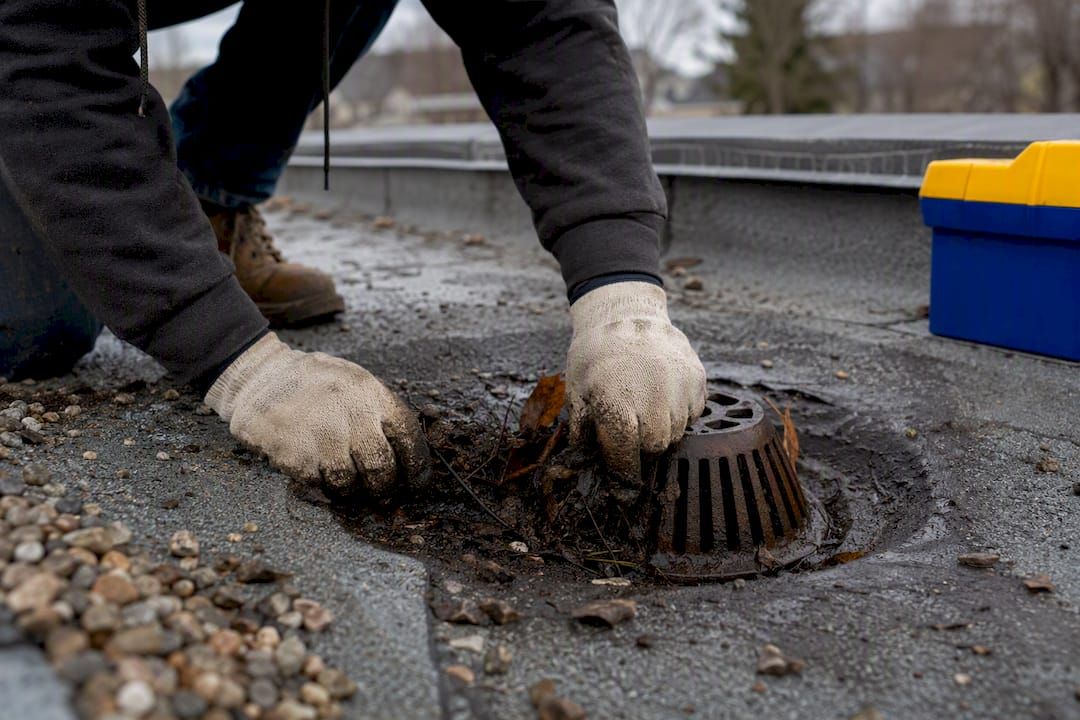
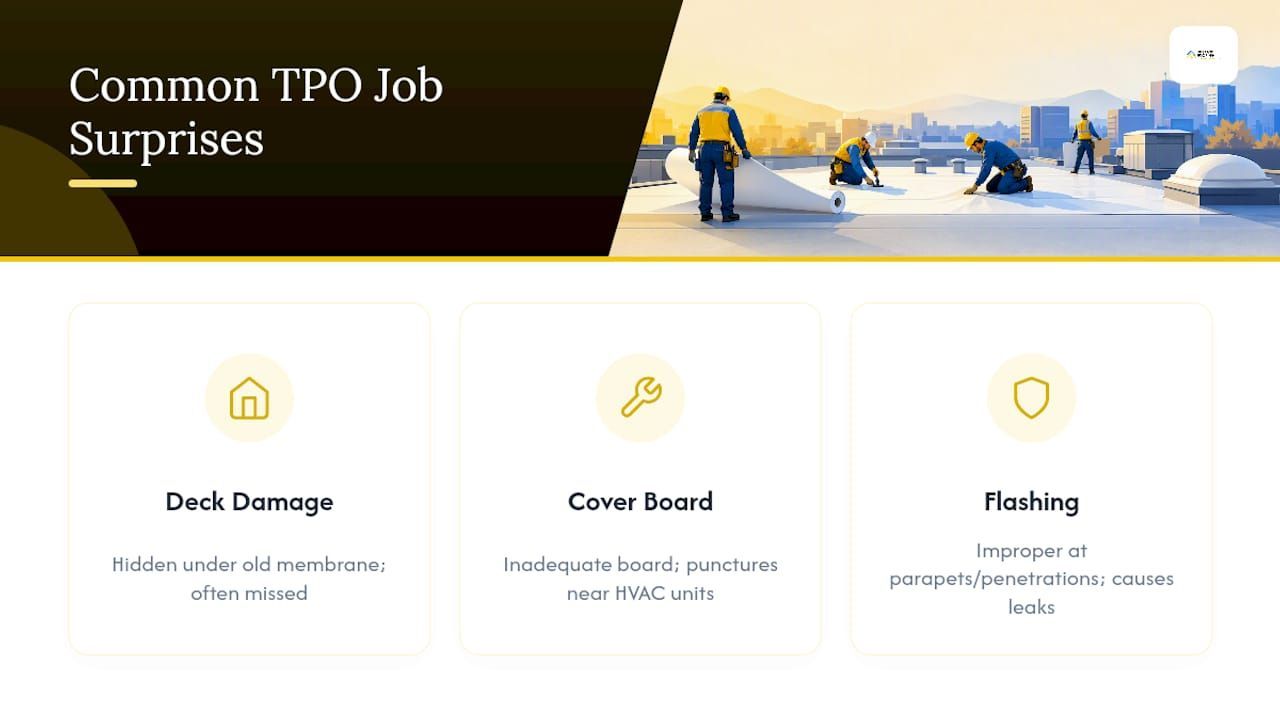
After years of tear-offs across Sacramento and Roseville roofs, a few surprises repeat often enough to plan for them in advance. Hidden deck damage under old membrane shows up more often than owners expect, and it's rarely priced into an initial walk-through estimate. Inadequate cover board on a previous install is another common find, usually revealed by a pattern of small punctures near HVAC units. Improper flashing details around parapet walls and penetrations cause more leak calls than membrane failure itself.
Before signing anything, ask your contractor to inspect the deck condition, confirm existing insulation R-value, and document flashing details around every penetration. A thorough roof inspection before the bid, not after the contract, is what turns a planning number into an accurate one.
Why Most TPO Pricing Guides Get the Order of Operations Backwards
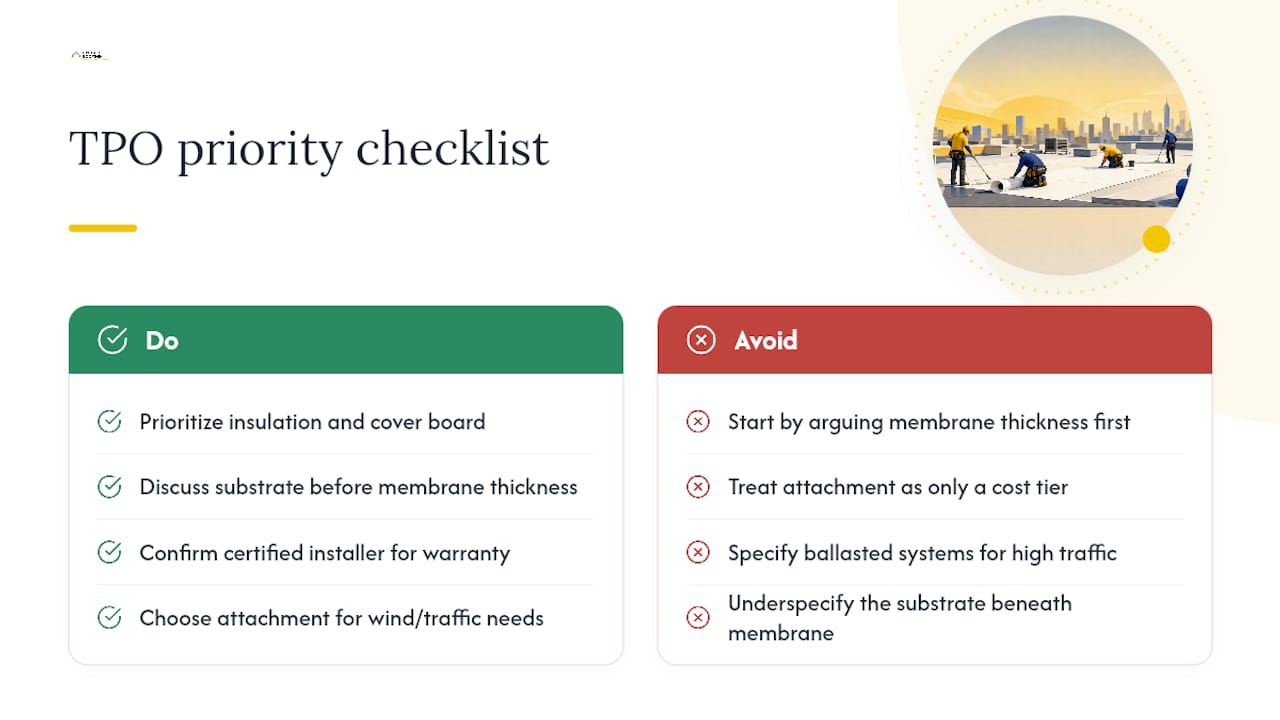
Most cost guides rank membrane thickness as the top price driver, and technically it is, dollar for dollar. But that framing leads owners to spend their upgrade budget in the wrong place. The data on cover boards and insulation tells a different story: substrate choice protects the investment you already made in membrane, and skipping it undermines even an 80-mil roof.
The conventional advice also treats attachment method as a simple cost tier, when it's really a decision about wind zone and roof traffic. A ballasted system might look cheap on a bid, but it's the wrong call on any roof with foot traffic or code-mandated wind uplift requirements. Owners get burned less by paying too much for membrane and more by underspecifying what's underneath it.
If you take one thing from this guide, prioritize the insulation and cover board conversation before you argue with a contractor about 60-mil versus 80-mil. Get the substrate right, confirm certified installer status for your warranty, and the membrane choice becomes a much smaller decision than most pricing tables suggest.
— Cesar
Get a Real TPO Roofing Estimate for Your Property
We provide spec-level pricing instead of a rough guess. Every estimate includes an itemized bid covering membrane thickness, insulation R-value, cover board recommendation, and warranty terms, so you're comparing against a real scope, not a placeholder number.
Our certified installers handle full roof replacement projects across the Sacramento and Roseville area, along with inspections, leak repair, and ongoing maintenance plans that catch small problems before they turn into warranty claims. If you're weighing a tear-off against a recover, or trying to decide which roofing option fits your building, request an on-site inspection and receive a detailed evaluation based on deck condition, insulation needs, and access challenges. Reach out to schedule your estimate and get a written, itemized bid for your roofing project.