Replacement Picture Window Prices: A Homeowner's Guide
Replacement Picture Window Prices: A Homeowner's Guide

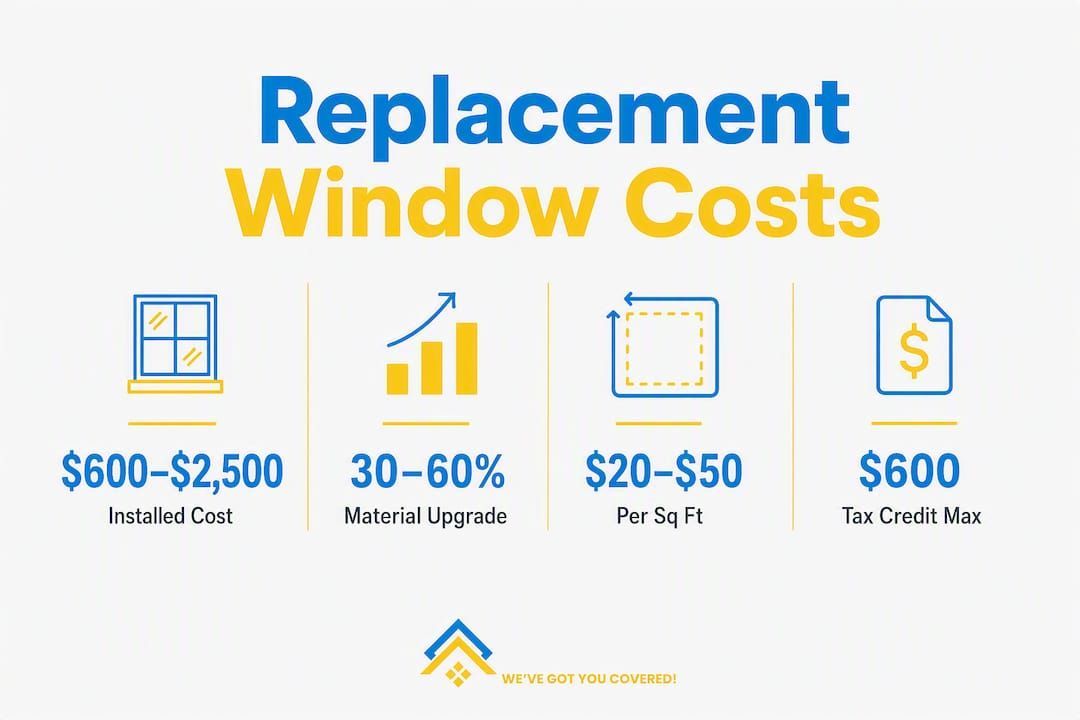
Replacement picture window prices typically run $300–$2,500 per window installed, with most homeowners landing between $600 and $2,500, and a national average near $800( https://modernize.com/windows/types/picture-windows-cost). The per-square-foot rule of thumb is $20–$50 installed, and larger units trend toward the high end of that range. Three things move the number more than anything else: the window's size and glass package, the frame material, and whether the install is an insert replacement or a full-frame tear-out.
The single most useful thing you can do before calling anyone is get three itemized quotes, each listing the frame material, glass specs (U-factor and SHGC), labor, disposal, and whether the job is insert or full-frame. That one step makes quotes comparable and surfaces hidden costs before you sign anything. If you're in Northern California, Upstateroofingpros can connect you with licensed local contractors who provide exactly that kind of itemized estimate.
- Size and glass package: The biggest cost driver. A 4x4 standard unit costs far less than a 6x6 with triple-pane low-E glass.
- Frame material: Vinyl is the baseline. Fiberglass or wood-clad adds 30–60% to the base unit price.
- Install type: Insert replacements are cheaper. Full-frame replacements cost more but let the installer inspect and fix the rough opening.
Pro Tip: Ask every contractor whether the Section 25C Energy Efficient Home Improvement Credit applies to the glass package they're quoting. Qualifying high-efficiency replacements can offset up to $600 of your net cost.
What do replacement picture window prices look like by size?
Picture windows generally cost less than operable windows of the same size because there's no hardware, no weatherstripping, and no moving sash to seal. That savings is real, but it shrinks fast once you move into large or custom glass.
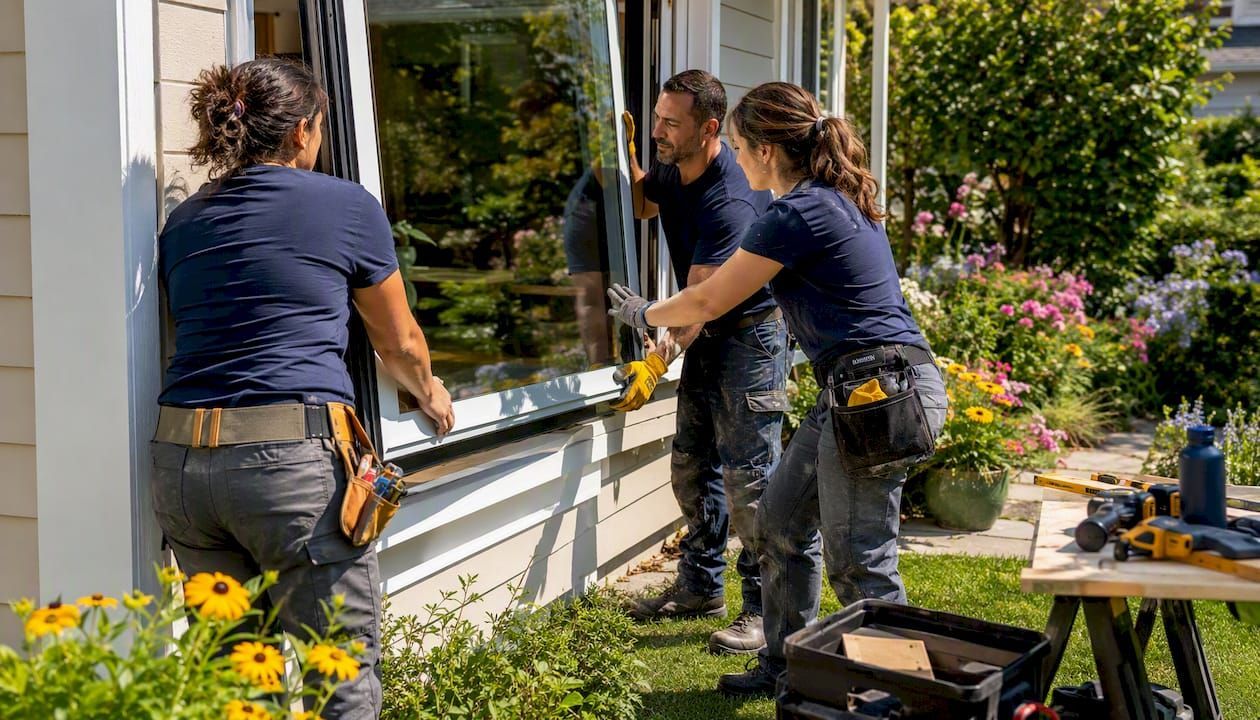
Here are the installed price ranges by size and glass quality:
| Window size | Typical installed range | Notes |
|---|---|---|
| Standard (up to ~4x4) | $400–$1,000 | Double-pane vinyl; most common replacement |
| Large (5x5 and up) | $1,000–$2,000 | Low-E glass standard; labor rises with weight |
| Oversized / custom | $1,800–$2,500+ | Specialty glass, possible structural work |
Worked example: a 6x6 picture window. A 6-foot by 6-foot unit is 36 square feet. At $20–$50 per square foot installed, the rough range is $720–$1,800. In practice, a standard double-pane vinyl unit at that size lands around $900–$1,200 installed. Add tempered glass (code-required in many situations), a low-E coating, and argon fill, and you're looking at $1,300–$1,700. Upgrade the frame to fiberglass and the number climbs toward $1,800–$2,200.
What pushes a project to the high end: tempered or triple-pane glass, full-frame replacement instead of insert, second-floor access, or any structural framing work. A standard insert swap on a ground-floor opening with a vinyl frame stays near the low end.
What are you actually paying for on a picture window invoice?
Most quotes bundle several distinct costs into one or two line items. Knowing what each piece costs helps you spot a vague quote before you're committed.
- Window unit: The glass and frame assembly itself. Often 50–65% of the total on a standard job.
- Glass package: Single, double, or triple pane; low-E coating; gas fill. On large picture windows, glass can represent 30–50% of the unit cost alone.
- Frame material: Vinyl is the baseline. Wood or fiberglass adds cost but also durability and aesthetics.
- Labor: Straightforward installs run $100–$300 per window. Difficult access, heavy glass, or structural work raises this significantly.
- Disposal of old window: Usually $25–$75, sometimes bundled into labor.
- Permit and inspection: Replacing a window in an existing opening generally doesn't require a permit, but enlarging or creating a new opening can add $50–$500 in local fees.
- Structural repairs: Headers, framing rot, or flashing damage found during removal. Non-negotiable once discovered, and costs vary widely.
- Interior trim and finish: Paint, casing, and drywall patching after installation. Often $50–$200 per window depending on finish level.
Glass and installation quality determine long-term value more than the brand name on the frame. A bad installation is the most common cause of air and water leaks in otherwise durable fixed windows.
Pro Tip: Watch for any quote that shows a single lump-sum "installation" line with no breakdown. That format hides structural repair risk. If rot or a damaged header turns up during removal, you have no baseline to judge whether the added charge is fair.
How do frame and glass choices change your price?
Frame materials
Vinyl is the most affordable and lowest-maintenance option. It holds up well in most climates and is the default for the majority of replacement jobs. Fiberglass costs more upfront but resists expansion and contraction better in extreme temperature swings. Wood or wood-clad frames carry the highest price and require periodic maintenance, but they're often the right call for historic homes or when interior aesthetics matter. Aluminum is inexpensive but conducts heat and cold, which hurts energy performance on large fixed windows.

Upgrading from vinyl to fiberglass or wood-clad typically adds 30–60% to the base unit price. On a $600 vinyl unit, that's an extra $180–$360 before labor.
Glass packages
| Glass type | Relative cost vs. standard double-pane | Energy benefit |
|---|---|---|
| Single-pane | Lower (legacy; rarely recommended) | Poor insulation |
| Double-pane, clear | Baseline | Moderate |
| Double-pane, low-E | +10–20% | Good; reduces solar heat gain |
| Double-pane, low-E + argon | 30–60% | Better U-factor, lower heating/cooling load |
| Triple-pane, low-E + krypton | +30–50% | Best thermal performance; heavy |
For most U.S. climates, a double-pane low-E package with argon fill hits the best balance of cost and performance. Triple-pane makes sense in very cold climates or when you're targeting the Section 25C credit threshold.
- SHGC — (Solar Heat Gain Coefficient) measures how much solar energy passes through. Lower SHGC suits hot climates; higher SHGC can help in cold climates where passive solar gain is useful.
Prioritize glazing specs over cosmetic frame upgrades on large picture windows. The glass controls most of the energy performance; the frame color controls none of it.
What installation factors raise the contractor's price?
Site conditions and replacement method are where budgets slip. Most of these costs are legitimate, but you should know about them before the crew shows up.
- Second-floor or hard-to-reach locations: Scaffolding, ladders, or lift equipment adds labor time and sometimes equipment rental fees.
- Heavy glass: A large picture window can be quite heavy. That requires suction handling equipment and multiple installers. Glass weight, not frame size, typically drives labor pricing on large units.
- Headers and framing reinforcement: Picture windows span wide openings. If the existing header is undersized or damaged, the contractor must sister in new lumber or replace it entirely before the window goes in.
- Insert vs. full-frame replacement: Insert replacements fit a new window into the existing frame, which is faster and cheaper. Full-frame replacements remove everything down to the rough opening. They cost more but allow inspection and repair of hidden rot, flashing failures, or moisture damage that an insert swap would seal over.
- Removal and disposal: Old glass is heavy and requires careful handling. Budget $25–$75 unless it's explicitly included.
- Interior trim and finishing: Patching drywall, reinstalling casing, and painting after a full-frame replacement adds time and cost that insert jobs rarely require.
Pro Tip: If your existing frame shows any soft spots, staining, or paint failure around the edges, request a full-frame replacement and ask the contractor to inspect the rough opening before ordering the new unit. Discovering rot after the new window arrives delays the job and raises costs.
Permits matter here too. Replacing a window in an existing opening is usually permit-free, but if you're enlarging the opening to fit a larger picture window, check local requirements first. Fees range from $50 to $500 depending on jurisdiction.
How do you get an accurate, comparable quote?
Getting three quotes is the baseline. Getting three comparable quotes takes a little more preparation.
- Measure the rough opening , not just the existing glass. Width and height of the opening determine what unit fits. If you're unsure, ask each contractor to measure independently.
- Photograph the existing window from inside and outside, including the frame edges, sill, and any visible staining or damage.
- Confirm the replacement method before the quote is written. Ask: insert or full-frame? The answer changes the price and the scope of work.
- Request an itemized quote that lists: window unit cost, glass package with U-factor and SHGC, frame material, labor hours, disposal, permit if applicable, and separate warranties for the frame and the insulated-glass seal.
- Ask about tempered glass. Building codes often require tempered safety glass when a window is within 18 inches of the floor or adjacent to a door. Confirm whether your opening triggers that requirement.
- Ask about heavy-glass handling. How many installers will be on site? Do they use suction equipment for large units?
- Confirm lead time. Custom glass orders can add weeks to the schedule.
When comparing quotes side by side, check that each one specifies the same glass package. A $200 price difference between two quotes often disappears when you notice one includes low-E argon and the other quotes clear glass.
Walk away from any quote that can't answer what U-factor the glass package achieves, or that bundles labor and materials into a single number with no breakdown.
Contractor email checklist you can copy:
- Opening dimensions (width x height)
- Insert or full-frame replacement?
- Glass package: pane count, coating, gas fill, U-factor, SHGC
- Frame material
- Tempered glass: required or not?
- Labor hours and crew size for large units
- Disposal included?
- Permit: required, and who pulls it?
- Warranty: frame and insulated-glass seal separately
- Lead time from order to install
Does energy efficiency change the net cost of picture windows?
For large fixed windows, the glazing package is the most important spec on the quote sheet. Picture windows achieve better U-factors than same-size operable windows because there's zero air infiltration through a fixed sash. That advantage only holds if the glass package is right.
- U-factor: Target 0.22–0.27 for double-pane low-E packages in most U.S. climates. Below 0.22 typically means triple-pane.
- SHGC: In hot climates (California, Texas, the Southwest), target SHGC below 0.25. In cold climates, a higher SHGC (0.35–0.45) lets in useful passive solar heat.
- Low-E coatings: Add roughly 10–20% to glass cost but meaningfully reduce heating and cooling loads on large windows.
The Section 25C Energy Efficient Home Improvement Credit can offset up to $600 for qualifying window replacements. To qualify, the windows must meet ENERGY STAR's most efficient criteria for your climate zone. Confirm the exact U-factor and SHGC thresholds with your contractor before ordering, because not every low-E package qualifies.
Use the Home Window Tinting Energy Savings Calculator to estimate how glazing upgrades affect your utility bills before committing to a glass package.
Pro Tip: For most U.S. regions, a mid-cost double-pane low-E argon package delivers the best payback. Triple-pane adds cost and weight without proportional energy savings unless you're in a very cold climate or specifically targeting the Section 25C threshold.
Combining window upgrades with other energy-efficient home improvements can stack incentives and reduce your overall envelope heat loss more than either project alone.
How long does a picture window replacement take from quote to install?
The timeline varies more than most homeowners expect, and the glass order is almost always the longest leg.
Typical end-to-end timeline:
- Initial quotes: 3–7 days to schedule and receive three itemized quotes
- Decision and order: 1–3 days after selecting a contractor
- Custom glass fabrication: 2–4 weeks for standard low-E double-pane; 4–6 weeks for triple-pane, specialty sizes, or obscure glass
- Scheduling the install: 1–2 weeks after glass arrives, depending on contractor availability
- Installation day: 2–6 hours for a single window; full-frame replacements on large units can run a full day
Total: expect 4–8 weeks from signing a contract to a finished installation for most standard replacement jobs. Custom or oversized glass, structural repairs, or permit requirements can push that to 10–12 weeks.
One practical note: order the window before you schedule the installation date. Contractors who schedule the install before the glass arrives often push the date twice when fabrication runs long.
Key Takeaways
Installed picture window costs run $600–$2,500 per window; getting three itemized quotes that specify glass U-factor, SHGC, frame material, and replacement method is the single step that makes those quotes comparable and protects your budget.
| Point | Details |
|---|---|
| Installed cost range | Most replacement picture windows cost $600–$2,500 installed; national average is near $800. |
| Per-square-foot rule | Budget $20–$50 per square foot installed; large units trend toward the high end. |
| Frame upgrade cost | Upgrading from vinyl to fiberglass or wood-clad adds a significant percentage to the base unit price. |
| Energy credit opportunity | Section 25C can offset up to $600 for qualifying high-efficiency replacements; confirm specs before ordering. |
| Upstateroofingpros | Serves Northern California homeowners with licensed local contractors who provide itemized estimates for window and home envelope work. |
The case for prioritizing glass specs over sticker price
There's a tendency in window shopping to anchor on the lowest installed quote and treat glass upgrades as optional add-ons. That's the wrong frame. On a large picture window, the glass is the window. The frame holds it in place; the glazing package determines whether the window pays for itself over time or just sits there looking good.
The math is straightforward: a $200 upgrade from clear double-pane to low-E argon on a 6x6 window typically reduces solar heat gain and conductive loss enough to affect your heating and cooling bill every year. Spread that over 20 years, and the upgrade cost is trivial. The Section 25C credit can cover part of it in year one.
What I'd push back on is the idea that the cheapest quote is the safest choice. A lump-sum quote with no glass specs and no mention of insert versus full-frame is a risk, not a deal. The contractor who can't tell you the U-factor of the glass they're installing is the contractor most likely to install whatever arrives on the truck that day.
Get the itemized quote. Require the glass specs. And if you're in Northern California and want a local contractor who approaches home envelope work with the same thoroughness, Upstateroofingpros is worth a call.
Upstateroofingpros serves Northern California homeowners who want the job done right
Replacing a picture window touches more of your home than most contractors will tell you upfront. The rough opening, the flashing, the interior trim, and the drainage around the sill all affect whether a new window performs for 20 years or starts leaking in five. That's where Upstateroofingpros brings something the window-only suppliers above don't: licensed local expertise across the full home envelope, from roof leak detection and repair to gutter systems that protect window openings from water damage.

Upstateroofingpros serves homeowners across Northern California, including Sacramento, Roseville, and surrounding areas. If your window replacement project has uncovered flashing concerns, water intrusion, or structural questions around the opening, the team can assess the full picture, not just the glass. Contact Upstateroofingpros to schedule an inspection and get a clear, itemized estimate for your project.
Useful sources for pricing, specs, and incentives
These are the most reliable places to check unit prices, verify glass specs, and confirm incentive eligibility before you commit to a quote.
- Angi: How Much Do Picture Windows Cost? — National cost data with labor breakdowns and size-based ranges.
- Modernize: Picture Window Cost Guide — Aggregated installer pricing with regional variation notes.
- DG Floors: Picture Window Replacement Guide — Detailed breakdown of frame materials, glass packages, and installation quality factors.
- Pella — Manufacturer configurator for premium wood, fiberglass, and vinyl picture windows with warranty details.
- WholesaleVinylWindows — Direct-to-consumer vinyl unit pricing for cost-conscious buyers arranging their own installation.
- Energy.gov: Section 25C Tax Credit — Official guidance on the Energy Efficient Home Improvement Credit and qualifying product specs.
- ENERGY STAR: Federal Tax Credits — Climate-zone-specific U-factor and SHGC thresholds for qualifying window replacements.
- DSIRE: State and Local Incentives — Database of state, utility, and local rebates that can stack with the federal credit.
- Energy Efficiency Explained for Homeowners — Practical explainer on how U-factor and SHGC affect bills and incentive eligibility.
How to use these together: Start with the retailer configurators (Pella, The Home Depot, WholesaleVinylWindows) to get unit-only price anchors for your target size and frame material. Then use Angi and Modernize to add realistic labor estimates for your region. Cross-check the glass specs your contractor quotes against ENERGY STAR's climate-zone thresholds before ordering, and run the DSIRE database to find any state or utility rebates that apply in your area.
Recommended
Recent Posts