Roof Maintenance Reduces Capital Costs: 2026 Guide

June 26, 2026

Share this article

Roof Maintenance Reduces Capital Costs: 2026 Guide

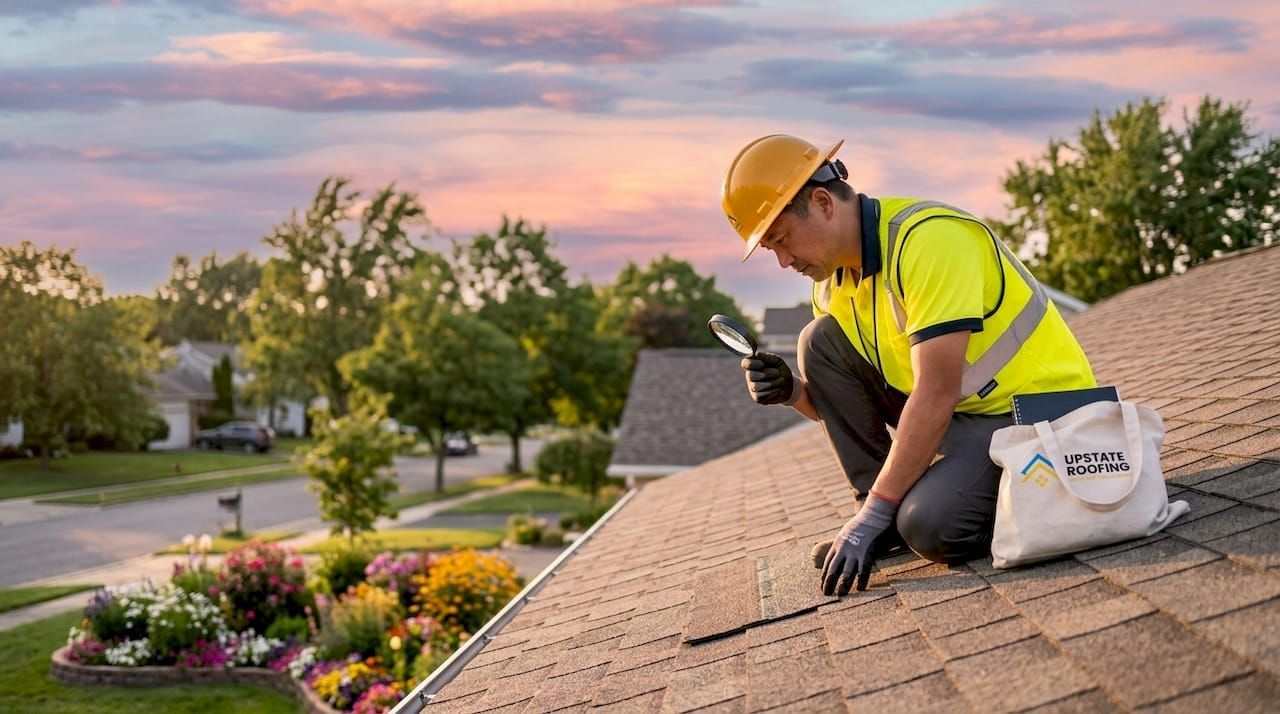
Worker in a hard hat and safety vest inspecting a rooftop at sunset.

Preventive roof maintenance is the most reliable method property owners and facility managers have for reducing long-term capital expenditures on their buildings. The industry term for this approach is planned preventive maintenance (PPM), and it covers inspections, minor repairs, sealant work, drainage clearing, and condition monitoring. Why roof maintenance reduces capital costs comes down to one principle: small problems caught early cost a fraction of what they cost after months of unchecked deterioration. A full roof replacement can average $9,537 or more, while a professional inspection runs as little as $75. The math is not close.

Why roof maintenance reduces capital costs faster than most owners expect

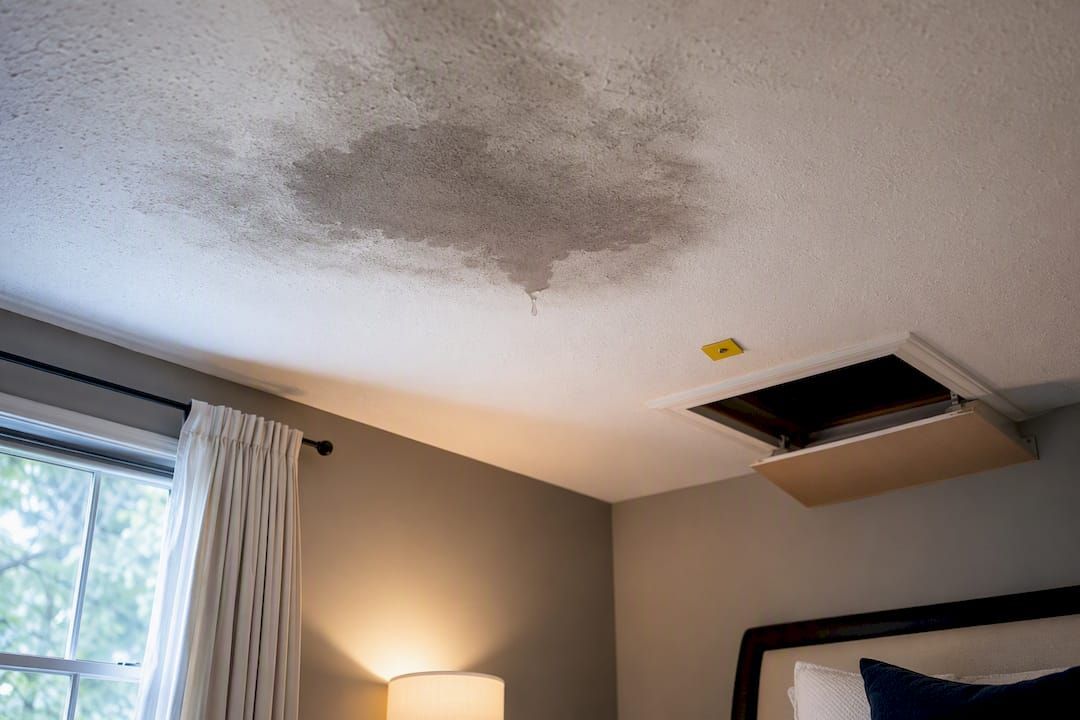
Roof deterioration does not follow a straight line. Costs grow exponentially as minor defects go unaddressed, because water ingress saturates insulation and structural components well before a leak becomes visible. By the time you see a stain on the ceiling, the damage has already multiplied.

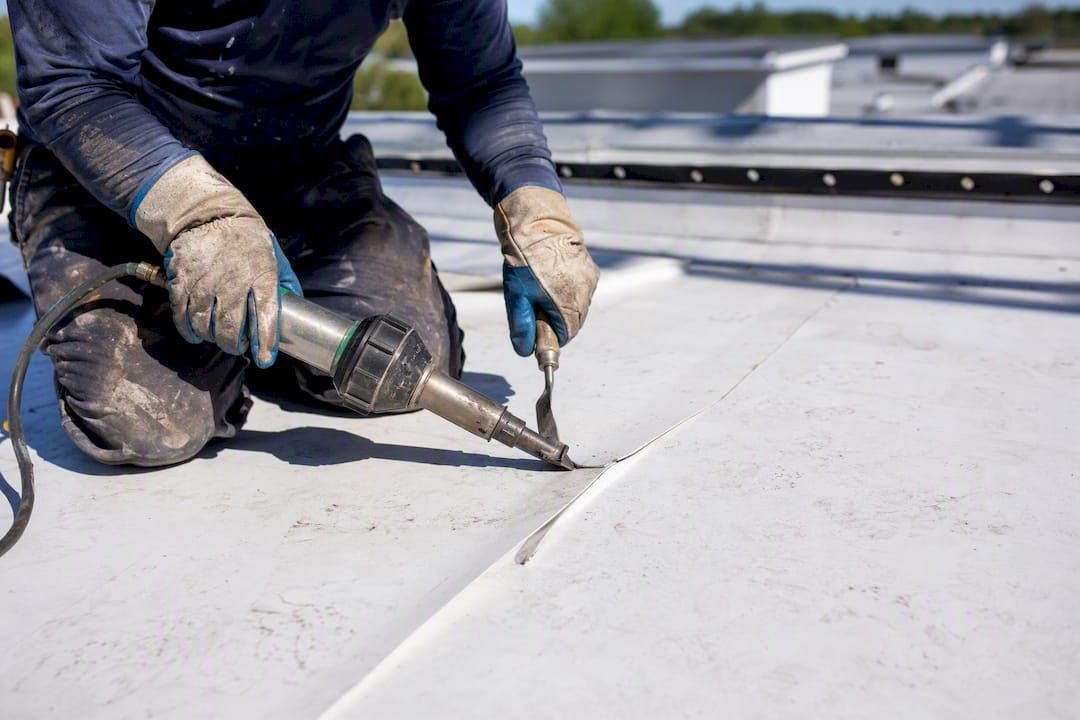
A seam separation on a flat commercial roof, for example, costs very little to seal during a routine visit. Left through one winter, that same seam allows moisture to penetrate the substrate. The repair now involves removing and replacing saturated insulation boards, resealing the membrane, and potentially addressing interior water damage. The cost difference is not incremental. It is categorical.

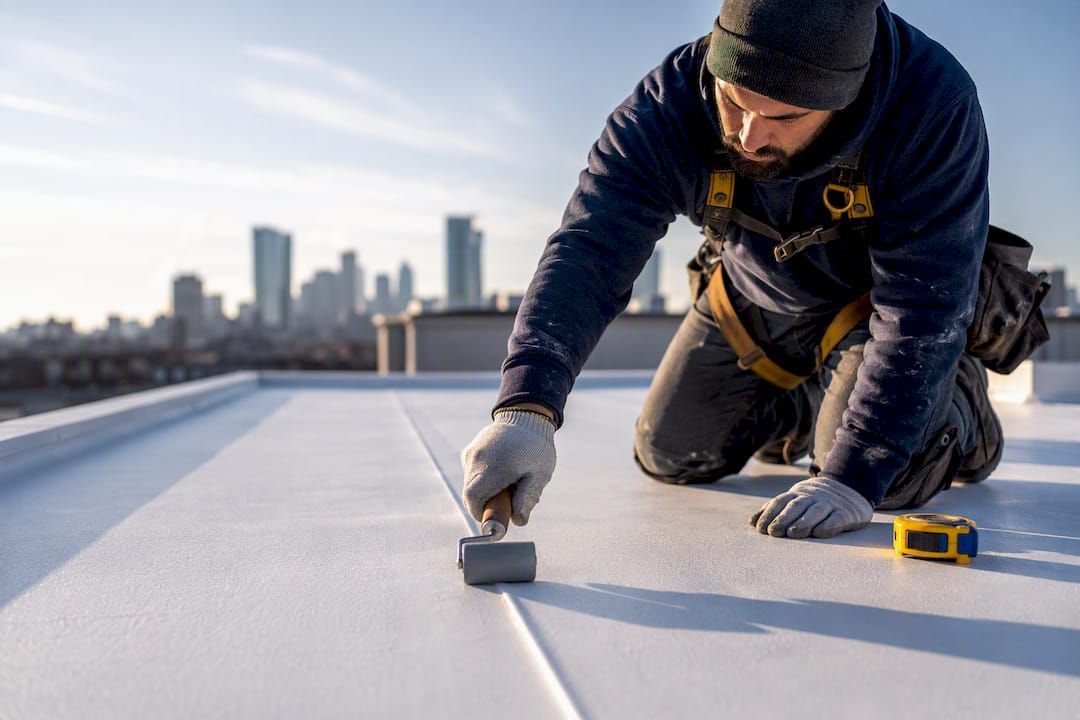
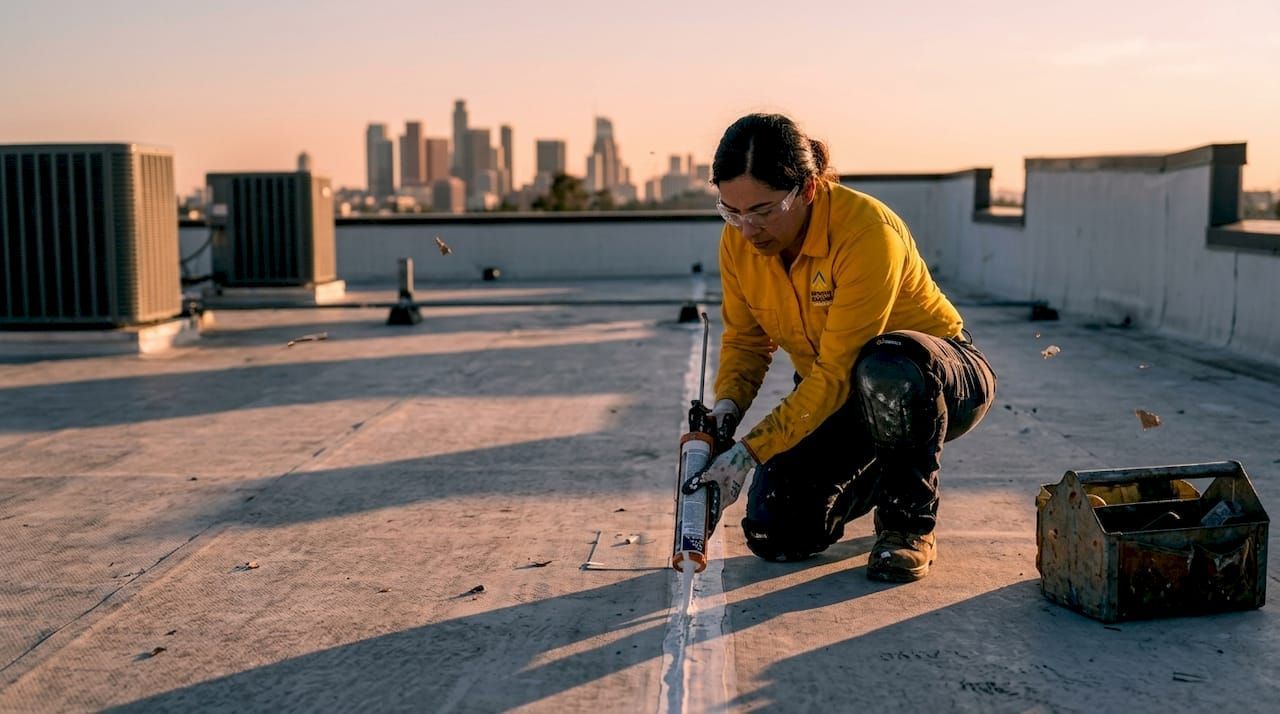
Worker in yellow jacket kneeling on a rooftop, applying sealant with a tool at sunset.

According to GAF's april 2026 report, emergency repairs cost building owners three to nine times more than regularly scheduled maintenance. That multiplier reflects not just material costs but emergency labor premiums, contractor mobilization fees, and the cost of working under time pressure rather than on a planned schedule.

Common small issues that escalate when ignored include:

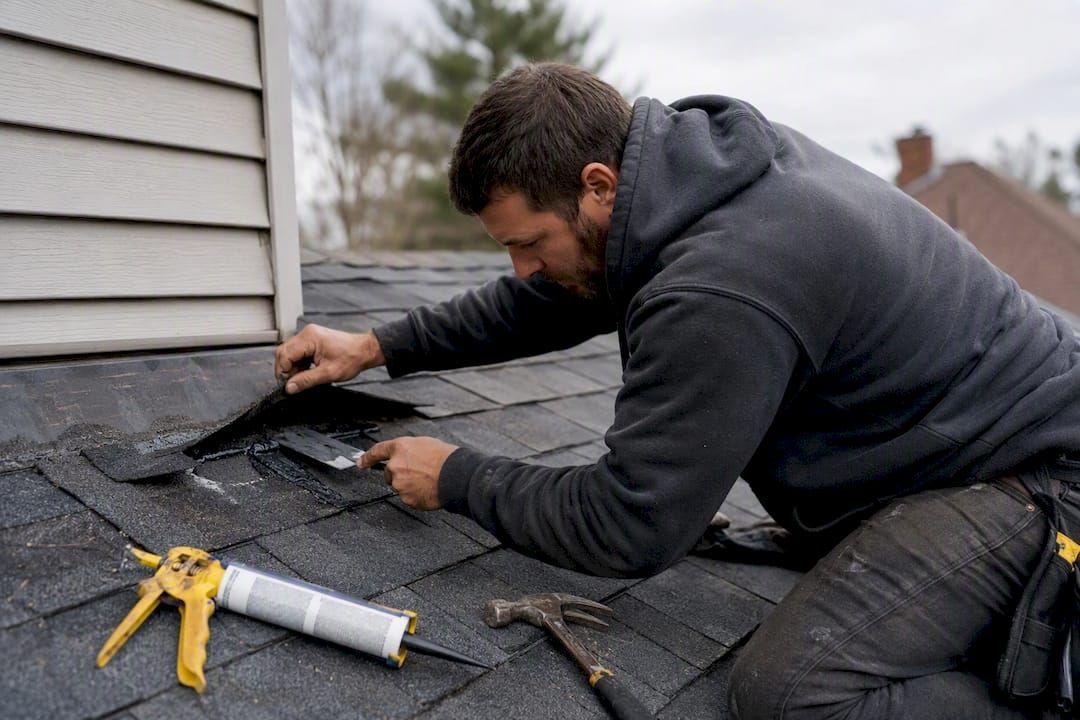
  • Flashing damage around chimneys, vents, and skylights that allows water behind the membrane
  • Clogged gutters and drains that cause ponding water and accelerated membrane wear
  • Seam separations on TPO or modified bitumen roofs that open under thermal expansion
  • Cracked or missing shingles that expose underlayment to UV and moisture
  • Debris accumulation that retains moisture and accelerates biological growth

Pro Tip: Schedule inspections in spring and fall. Seasonal inspection timing post-winter and post-summer catches damage from thermal stress and storm exposure before it compounds through the next season.

How regular upkeep extends roof life and delays replacement

Every year a roof replacement is delayed is a year of capital expenditure avoided. Planned preventive maintenance extends the functional life of a roof by addressing the conditions that cause premature failure. This is where the long-term financial case for maintenance becomes undeniable.

A roof that receives consistent upkeep retains its membrane integrity, drainage performance, and flashing seals. One that does not will experience accelerated wear at every vulnerable point. The gap between a maintained roof and a neglected one widens every year, and the cost of closing that gap grows with it.

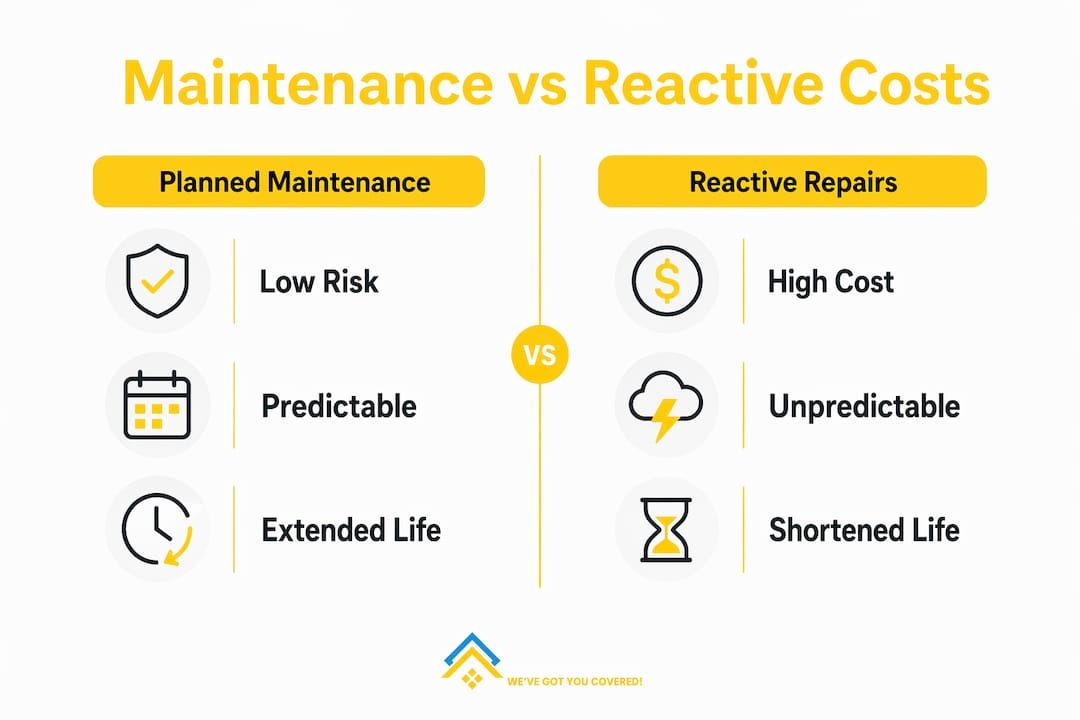
Infographic comparing planned maintenance vs reactive repairs, showing lower risk and cost versus high cost and unpredictability.

A maintenance program costs 1–3% of total roof replacement value per year and may save up to 50% over a 30-year roof life. That figure accounts for avoided emergency repairs, fewer partial replacements, and the extended interval before full replacement becomes necessary.

Maintenance actions that protect lifespan directly

The following table shows common maintenance tasks alongside the failure mode they prevent and the capital cost they defer.

Maintenance action Failure mode prevented Capital cost deferred
Sealant reapplication at penetrations Water ingress at vents and pipes Interior damage, deck replacement
Gutter and drain clearing Ponding water and membrane saturation Premature membrane failure
Flashing inspection and resealing Edge and perimeter water infiltration Structural deck and fascia repair
Surface debris removal Moisture retention and biological growth Accelerated surface degradation
Seam inspection and repair Membrane separation under thermal cycling Full membrane replacement

Manufacturer warranties for commercial roofing systems, including GAF products, typically require documented maintenance to remain valid. Skipping maintenance does not just accelerate physical deterioration. It also voids the financial protection the warranty provides.

Pro Tip: Keep a maintenance log for your roof with dates, findings, and repairs completed. This documentation supports warranty claims and gives facility managers a clear picture of asset condition when planning capital budgets.

How does maintenance improve financial predictability for property owners?

Reactive roofing costs are unpredictable by definition. A storm, a hidden defect, or a drainage failure can generate a five-figure repair bill with no warning. That kind of unplanned capital expenditure disrupts budgets, delays other projects, and forces property owners into emergency spending decisions.

Planned preventive maintenance converts those unpredictable reactive capital expenditures into predictable operating expenses. Instead of budgeting for an unknown emergency, you budget for a known annual maintenance cost. That shift from capital expenditure to operating expenditure also has accounting implications. Routine maintenance and minor repairs are typically expensed in the year they occur, while major replacements must be capitalized and depreciated over time.

A practical annual budgeting framework for facility managers looks like this:

  1. Commission a baseline inspection. Establish the current condition of every roof surface, noting defects, remaining life estimates, and priority repairs.
  2. Set an annual maintenance budget. Use the 1–3% of replacement cost benchmark as your starting range, adjusted for roof age and condition.
  3. Schedule two inspections per year. Spring and fall visits align with seasonal stress cycles and catch weather-related damage at the earliest point.
  4. Track all maintenance activity. Condition reports from each visit feed directly into capital planning, giving you data to justify budget requests.
  5. Plan replacement on your timeline. With documented condition data, you choose when to replace rather than being forced into it by an emergency.

This framework turns roofing from an unpredictable liability into a managed asset. Routine inspections prevent surprise costs and maintain the marketability and insurability of property assets. Insurance carriers increasingly factor maintenance history into coverage decisions, making documentation a financial asset in its own right.

The table below illustrates the cost difference between a reactive and a planned maintenance approach over a ten-year period for a mid-size commercial roof.

Approach Year 1–5 costs Year 6–10 costs Replacement timing
Reactive (no maintenance) Low upfront, high emergency repairs Major partial or full replacement likely Forced, unplanned
Planned preventive maintenance Predictable annual spend Extended life, deferred replacement Scheduled, budgeted

Is roof maintenance worth the investment?

A maintenance program costing 1–3% of replacement value annually is worth the investment when measured against the alternatives. Emergency callout costs alone, at three to nine times the maintenance cost, make the math clear. Add in the indirect costs that rarely appear in repair estimates, and the case becomes stronger.

Indirect savings from consistent roof upkeep include:

  • Avoided downtime. A roof failure that disrupts operations costs far more than the repair itself when lost productivity or tenant displacement is factored in.
  • Mold remediation avoided. Water intrusion that goes undetected leads to mold growth inside wall assemblies and ceiling cavities. Remediation costs routinely exceed the original repair cost.
  • Energy loss reduced. Saturated insulation loses its thermal resistance. A maintained roof retains its R-value, keeping energy costs lower.
  • Property value protected. Buyers and lenders assess roof condition directly. A documented maintenance history supports higher valuations and smoother financing.
  • Insurance coverage maintained. Regular inspections protect homeowner and commercial property insurance coverage by demonstrating due diligence.

The total cost of ownership for a roof is not just the replacement price. It includes every emergency repair, every interior damage claim, every energy penalty, and every insurance complication that a maintained roof avoids. Maintenance programs that bundle minor repairs into the annual contract cost add further value by eliminating separate callout fees for small fixes.

Key Takeaways

Planned preventive maintenance is the single most effective way to reduce the total capital cost of a roof over its full service life.

Point Details
Emergency repairs cost far more GAF data shows emergency repairs run 3–9 times the cost of scheduled maintenance.
Maintenance extends roof lifespan Annual upkeep can save up to 50% over a 30-year roof life by deferring replacement.
Predictable budgeting replaces surprises Converting reactive capital costs to planned operating expenses improves financial control.
Inspection cost is minimal Professional inspections start at $75, far below the average replacement cost of $9,537 or more.
Documentation adds financial value Maintenance records support warranty claims, insurance coverage, and property valuations.

What I've learned after years of watching owners skip maintenance

Cesar here. The most common thing I hear from property owners who call us after a major roof failure is some version of: "I knew I should have had it looked at." They are not wrong. They knew. The problem is that a roof that is not actively leaking feels fine, and spending money on something that feels fine is psychologically hard to justify.

The misconception I see most often is that maintenance is an added cost. It is not. It is a cost you are already going to pay. The only question is whether you pay it in small, planned amounts or in one large, unplanned emergency. I have seen facility managers avoid a $40,000 emergency repair because a $300 inspection caught a failing flashing seal in time. That is not a hypothetical. That is a Tuesday.

My advice is straightforward: treat your roof as a managed asset, not a fixed feature. Get a baseline inspection, document what you find, and build a maintenance line into your annual operating budget. The 2026 data from GAF and Johns Manville reinforces what experienced roofing professionals have known for years. Waiting costs more. Every time.

If you are managing multiple properties, start with the oldest roofs and work forward. Prioritize drainage and penetration points. And find a contractor who gives you written condition reports, not just verbal updates. Documentation is the difference between a managed asset and a liability.

— Cesar

How Upstateroofingpros helps you control roofing capital costs

Website homepage with a dark roof-repair hero image and a centered contact pop-up

Upstateroofingpros works with property owners and facility managers in Sacramento, Roseville, and nearby areas to build maintenance programs that protect roofs and budgets at the same time. The team at Upstateroofingpros is fully licensed, experienced across residential and commercial roofing systems, and equipped to deliver the written condition reports that make capital planning possible.

A professional roof inspection from Upstateroofingpros gives you a clear picture of your roof's current condition, identifies priority repairs, and provides the documentation you need for warranty compliance and budget planning. For roofs that need immediate attention, the roof repair services team addresses defects before they escalate into capital replacements. Contact Upstateroofingpros to schedule an inspection and put a maintenance plan in place that works for your property and your budget.

FAQ

Why does roof maintenance reduce capital costs?

Maintenance catches small defects before they cause structural damage, avoiding emergency repairs that cost three to nine times more than scheduled upkeep. Deferred replacements and avoided interior damage compound those savings over time.

How much does a roof maintenance program cost annually?

A planned maintenance program typically costs 1–3% of total roof replacement value per year. That figure covers inspections, minor repairs, and condition reporting.

How often should a roof be inspected?

Inspections in spring and fall align with seasonal weather stress cycles and maximize the chance of catching damage early. Two inspections per year is the standard recommendation for both residential and commercial properties.

What is the difference between a repair and a capital improvement for roofing?

Routine maintenance and minor repairs are generally expensed as operating costs in the year they occur. Major replacements or upgrades are capitalized and depreciated over time. Keeping repairs small through maintenance keeps more roofing costs in the operating budget.

Does skipping maintenance void a roof warranty?

Most manufacturer warranties, including those from GAF, require documented maintenance to remain valid. Skipping inspections and repairs can void coverage, removing a key financial protection from your asset.

Recommended

Recent Posts

August 2, 2026
Discover replacement picture window prices ranging from $300 to $2,500. Get tips on comparing quotes and choosing the best options for your home.
July 31, 2026
Discover key insights in our wood vs composite shingles comparison. Learn which option suits your home, budget, and safety needs best!
July 28, 2026
Discover what a roof section means and why it’s crucial for permits, insurance claims, and repairs. Get informed and stay compliant!
July 26, 2026
Discover what a roof boot is and why it’s essential for preventing leaks. Learn how to inspect and maintain this crucial roof component.
July 24, 2026
Discover what roof lifecycle means for homeowners. Learn how to identify stages, save money on repairs, and plan for replacements effectively.
July 21, 2026
Discover the best roseville-ca.odom-roofing.com alternatives for 2026. Save money and extend your roof's life with these smart options!
July 19, 2026
Discover why flat roofs leak more and learn effective prevention tips. Regular maintenance can save you from costly repairs.
July 17, 2026
Discover essential roof leak warning signs every homeowner should know. Act early to prevent costly damage and protect your home!
July 14, 2026
Discover what roof overlay is and how it can save you money and time. Learn about its benefits, risks, and comparisons to roof replacement.
July 12, 2026
Learn how TPO installation works to enhance your roof’s durability. Discover the step-by-step process for a successful roofing project.
Show More