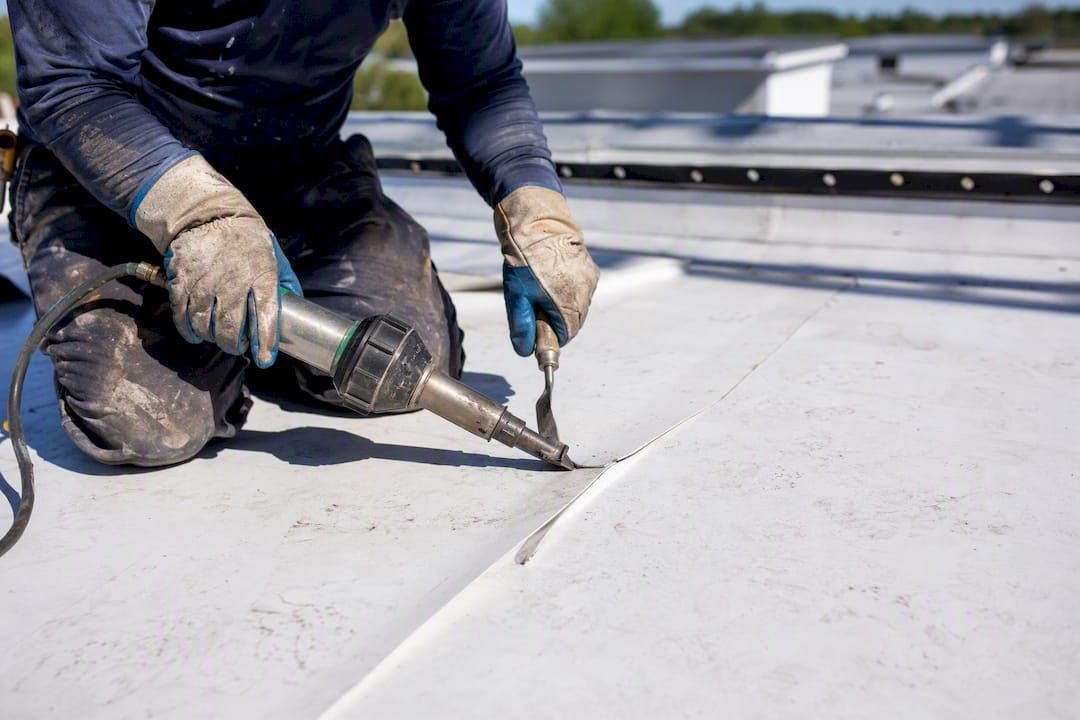
What Does Roof Lifecycle Mean for Homeowners?
What Does Roof Lifecycle Mean for Homeowners?
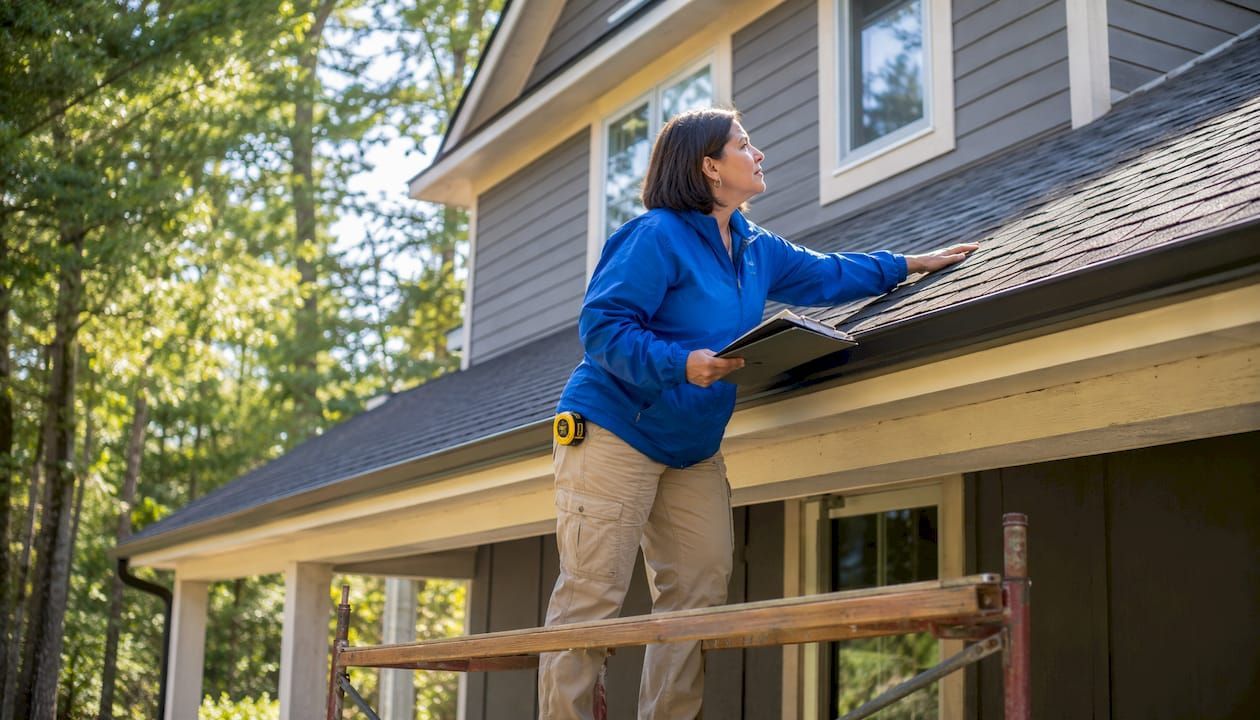
A roof lifecycle is the sequence of stages a roof moves through from the day it's installed to the point where replacement becomes the smarter call. Each stage carries its own warning signs, maintenance needs, and cost implications. The National Roofing Contractors Association notes that most new roofs are designed to deliver roughly 20 years of useful service, though materials like slate, clay tile, and quality metals can push well beyond that. InterNACHI and Upstateroofingpros both emphasize the same practical takeaway: knowing which stage your roof is in tells you exactly what to inspect, what to fix, and when to start budgeting for replacement. If you haven't had a professional inspection in the last two years, that's the one thing worth doing this month.
Why knowing your roof's lifecycle stage saves you money
Most homeowners think about their roof twice: when they move in and when something leaks. That gap is expensive.
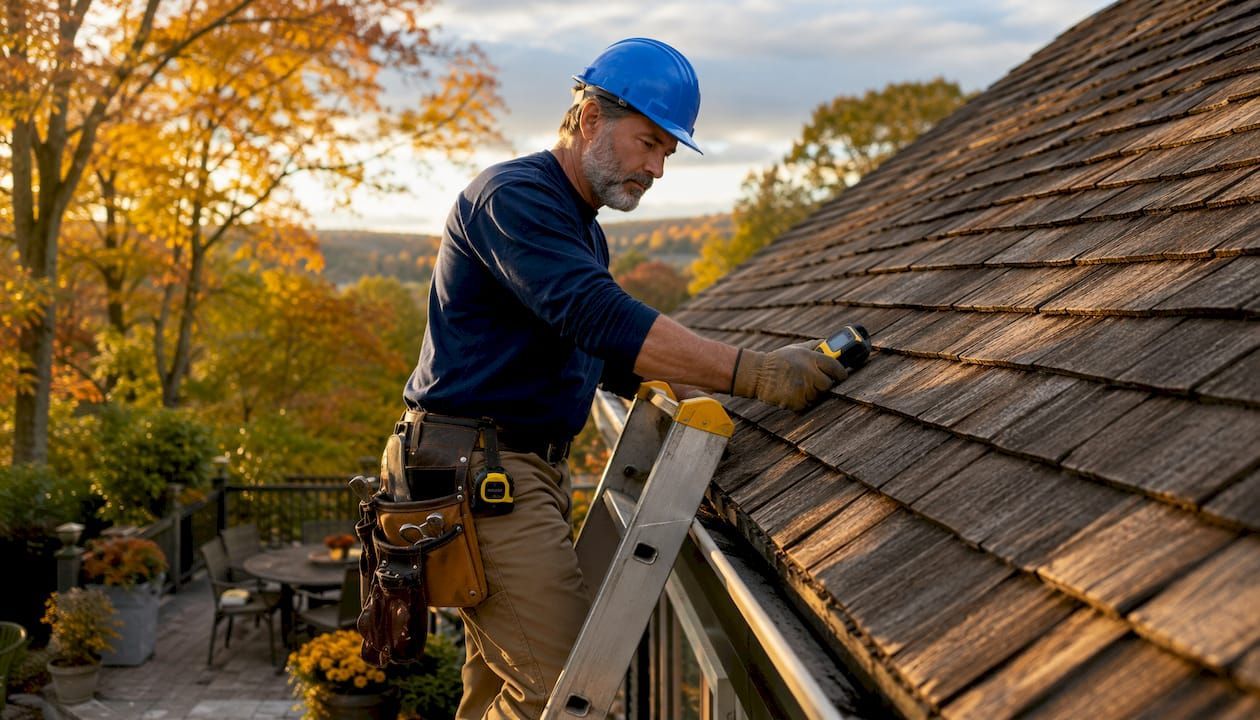
Understanding where a roof sits in its lifecycle lets you act before problems compound. A $300 flashing repair at year 12 can prevent a $4,000 water-damage claim at year 15. Planned maintenance lowers lifecycle capital costs in ways that reactive repairs simply can't match.
Here's what lifecycle awareness actually buys you:
- Cost avoidance: Catching granule loss or sealant failure early prevents deck rot and interior water damage.
- Safety: A sagging deck or rusted fastener isn't just a roofing problem — it's a structural one.
- Energy efficiency: A roof with compromised ventilation or missing insulation raises heating and cooling bills year-round.
- Resale value: Buyers and their inspectors notice roof age. A documented maintenance history or a recent replacement adds negotiating power.
- Insurance positioning: Insurers increasingly factor roof age and condition into premiums and coverage decisions. An aging roof with no maintenance record can trigger higher deductibles or policy non-renewal.
Cost reality check: A full asphalt shingle replacement on an average U.S. home runs several thousand dollars or more depending on size, material, and local labor rates. Routine annual inspections and minor repairs typically cost a fraction of that — and can add years to the roof's service life.
What are the four stages of a roof's lifecycle?
Think of a roof's life in four broad chapters. The year ranges below apply to standard architectural asphalt shingles; metal, tile, and slate roofs follow different timelines.
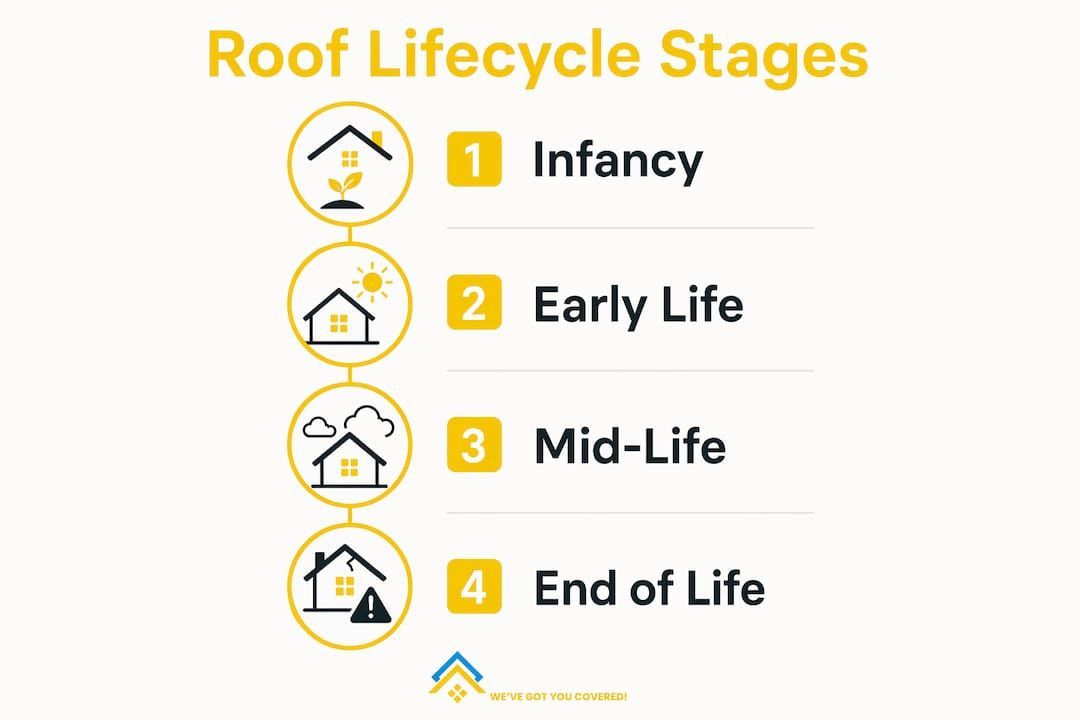
Stage 1: Infancy (years 0–2)
New roofing materials perform at peak capacity. Shingles carry full granule coverage, sealant bonds are tight, and the underlayment is fresh. This is the stage where installation quality sets the ceiling for everything that follows. Proper flashing placement, adequate attic ventilation, and correct fastener patterns during installation determine how well the roof handles the next two decades.
What to do: Schedule a post-installation inspection within the first year to confirm workmanship. Check attic ventilation and make sure gutters are clear.
Stage 2: Early life (years 2–10)
The roof is performing well but beginning to experience its first real environmental stress. UV exposure gradually breaks down the protective compounds in shingles. Thermal cycling — materials expanding in afternoon heat and contracting overnight — starts accumulating micro-stress across the surface.

What to do: Professional inspection every two to three years. After any significant storm, do a visual check from the ground or hire a pro. Address any lifted flashing or minor sealant gaps immediately.
Stage 3: Mid-life (years 10–20)
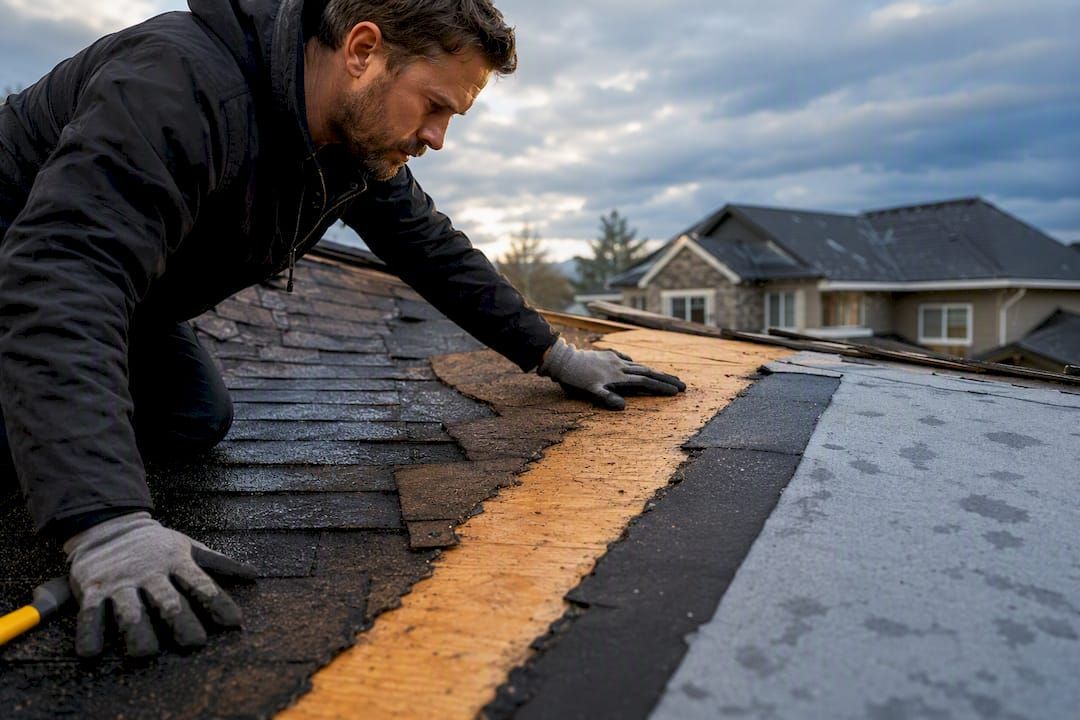
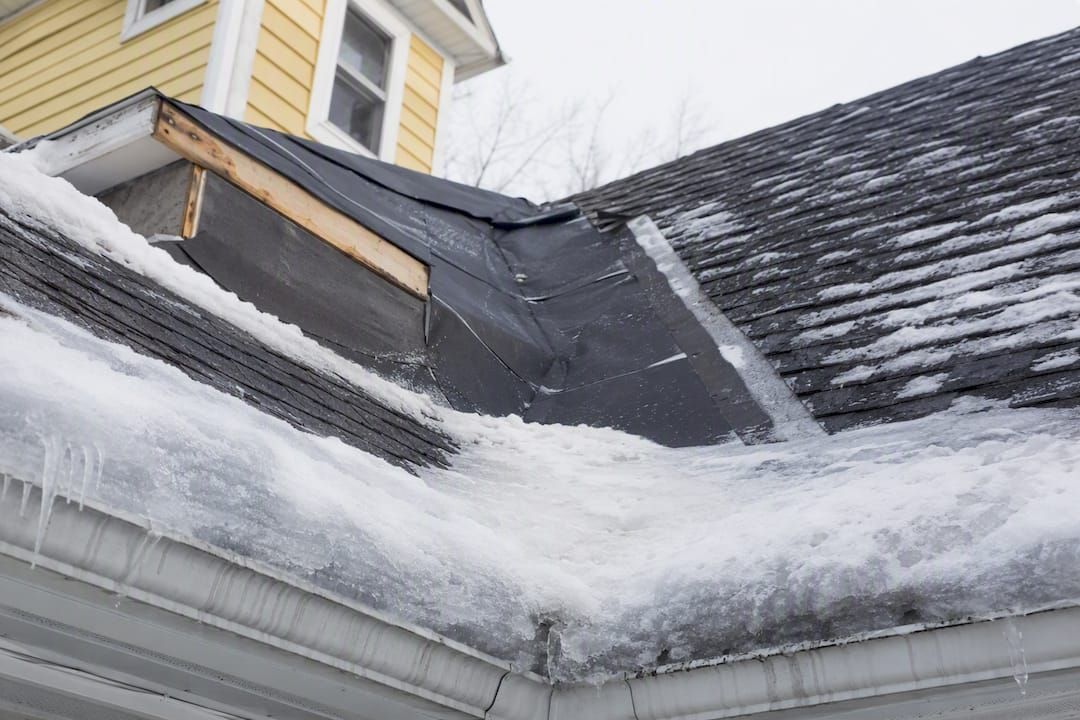
This is where the roof earns its keep — or reveals its weaknesses. Granule loss becomes visible in gutters and at downspout outlets. Sealant around flashings and pipe boots may begin to crack. Valleys, which channel the highest water volume during storms, often show wear first.
What to do: Annual professional inspections. Repair isolated problem areas rather than ignoring them. Begin tracking repair costs — if annual repairs are climbing, start a replacement budget.
Stage 4: End of life (years 20+)
Widespread curling, persistent leaks, sagging sections, and large granule loss signal that the roof is past the point where targeted repairs make economic sense. The NRCA's roof management guidance frames this clearly: when repairs no longer restore performance, replacement delivers better long-term value.
What to do: Get two or three replacement quotes. Evaluate material options based on your climate and budget. Don't delay — a failing roof creates interior damage that adds to total replacement cost.
Timeline note: These year bands shift significantly by material and climate. An asphalt roof in a high-UV, high-humidity region may hit end-of-life at 15 years. A metal roof in a mild climate may not reach mid-life until year 30.
Pro Tip: Check your attic in summer. If it feels like an oven, your ventilation is inadequate — and that heat is cooking your shingles from the inside out, potentially cutting years off their lifespan.
How long do roofs last? A comparison by material
Lifespan ranges below reflect industry sources including NAHB lifetime data and manufacturer guidance. Actual performance depends on climate, installation quality, and maintenance.
| Material | Typical Lifespan | Notes |
|---|---|---|
| 3-tab asphalt shingles | 15–20 years | Thinner profile; more vulnerable to wind and UV |
| Architectural (dimensional) asphalt | 25–30 years | Climate and ventilation can shift this to as little as 15 or up to 35+ years |
| Premium asphalt (impact-rated) | 30–40 years | Thicker mat; better hail resistance |
| Metal panels (corrugated/exposed fastener) | 25–40 years | Fastener maintenance required |
| Standing seam metal | 40–70 years | 24-gauge systems can carry lifetime warranties and outperform thinner panels |
| Clay tile | 50–150+ years | Underlayment typically needs replacement every 20–30 years; tiles often outlast underlayment |
| Natural slate | 50–150+ years | Heavy; requires engineered structure; underlayment replacement every 20–30 years |
| Concrete tile | 40 years | Heavier than clay; prone to surface erosion |
| Wood shake | 25–30 years | Requires regular treatment; fire risk in dry climates |
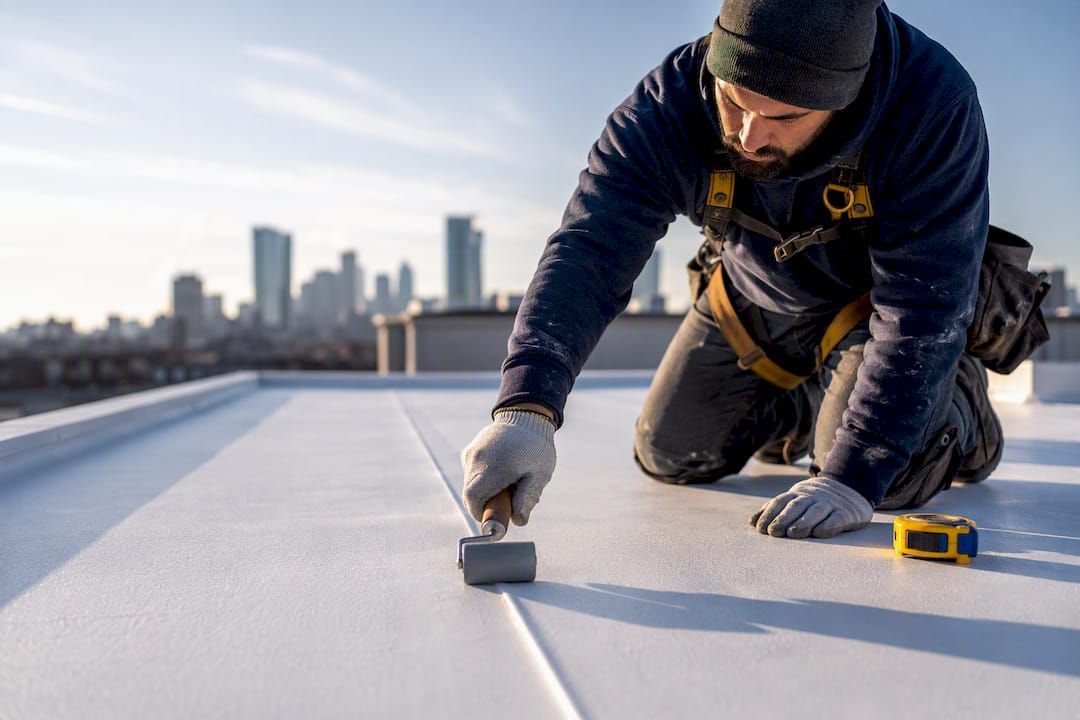
| TPO / EPDM (flat roofs) | 15–30 years | Seam integrity and UV exposure are key variables |
A note on components: The visible surface isn't the only thing aging. Underlayment beneath tile and slate roofs typically needs replacement every 20–30 years — long before the tiles themselves fail. Tile relay (removing tiles, replacing underlayment, reinstalling tiles) is a cost-effective mid-life option that avoids a full replacement. Flashings and fasteners also have finite lives and should be evaluated at every professional inspection.
- Manufacturer warranties and actual lifespans often diverge. A "30-year shingle" carries a prorated warranty that pays less the older the roof gets — read the fine print before assuming full coverage at year 25.
- Warranty terms also vary by installation method. Some manufacturers require certified installers and specific ventilation standards to honor the full warranty period.
What factors shorten or extend your roof's lifespan?
Two categories matter here: things you can control and things you can't.
Factors you can control:
- Attic ventilation: Poor attic ventilation is the single biggest controllable variable reducing asphalt shingle lifespan — it can cut service life by 20–30%. Heat trapped in an under-ventilated attic accelerates shingle deterioration from below.
- Installation workmanship: A roof installed with incorrect fastener patterns, improper flashing, or inadequate underlayment laps will underperform regardless of material quality.
- Maintenance frequency: Debris accumulation in valleys, clogged gutters, and ignored minor repairs all accelerate aging.
- Drainage: Poor slope or blocked drainage keeps water in contact with roofing materials longer than they're designed to handle.
- Biological growth: Moss and lichen retain moisture against shingles and physically lift granules. Left untreated, they shorten lifespan measurably.
Factors you can't control — but should plan around:
- Climate and UV exposure: High-UV regions bake shingles faster. Coastal humidity accelerates corrosion on metal components.
- Temperature swings: Nearmap's analysis of billions of roof images found that counties with daily temperature fluctuations above 23°F averaged roof ages near 9.0 years, compared to 11.1 years in counties where daily swings stayed below 20°F.
- Storm exposure: Hail, high winds, and heavy rainfall create cumulative damage that compounds with each event.
Climate stat: That two-year difference in average roof age between high-swing and low-swing counties translates directly into more frequent replacement cycles and higher lifetime roofing costs for homeowners in variable-climate regions.
The practical takeaway: you can't move your house, but you can maximize ventilation, keep gutters clear, and schedule inspections after major weather events. Those three habits alone push a roof toward the high end of its lifespan range.
How do you know when to repair vs. replace your roof?
The visible signs of a failing roof are usually clear once you know what to look for.
Common failure indicators:
- Curling or cupping shingles (edges lifting or centers buckling)
- Granule loss visible in gutters or at downspout outlets
- Widespread blistering or cracking across the surface
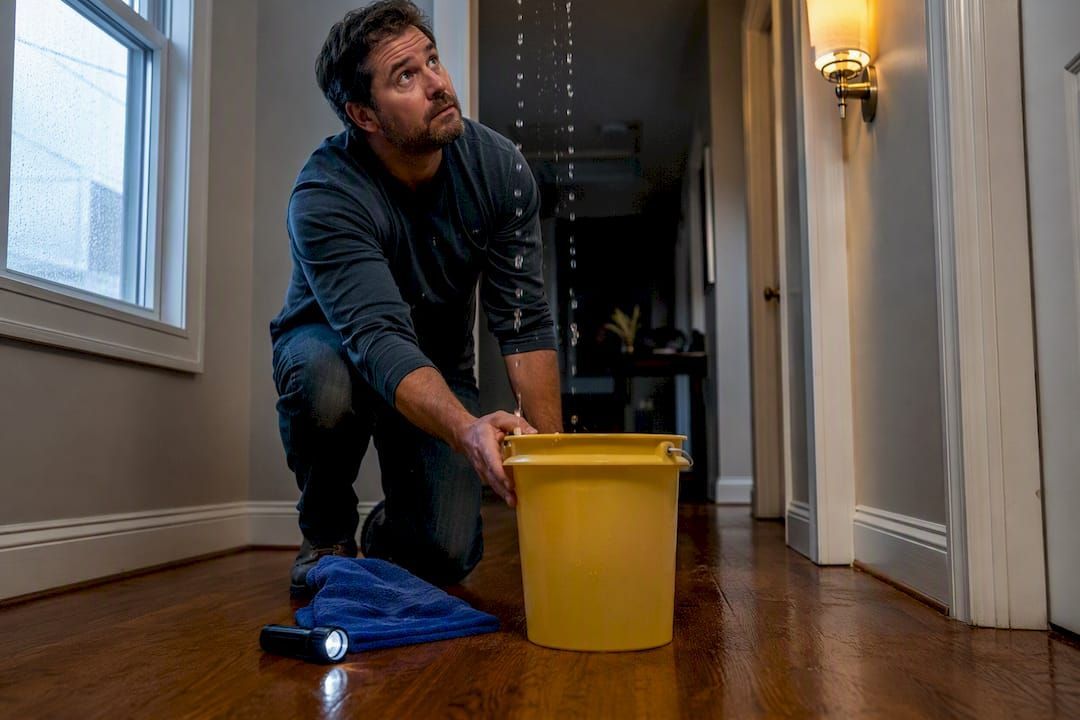
- Persistent leaks that return after repair
- Sagging decking (visible from inside the attic or from the ground)
- Rusted or missing fasteners
- Large patch count — multiple repaired areas across the surface
The 25% rule is a widely used industry guideline: if more than 25% of the roof surface needs repair or replacement, a full replacement is generally more cost-effective than continued patching. The logic is straightforward — at that damage level, the remaining material is typically near the same age and condition as the damaged sections, so piecemeal repairs just delay the inevitable.
That said, the rule has limits. For tile and slate roofs, the 25% threshold doesn't apply the same way because the tiles themselves may be fine while the underlayment has failed. In those cases, tile relay is often the right call regardless of how much surface area is affected.
A practical repair-vs-replace sequence:
- Get a professional inspection — not just a visual from the ground.
- Ask the inspector to assess underlayment condition, not just surface shingles.
- Request a repair estimate and a replacement estimate side by side.
- Calculate cumulative repair costs over the past three years.
- If repairs exceed 30–40% of replacement cost, replacement typically wins on a five-year horizon.
Pro Tip: When a tile or slate roof leaks, don't assume the tiles are the problem. The underlayment beneath them is often the actual failure point — and replacing just the underlayment through tile relay can cost significantly less than a full roof replacement.
What should your roof maintenance schedule look like?
Maintenance mapped to lifecycle stage is more useful than a generic annual checklist. Here's how to think about it:
By stage:
- New (0–2 years): Confirm installation quality with a post-installation inspection. Clear gutters after the first fall season. Check attic ventilation.
- Early life (2–10 years): Professional inspection every two to three years. Clean gutters twice annually. Remove moss or algae growth promptly. Check flashings after major storms.
- Mid-life (10–20 years): Annual professional inspections. Inspect and reseal pipe boots and flashings. Check underlayment condition if tiles or slate are present. Begin tracking repair frequency and cost.
- Late life (20+ years): Bi-annual professional inspections. Prioritize interior checks (attic moisture, water stains). Get replacement quotes before a failure forces an emergency decision.
Inspection cadence at a glance:
| Inspection Type | Frequency | What It Covers |
|---|---|---|
| DIY visual check | Quarterly | Ground-level scan for obvious damage, debris, sagging |
| Post-storm check | After major events | Lifted shingles, damaged flashings, gutter blockage |
| Professional inspection | Annually (mid-life+) | Full surface, underlayment, flashings, attic, ventilation |
| Pre-sale inspection | Before listing | Full system assessment for disclosure and negotiation |
A roofing maintenance plan formalizes this cadence and ensures nothing gets skipped between seasons.
Pro Tip: Attic ventilation affects shingle life more than most homeowners realize. A properly ventilated attic keeps summer attic temperatures from spiking, which directly reduces the thermal stress that ages shingles from below. If your attic has fewer than one square foot of ventilation per 150 square feet of attic floor, it's under-ventilated by most building code standards.
How do you plan and budget for roof replacement?
Replacement planning works best when it starts before the roof fails, not after.
Cost drivers to understand:
- Material choice: The gap between 3-tab asphalt and standing seam metal is substantial — both in upfront cost and in how long before you're doing this again.
- Roof complexity: More valleys, dormers, and penetrations mean more labor and more flashing work.
- Decking condition: Rotted or damaged decking adds cost that's only discovered after tear-off begins.
- Tear-off vs. overlay: Most jurisdictions allow one overlay (new shingles over old), but overlays hide the deck condition and add weight. A full tear-off costs more upfront and gives you a clean start.
- Disposal: Debris removal and landfill fees vary by region and material type.
- Permits: Most municipalities require a permit for full replacement. Factor in the cost and timeline.
- Local labor rates: Roofing labor costs vary significantly across U.S. regions.
Warranty traps to check before signing:
- Manufacturer warranties are prorated — coverage decreases as the roof ages. A 30-year warranty doesn't mean full replacement value at year 25.
- Workmanship warranties come from the contractor, not the manufacturer. Verify the contractor is still in business and that the warranty is transferable if you sell.
- Some manufacturer warranties require certified installers and specific ventilation specs. If those weren't met at installation, the warranty may already be void.
Planning stat: The NRCA emphasizes that maintenance is often the most neglected area of roof management — yet it's the single most important factor after proper installation for determining lifespan and total cost.
A sample planning timeline: get two to three quotes 12–18 months before you expect to need replacement, schedule the work outside peak season (spring and fall book fast), and arrange temporary storage or protection for anything stored in the attic.
Why professional inspections and maintenance programs extend roof life
The NRCA's guidance on roof repair and maintenance is direct: a documented maintenance program with annual professional inspections materially reduces emergency repairs and total lifetime capital costs. That's not marketing language — it's the conclusion from decades of roof management data across thousands of commercial and residential systems.
Upstateroofingpros backs this with a structured approach:
- Annual inspection program: Licensed professionals assess surface condition, flashing integrity, underlayment health, attic ventilation, and drainage — not just a visual pass from the ground.
- Maintenance plans: Scheduled service that catches minor issues before they become major ones. Details on the maintenance plan benefits are worth reviewing before your next inspection cycle.
- Restoration programs: For roofs that are aging but not yet at end-of-life, roof restoration can add years of service at a fraction of replacement cost.
- Warranty-backed replacement: When replacement is the right call, Upstateroofingpros installs with manufacturer-certified methods that preserve full warranty coverage.
Pro Tip: Ask any roofing contractor whether their inspection includes an attic assessment. A contractor who only walks the surface is missing half the picture — attic moisture, insulation gaps, and ventilation failures are often the root cause of surface problems.
Key Takeaways
A roof's lifecycle runs from installation through four distinct stages, and knowing which stage you're in determines what to inspect, repair, or budget for next.
| Point | Details |
|---|---|
| Lifecycle has four stages | New, early life, mid-life, and end-of-life each require different inspection cadence and actions. |
| Material determines lifespan range | Asphalt lasts 15–30 years (can be as little as 15 or up to 35+ years for architectural shingles based on climate and ventilation); standing seam metal 40–70 years; slate and clay tile 50–150+ years. |
| Ventilation is the biggest controllable factor | Poor attic ventilation can cut asphalt shingle lifespan by 20–30% — fix it before replacing shingles. |
| The 25% rule guides repair vs. replace | When more than 25% of the surface needs work, full replacement is usually more cost-effective than patching. |
| Upstateroofingpros offers inspections and maintenance plans | Scheduled inspections and a structured maintenance program extend roof life and reduce total replacement costs. |
A roofer's perspective on what the lifecycle really looks like in the field
The theory of a roof lifecycle is clean on paper. Four stages, clear year bands, logical decision points. What you actually find on a real roof is messier — and more instructive.
The most common surprise in inspections isn't dramatic surface damage. It's a roof that looks fine from the street but has an attic running 30 degrees hotter than it should, with shingles that are brittle and granule-depleted on the underside while still appearing intact from above. The homeowner has no idea. The roof has maybe three years left, and they were planning to wait five.
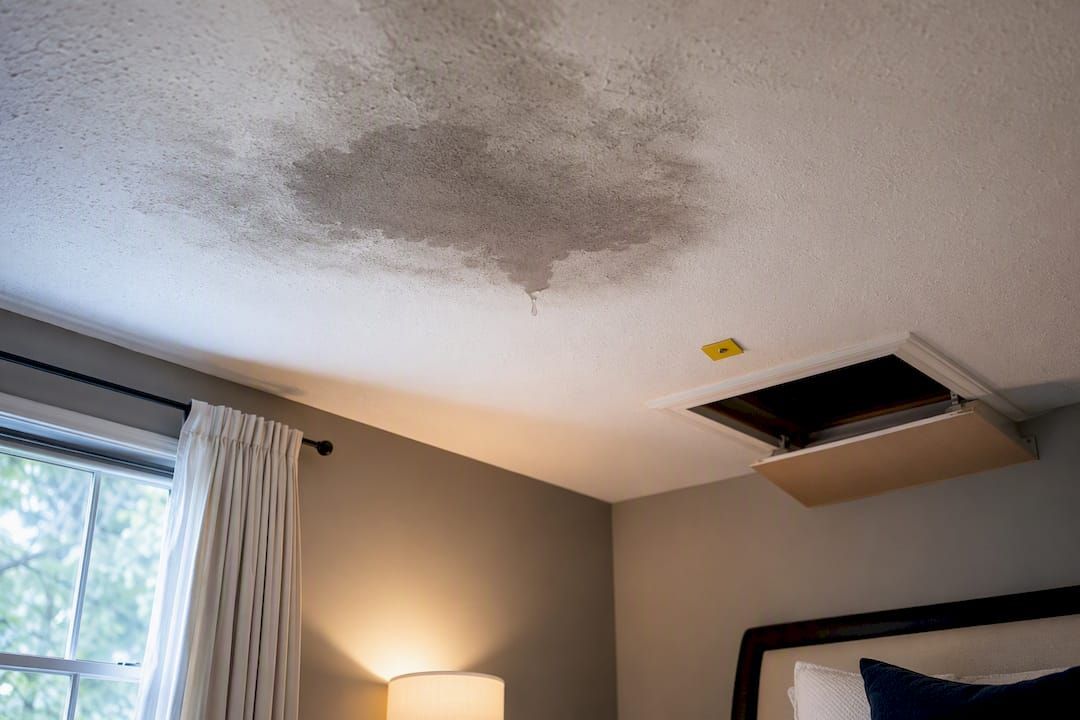
Tile roofs produce a different kind of surprise. The tiles look perfect — no cracks, no missing pieces. But the underlayment beneath them is 25 years old and failing at the seams. Water is getting in, running under the tiles, and showing up as a stain on a ceiling two rooms away from where the actual breach is. The fix isn't new tiles. It's tile relay: pull the tiles, replace the underlayment, reinstall. Homeowners who understand the lifecycle concept grasp this immediately. Those who don't often push back on the cost because "the tiles look fine."
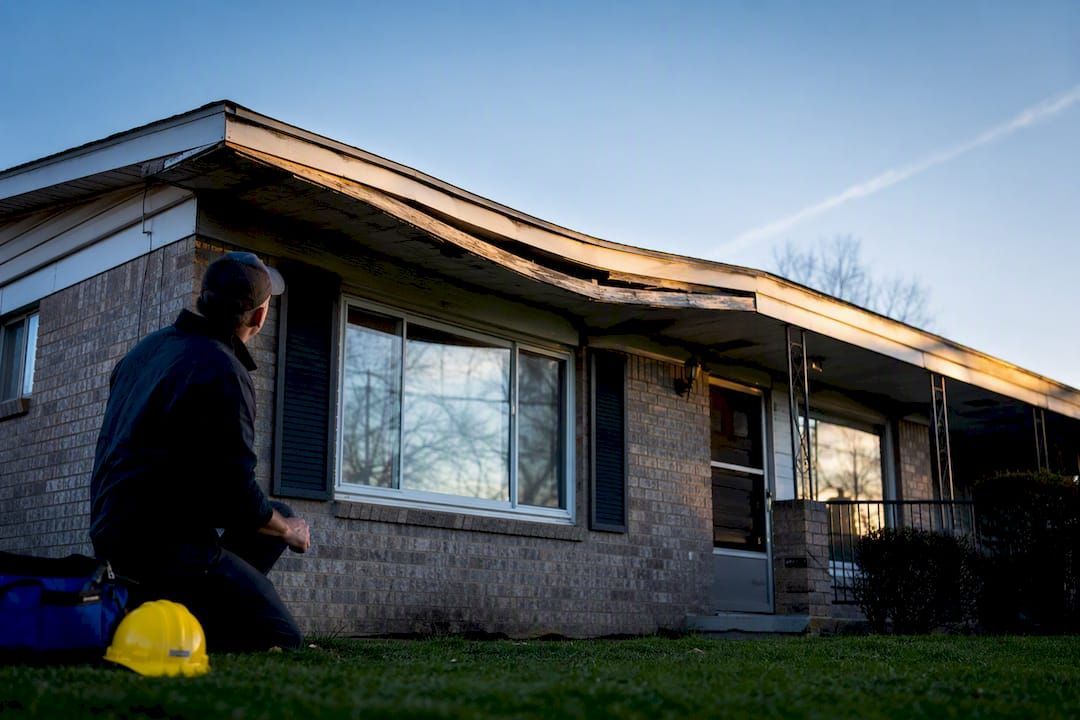
The practical lesson: don't wait for visible damage to call for an inspection. By the time curling shingles or granule loss are obvious, the roof has already been in decline for years. An inspection at year 10 on an asphalt roof, and again at year 15, gives you the information to plan rather than react. That's the difference between a scheduled replacement on your timeline and an emergency call after a storm.
Upstateroofingpros: inspections, maintenance, and replacement in Sacramento and Roseville
Knowing your roof's lifecycle stage is only useful if you act on it. Upstateroofingpros gives homeowners in Sacramento, Roseville, and surrounding areas a clear path from inspection to solution, without the guesswork.

A professional roof inspection from Upstateroofingpros covers the full system: surface condition, flashing integrity, attic ventilation, underlayment health, and drainage. If repairs are needed, the repair team handles everything from targeted leak fixes to flashing replacement. When replacement is the right call, Upstateroofingpros installs with manufacturer-certified methods across asphalt, metal, tile, and TPO roofing systems. And for roofs that aren't ready for replacement but need structured care, the maintenance plan keeps the lifecycle on track year after year. Schedule your inspection today and know exactly where your roof stands.
Useful sources and further reading
- National Roofing Contractors Association — Roof Repair and Maintenance: The NRCA's guidance on why maintenance is the most critical factor after installation for determining roof lifespan and cost.
- NRCA — Effective Roof Management and Life Cycle Data: Overview of roof system life cycle performance data and the key factors that influence life expectancy across different system types.
- NRCA — Resources on Expected Roof Service Lives: Industry reference for typical service life ranges and the variables that determine where a roof lands within those ranges.
- Nearmap — What America's Roofs Reveal About Climate Risk: Analysis of billions of roof images showing how daily temperature swings and rainfall intensity correlate with shorter average roof ages at the county level.
- NAHB Study of Life Expectancy: Consolidated industry lifetime data for roofing materials including asphalt, wood shake, slate, clay tile, and metal systems.
- Upstateroofingpros — Roofing Maintenance Plan Benefits: How a structured maintenance plan reduces emergency repairs and extends roof service life.
- Upstateroofingpros — Roof Restoration Programs: Case-study approach to restoring aging roofs and extending lifecycle before replacement becomes necessary.
- Upstateroofingpros — What Does Roof Warranty Cover?: Plain-language breakdown of manufacturer vs. workmanship warranties and the prorating traps homeowners should check.
- Lifeline Roofing Systems Partnership: Local roofing systems partner resource for homeowners evaluating system-level roofing solutions.
Recommended
Recent Posts