
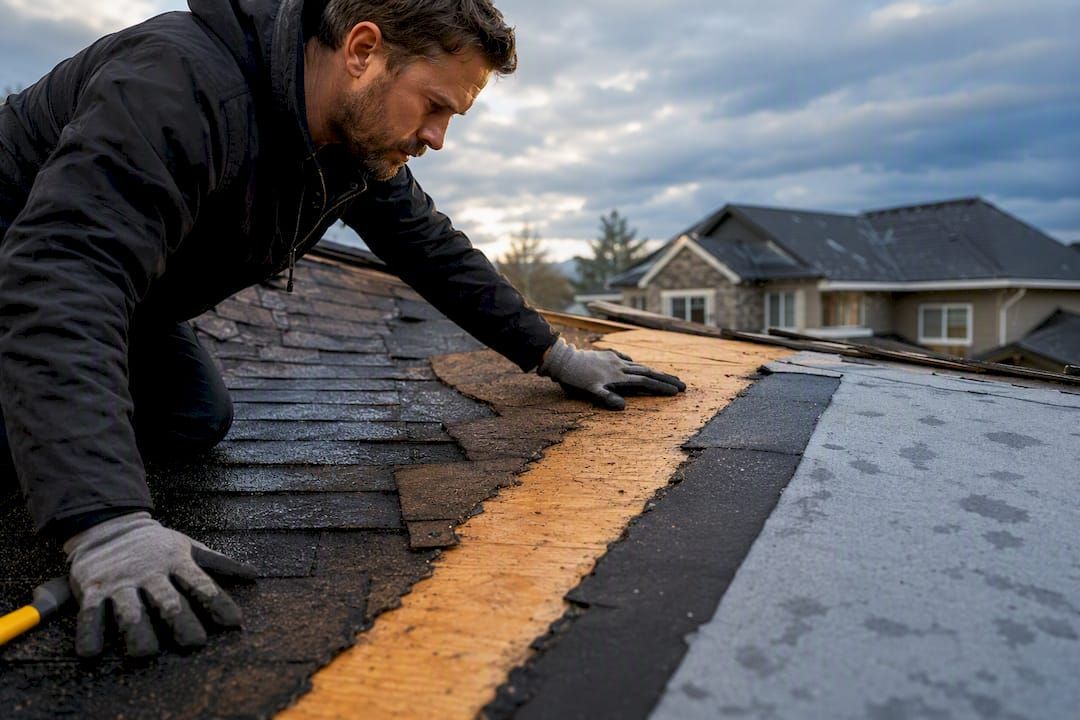
Residential Roof Layers Explained for Homeowners
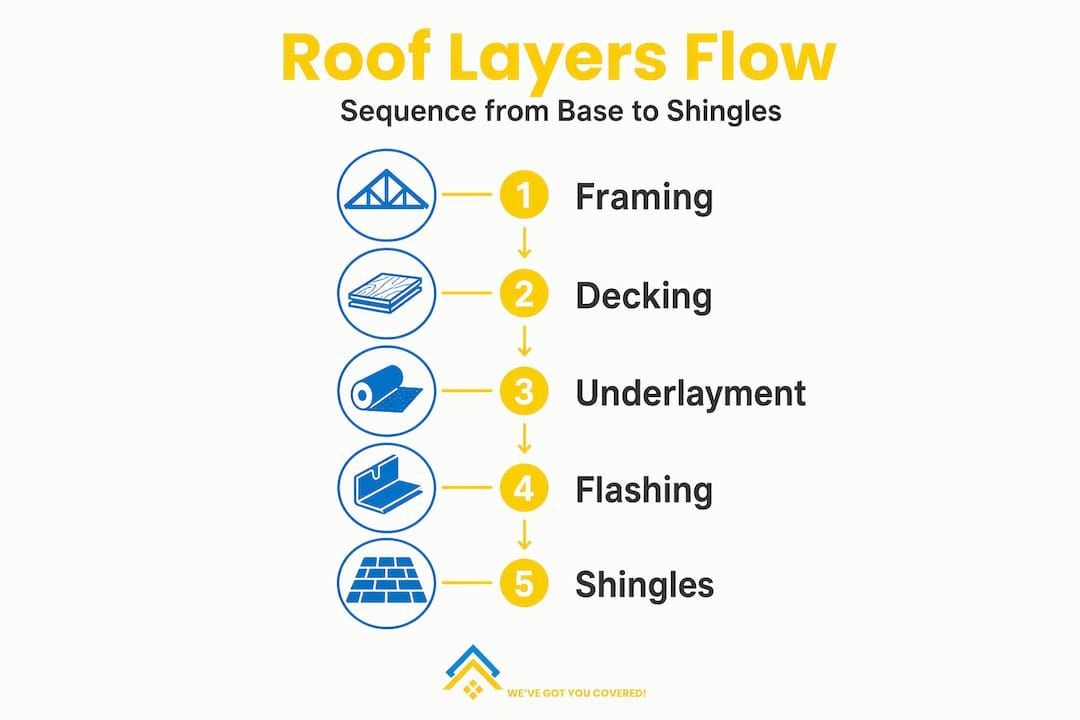
Most homeowners think about their roof only when something goes wrong. And when they do, they focus entirely on the shingles. That's understandable. But the shingles are just one piece of a multi-layer system, and a roof is an assembly of structural framing, decking, underlayment, flashing, ventilation, and an outer covering. Getting residential roof layers explained properly means understanding how all those components interact. That knowledge is what separates homeowners who make smart repair decisions from those who spend money fixing the wrong thing.
Key Takeaways
| Point | Details |
|---|---|
| Roof is a system, not one layer | Every layer from the deck to the shingles works together; failure in one affects all others. |
| Underlayment type matters by slope | Low-slope roofs require two layers of underlayment per code; steep slopes need only one. |
| Flashing causes most leaks | Flashing at chimneys, valleys, and penetrations is the most common source of water intrusion. |
| Two-layer code limit for overlays | Most building codes allow no more than two shingle layers before a full tear-off is required. |
| Ventilation protects every layer | Poor attic ventilation accelerates deterioration of the deck and shingles from the inside out. |
Residential roof layers explained: structural base first
Before water management even enters the conversation, your roof needs a skeleton. That skeleton is the framing, made up of rafters or trusses. Rafters are individual boards cut and installed on site, typically in older or custom homes. Trusses are prefabricated triangular assemblies engineered for specific spans, and they dominate new construction today because they are faster to install and structurally predictable. Rafters and trusses form the structural skeleton, and everything else sits on top of them.
Directly over the framing sits the roof deck, also called sheathing. This is the nailable surface that all upper layers attach to. The two most common materials are plywood and oriented strand board (OSB). OSB is less expensive and widely used today, while plywood offers slightly better moisture resistance. Both must meet span rating requirements per your local building code, meaning the thickness corresponds to how far apart the framing members are spaced.
Here is why the deck matters more than most homeowners realize:
- A soft or spongy deck means rot or delamination, and no new shingles will fix that
- Deck thickness typically ranges from 7/16 inch to 3/4 inch depending on framing spans
- If decking is compromised, replacement costs are added to any reroofing project
Pro Tip: Before any roofing contractor starts a replacement job, ask them to walk the deck after tearing off old shingles and confirm its condition in writing before new layers go down.
Moisture barriers: underlayment and ice and water shield
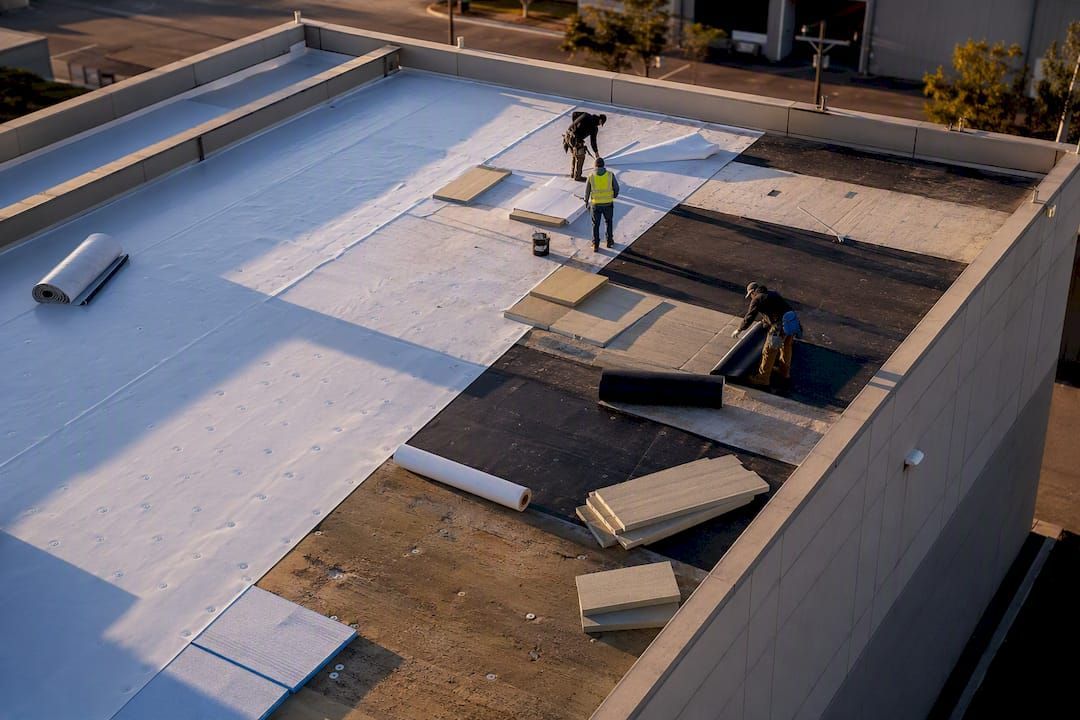
This is where most roofing conversations get oversimplified, and where a lot of costly mistakes happen. Underlayment is the secondary water barrier that sits between the deck and the outer covering. It is not optional, and it is not all the same material.
There are three main types you will encounter:
- Asphalt-saturated felt (#15 and #30): The traditional option. #30 is heavier and more durable. Both are affordable but prone to wrinkling and tearing in heat.
- Synthetic underlayment : Made from woven polypropylene or polyethylene. Synthetic is preferred over felt for its lighter weight, tear resistance, and ability to handle longer UV exposure without degrading before shingles are installed.
- Self-adhering membranes (ice and water shield) : Peel-and-stick, fully adhered barriers designed for the most vulnerable spots on the roof.
Here is a direct comparison to guide your decisions:
| Underlayment type | Weight | UV tolerance | Best use case |
|---|---|---|---|
| #15 asphalt felt | Light | Low (days) | Budget projects, steep slopes |
| #30 asphalt felt | Medium | Low to moderate | Steeper slopes, moderate climates |
| Synthetic | Light | High (weeks to months) | All slopes, hot or variable climates |
| Ice and water shield | Heavy | N/A (covered quickly) | Eaves, valleys, penetrations |
The distinction between underlayment and ice and water shield is important. Ice and water shield seals fastener holes and is required at eaves, valleys, and penetrations because those zones see concentrated water flow and wind-driven rain. Standard underlayment does not self-seal. You need both, placed in the right locations.
Per the IRC 2024, two layers of underlayment are required for asphalt shingles on low slopes (2:12 to under 4:12). Steeper pitches need only one layer. This is not a contractor preference. It is a code requirement tied to how slowly water sheds at shallower angles.
Pro Tip: If a contractor bids a low-slope roof replacement and does not mention two-layer underlayment, that is a red flag. Ask directly what the underlayment spec is before signing anything.
Waterproofing transitions: flashing and valley details
Shingles shed water well on open, uninterrupted roof planes. The trouble starts wherever that plane ends or changes. Chimneys, skylights, vents, dormers, sidewalls, and valleys. These are the transition zones, and flashing is what keeps them watertight.
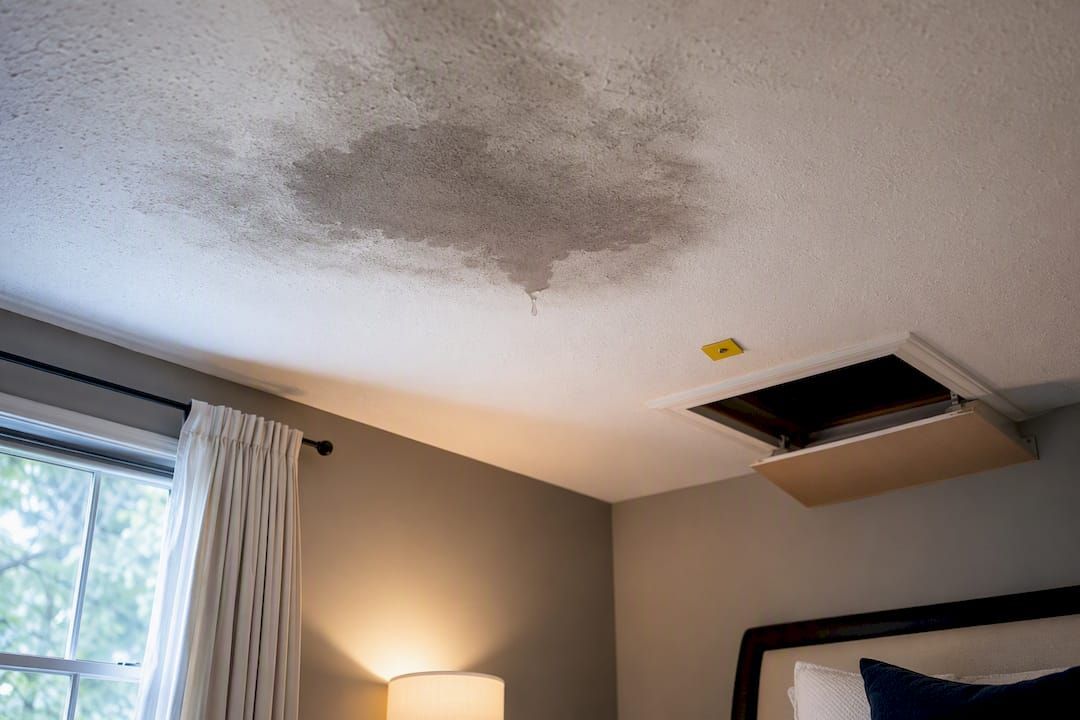
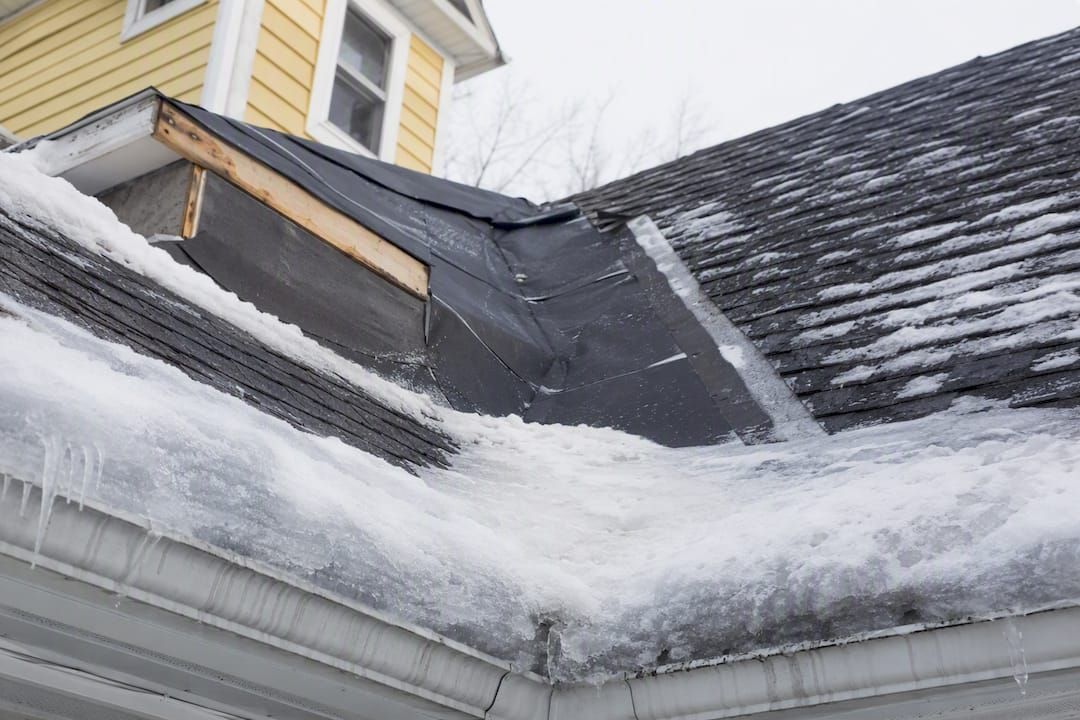
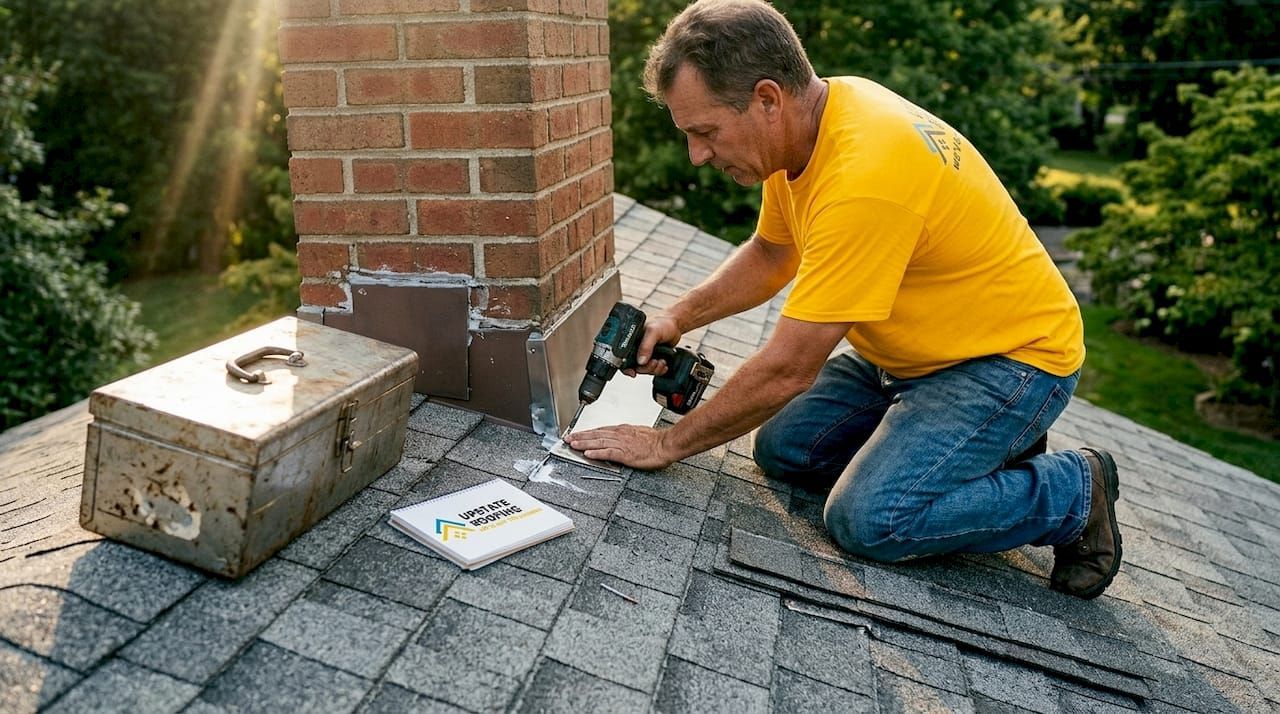
Flashing failure is among the leading causes of roof leaks. It is made from metal, typically galvanized steel, aluminum, or copper, and it is installed at every point where the roof surface meets a wall, projection, or change in direction. When it fails, water finds a path straight to your decking and framing.
Common flashing types every homeowner should know:
- Step flashing : Interlocking L-shaped pieces installed at the junction of the roof and a sidewall, woven with each shingle course
- Counter flashing : Embedded in mortar joints above step flashing on masonry walls or chimneys
- Valley flashing : Runs down the center of a valley, either open or closed, to channel concentrated water flow
- Drip edge : Installed at the eaves and rakes to direct water away from the fascia and into the gutters
- Pipe boots : Rubber or metal collars around plumbing vents that seal the penetration
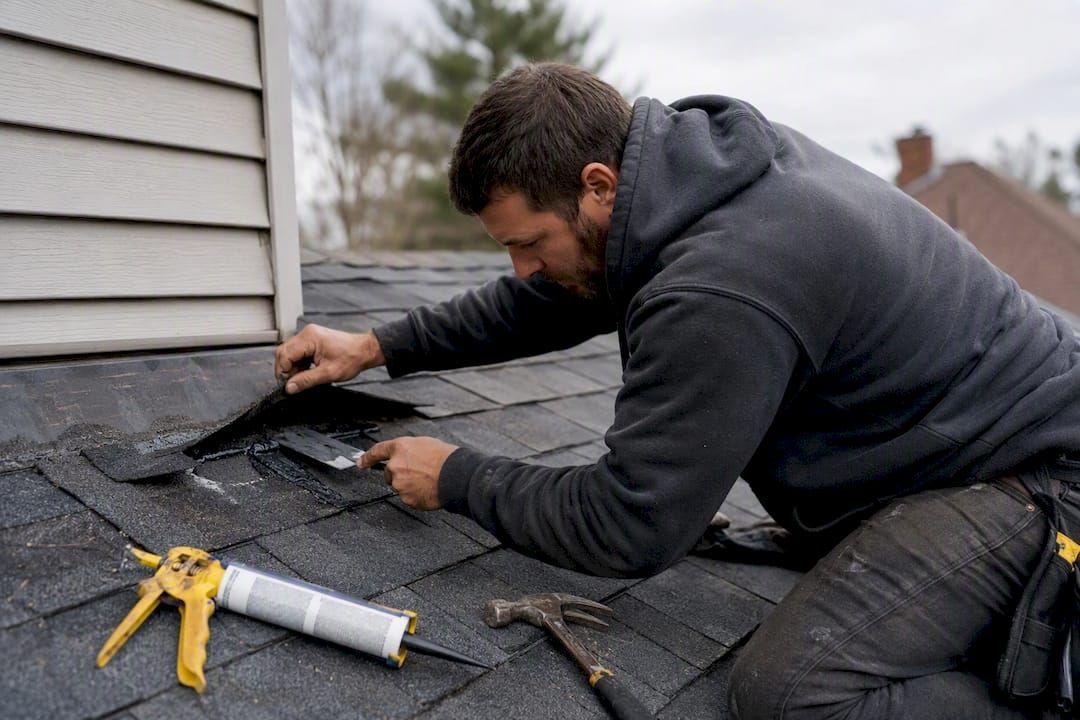
Flashing must be integrated with, not just laid over, the underlayment. The layering sequence matters. Flashing details that are installed out of sequence create laps that direct water inward instead of outward. A homeowner red flag: if you see caulk generously applied around a chimney or vent as the primary seal, that is a band-aid over a flashing problem.
The outer layer: roof covering types and what they actually do
The roof covering is the only layer you see from the street, but its job is more nuanced than it appears. Roof coverings are water-shedding, not waterproof. They redirect water downhill toward the gutters. The underlayment and flashing below handle the edge cases. Knowing this changes how you evaluate material choices.
Common residential covering options and what sets them apart:
- Asphalt shingles : The dominant choice in the U.S. Lifespans range from 20 to 50 years depending on the class. Three-tab shingles are thinner and older technology. Architectural (laminate) shingles are heavier, more durable, and far more common today.
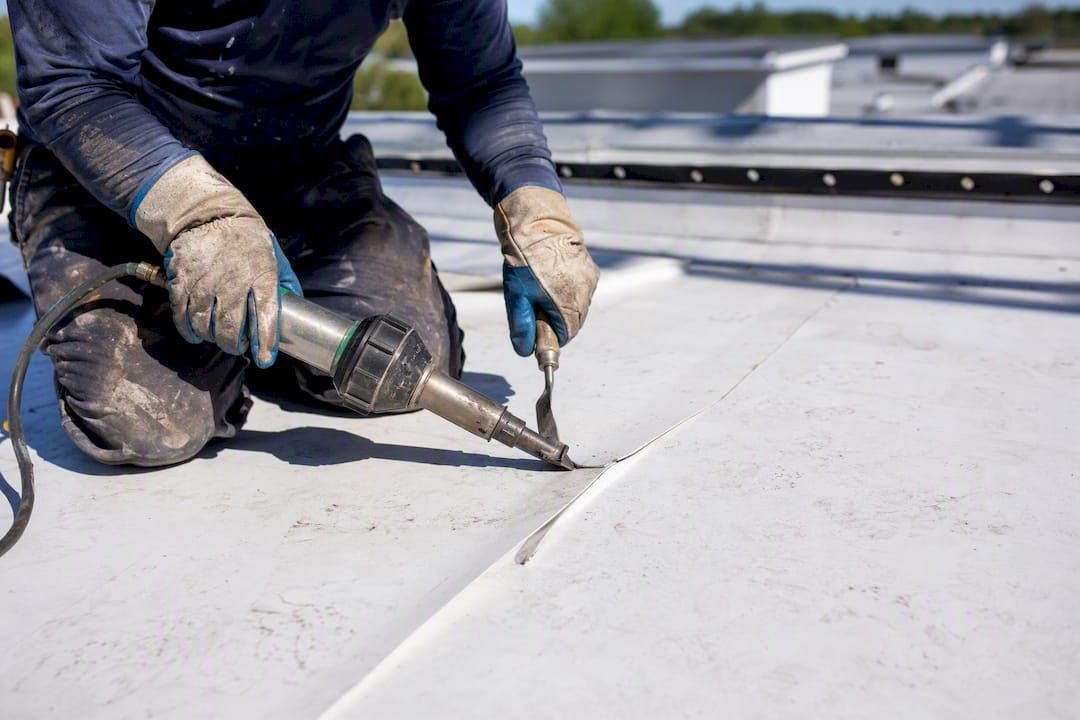
- Metal panels and standing seam : Lifespan of 40 to 70 years. Excellent for steep and low slopes, though compatibility with specific underlayments matters.
- Concrete and clay tile : Very long lifespan (50+ years), but heavy. Your framing must be engineered to support the load.
- Slate : Can last over 100 years but requires specialized installation and structural reinforcement.
- Wood shake : Attractive but requires significant maintenance and is restricted in high fire-risk zones.
One thing most homeowners miss: the cool-roof performance of your home is driven by the solar reflectance of your outer covering, not the layers beneath it. Swapping underlayment or adding insulation does not create a cool roof. If energy efficiency is a priority, the covering material and its color are what drive that result. If you are also exploring solar panel integration , your roof covering age and condition directly influence whether solar is a viable next step.
Ventilation and drainage as part of the roof system
A lot of homeowners think about ventilation as an attic issue separate from roofing. It is not. Ventilation is part of the roof assembly, and inadequate ventilation accelerates shingle and deck deterioration by trapping moisture and heat from below.
The IRC 2024 sets a minimum of 1 square foot of net free ventilation per 150 square feet of attic floor area. That ratio drops to 1:300 when at least 40% of the ventilation area is positioned as high exhaust and the rest as low intake. Both intake (soffit vents) and exhaust (ridge vents or gable vents) must be present. One without the other creates dead air zones rather than a proper airflow path.
Gutters and downspouts complete the drainage side of the system. A roof that sheds water correctly into gutters that are clogged or improperly sloped puts water back against your fascia and foundation.
Pro Tip: When planning a roof replacement, ask your contractor to evaluate your ventilation math. The square footage of intake versus exhaust should be in balance. Many older homes are under-ventilated and a new roof does not fix that automatically.
How many roof layers can you have?
This question comes up constantly when homeowners are weighing repair versus replacement. The short answer: most building codes allow a maximum of two shingle layers. Adding a third layer is not permitted under typical residential building codes. If two layers already exist, a full tear-off is required before re-roofing.
Here is a checklist to work through with your contractor before any reroofing decision:
- Ask how many existing shingle layers are on the roof right now
- Confirm whether the existing shingles are in good enough condition to act as a substrate for an overlay
- Check that the decking is sound, because overlaying onto a compromised deck only delays a larger expense
- Verify that an overlay will not void your new shingle warranty (many manufacturers require installation over a clean deck)
- Get confirmation in writing that the work complies with your local building code
- Check with your insurer. Some policies require a tear-off for full coverage on a new roof
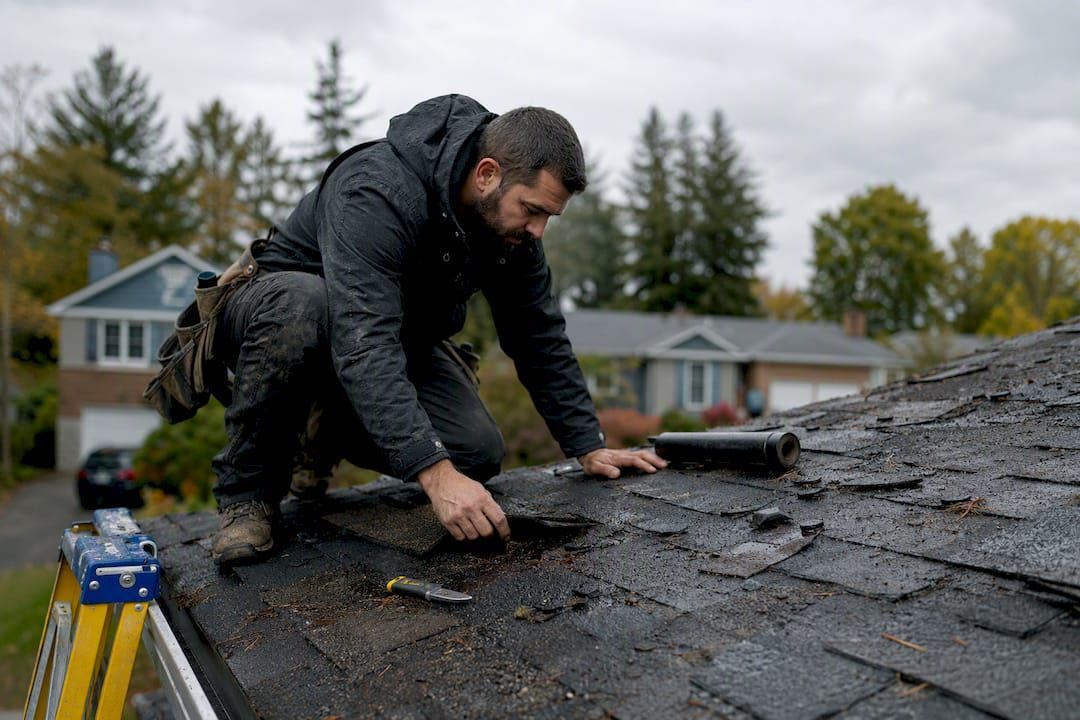
Re-roofing over existing shingles requires checking not just layer count but whether those existing shingles provide a sound, flat substrate. Curled, buckled, or badly weathered shingles underneath will telegraph through the new layer and create problems within a few years. The upfront cost savings of an overlay can easily be erased by a premature failure. A roof restoration assessment from a qualified contractor will tell you which path makes the most sense for your specific situation.
My take on the layers homeowners overlook most
I have seen a lot of roofing projects go sideways, and in my experience the cause is almost always the same. The homeowner and sometimes even the contractor focused on the visible surface and treated the layers underneath as afterthoughts.
Flashing is the component I see mishandled most often. At every complex intersection, a valley with a dormer, a chimney on a low-pitched section, a skylight flanked by sidewalls, you have multiple layers converging. Getting the sequencing wrong at even one of those spots creates a leak that looks like a shingle failure but is actually much deeper in the assembly. The fix costs far more than the original install would have if done right.
Ventilation is the other one. I have walked attics in homes where the deck is visibly darkened or soft, and the shingles above were only eight years old. Trapped moisture from inadequate intake or blocked soffit vents does more structural damage over time than most weather events. New shingles do not solve a ventilation deficit.
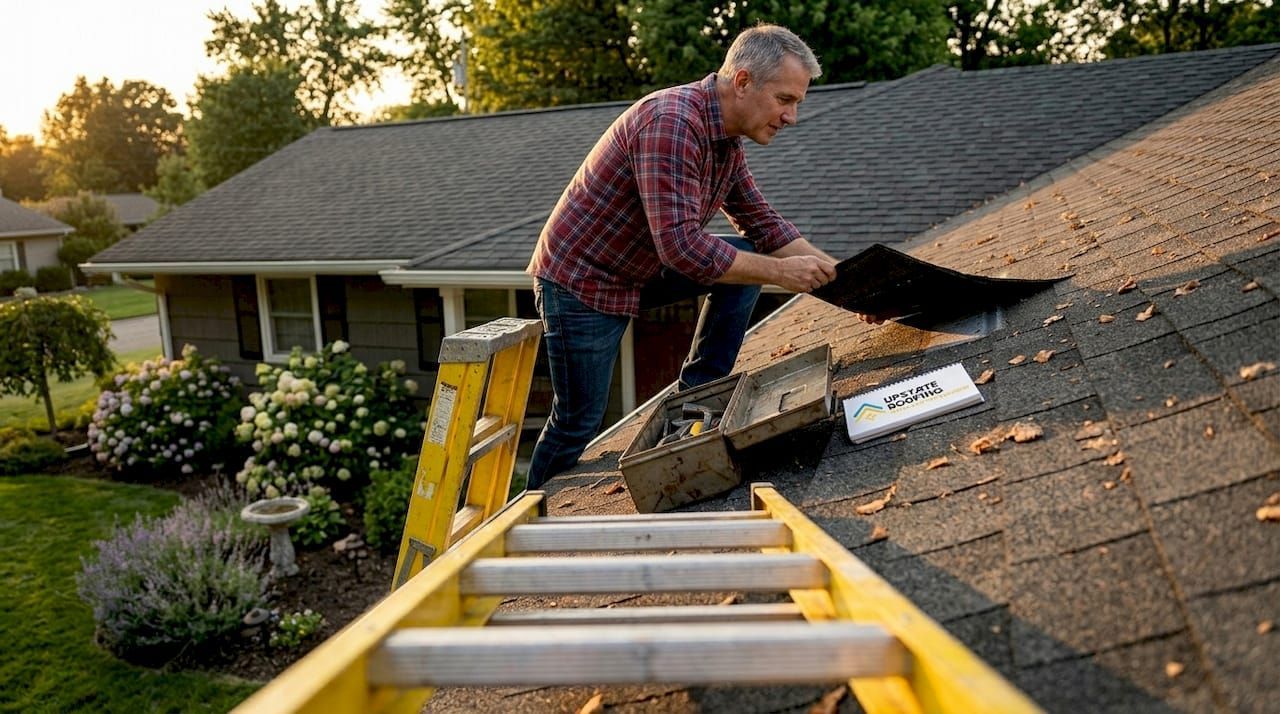
My honest advice: before you approve any roofing bid, ask the contractor to walk you through every layer they plan to install or inspect. If they cannot explain why each layer matters, that tells you something about the quality of work you are going to get.
— Cesar
Ready to put this knowledge to work?
Now that you understand how the layers of a residential roof actually function together, you are in a much better position to evaluate what your roof needs. Whether you have noticed a soft spot, seen water staining, or are simply planning ahead before the next storm season, knowing the system means you can ask the right questions and hold contractors accountable.
At Upstateroofingpros, our licensed team assesses every layer of your roof, from decking condition to flashing integrity to ventilation balance. We do not just replace shingles. We evaluate the full system. Whether you need a targeted roof leak repair , a full roof replacement , or a diagnostic roof inspection , Upstateroofingpros brings the experience and code knowledge to do it right the first time. Contact us for a consultation and get a clear picture of where your roof actually stands.
FAQ
What are the main layers of a residential roof?
A residential roof typically includes structural framing, a plywood or OSB deck, underlayment, ice and water shield at vulnerable zones, flashing at transitions and penetrations, and an outer covering such as shingles or metal. Each layer has a specific role in the overall water management system.
How many layers of shingles are allowed on a roof?
Most local building codes allow a maximum of two shingle layers on a residential roof. If two layers already exist, a full tear-off is required before any new roofing can be installed.
What is the difference between underlayment and ice and water shield?
Standard underlayment is a secondary water barrier installed across the entire deck, while ice and water shield is a self-adhering membrane placed specifically at eaves, valleys, and penetrations to seal around fasteners and block wind-driven water intrusion.
Why does roof ventilation matter for roof layer performance?
Poor attic ventilation traps heat and moisture that deteriorates the roof deck and shortens shingle life from below. Proper ventilation with balanced intake and exhaust protects every layer in the roof assembly.
Can I install new shingles over my existing ones?
You can install new shingles over one existing layer if the current shingles are flat and in sound condition and your local code permits it. However, an overlay over curled or buckled shingles will cause premature failures, and many shingle warranties require installation over a clean deck.