


What Does a Roofing Bid Include? A Homeowner's Guide
A roofing bid is a detailed, itemized proposal that spells out every material, labor cost, timeline, warranty, and payment term involved in your roofing project. Most homeowners receive one or two bids and pick the lowest number. That approach costs them thousands. Understanding what does a roofing bid include, and why each line item matters, is the difference between a project that goes smoothly and one that blows your budget. This guide breaks down every component of a standard roofing estimate so you can read, compare, and negotiate with confidence.
What does a roofing bid include? The full breakdown
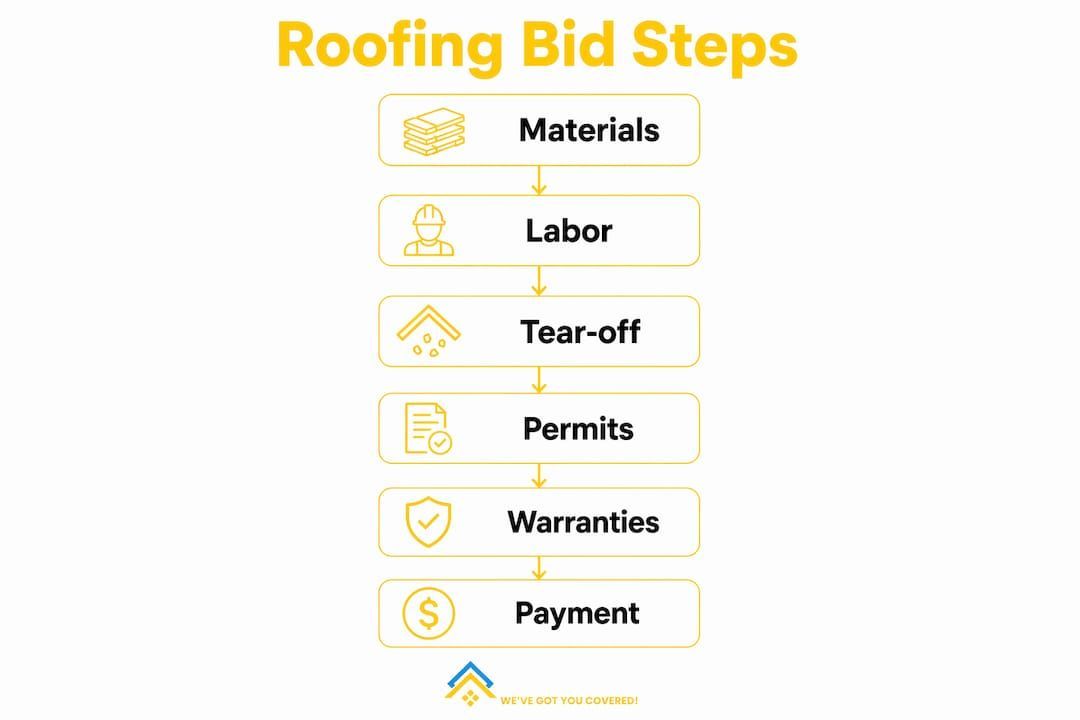
A complete roofing bid covers far more than shingles and nails. A professional estimate specifies materials by brand, product line, color, and quantity, alongside labor broken down by phase, permit fees, tear-off costs, and warranty terms. Each of these items tells you something specific about the contractor's plan and professionalism.
Here are the core line items every roofing bid should contain:
- Materials. The bid must name the exact product. "Owens Corning Duration shingles, Driftwood, 30 squares" is acceptable. "Architectural shingles" is not. The same standard applies to underlayment, ice and water shield, ridge cap, and starter strips.
- Labor. Labor costs should be broken down by task: tear-off, installation, flashing work, and cleanup. A single lump-sum labor figure gives you no way to verify what you are paying for.
- Tear-off and disposal. Removing old roofing material is a separate cost. Disposal and cleanup as defined line items prevent these from appearing as surprise add-ons after the job starts.
- Permits and inspection fees. Most cities require permits for roof replacement, with fees ranging from $100 to $500. These must appear as a separate line, not buried in overhead.
- Flashing and ventilation. Chimney flashing, pipe boots, ridge vents, and soffit vents each carry their own material and labor cost. Bids that omit these items often add them later at a premium.
- Underlayment details. Synthetic underlayment and felt paper differ significantly in cost and performance. The bid should name the product and specify coverage area.
- Warranty terms. The bid must state both the manufacturer's material warranty and the contractor's workmanship warranty with specific durations.
- Payment schedule. Industry standard deposits run 10–30% upfront, with the balance due at completion.
- Project timeline. A professional estimate includes a start date, expected completion date, and a note on weather contingency planning.
Pro Tip: Ask every contractor to provide a line-item bid in writing before any work begins. A verbal quote is not a contract and offers you no protection if the scope changes.
How to read and compare roofing bids accurately
Comparing bids on final price alone is the most common and most expensive mistake homeowners make. Effective bid comparison focuses on scope of work, not the bottom line. Two bids that differ by $3,000 may simply reflect one contractor including flashing replacement and permits while the other omits both.
Use this numbered process to evaluate bids side by side:
- List every line item from each bid. Create a simple spreadsheet. If one bid includes 12 line items and another includes 6, the shorter one is almost certainly missing scope.
- Verify material specifications match. Confirm that each bid names the same shingle brand, product line, and underlayment type. Swapping a premium shingle for a builder-grade product can cut $1,500 from a bid while cutting years from your roof's life.
- Check the waste factor. Contractors include a 10–20% material waste factor to cover cuts, overlaps, and irregular roof shapes. A bid with no stated waste factor likely underestimates materials and will require a change order.
- Confirm permits are included. If a bid does not list a permit fee, ask directly. A contractor who skips permits exposes you to code violations and insurance complications.
- Flag bids that are 30–40% lower than the others. Bids significantly below competitors almost always omit crucial scope items such as flashing replacement, quality underlayment, or proper disposal.
- Confirm cleanup responsibility. Site cleanup, magnetic nail sweeps, and dumpster rental are often missed by homeowners but should appear in every professional bid. If they are absent, get written confirmation that the contractor covers them.
Pro Tip: Request that each contractor use the same project description when bidding. Hand them a one-page scope sheet listing your roof's square footage, pitch, number of stories, and desired materials. This forces an apples-to-apples comparison.
What factors and variables affect roofing bid costs?
Several project-specific variables push costs well beyond basic materials and labor. Understanding these factors helps you anticipate why two similar-looking homes can produce very different bids.
| Variable | Impact on bid | What to look for |
|---|---|---|
| Roof pitch | Steep pitch adds 20–35% extra labor | Pitch multiplier listed in bid |
| Number of tear-off layers | Each additional layer increases disposal cost | Layers counted and priced separately |
| Site access | Multi-story or tight lots raise labor time | Access surcharge noted in bid |
| Waste factor | 10–20% added to material quantities | Percentage stated explicitly |
| Optional add-ons | Ice and water shield, skylights, chimney flashing | Listed as separate line items |
Roof pitch is the variable that surprises homeowners most. A low-slope roof is straightforward to walk and work on. A steep pitch requires additional safety equipment, slower installation, and more labor hours. That cost difference is real and should appear clearly in the bid.
Multi-layer tear-offs are another hidden cost driver. Older homes sometimes have two or three layers of shingles stacked over decades. Each additional layer adds weight to the dumpster load and time to the crew's day. A 4-layer tear-off is a fundamentally different project than a single-layer removal, and the bid must reflect that.
Optional add-ons like ice and water shield along eaves, upgraded ridge vents, or new chimney flashing are worth pricing out explicitly. Leaving them off the bid to win the job and adding them as change orders later is a common contractor tactic. Get every optional item in writing before signing.
Best practices for requesting and reviewing roofing bids
Getting a fair, complete bid starts before you contact a single contractor. Preparation on your end directly determines the quality of the estimates you receive.
- Collect 3–5 bids from licensed and insured contractors. Fewer than three bids gives you no baseline for comparison. More than five creates confusion without adding clarity.
- Verify licensing and insurance before the first meeting. Ask for a copy of the contractor's general liability policy and workers' compensation certificate. An uninsured crew working on your roof creates personal liability for you.
- Request fully itemized written estimates. A one-page bid with a single total price is not an estimate. It is a number. Push for line-item detail on every material, labor phase, and fee.
- Clarify warranty terms in writing. Warranty terms vary from 5 to 10 years for workmanship. Vague claims like "lifetime warranty" require written clarification on what is actually covered and for how long.
- Avoid contractors who demand full payment upfront. The industry standard is a 10–30% deposit with the balance due at project completion. Full upfront payment removes your leverage if problems arise.
- Ask about local permit requirements. Your municipality may require a licensed contractor to pull the permit. Confirm this before signing, and never let a contractor suggest you pull your own permit to save money.
- Use a roof inspection checklist as a reference. A pre-bid inspection checklist helps you document existing conditions and gives every bidder the same starting point.
Understanding the full scope of roof replacement before you solicit bids also helps you ask better questions and catch omissions faster.
Key Takeaways
A roofing bid must include itemized materials, labor by phase, tear-off costs, permits, warranty terms, and a payment schedule to give homeowners a complete and accurate picture of project costs.
| Point | Details |
|---|---|
| Itemized materials are non-negotiable | Every bid must name the exact shingle brand, underlayment type, and quantity ordered. |
| Scope comparison beats price comparison | Two bids differ by thousands when one includes flashing and permits and the other does not. |
| Waste factor signals professionalism | A stated 10–20% waste factor shows the contractor has calculated materials accurately. |
| Payment schedule protects you | Industry standard is 10–30% deposit upfront; full payment before completion is a red flag. |
| Permits must be itemized | Permit fees of $100–$500 belong on the bid as a separate line, not hidden in overhead. |
What I've learned from watching homeowners read roofing bids
The most consistent mistake I see is homeowners treating a roofing bid like a restaurant check. They look at the total, wince or smile, and move on. Nobody reads the line items. That habit is exactly what some contractors count on.
The second mistake is trusting verbal assurances over written scope. A contractor who says "don't worry, we'll take care of the flashing" but does not write it into the bid has made you a promise with no legal weight. Every commitment belongs in the document.
The third mistake is rushing. Homeowners often contact contractors after a storm, feel pressure to act fast, and sign the first reasonable-sounding bid. That urgency is understandable. It is also expensive. Taking three extra days to collect two more bids and read them carefully almost always pays off.
The bid is the contract's foundation. A vague bid produces a vague contract. A detailed bid gives you something to hold the contractor accountable to when the job is done. Read every line. Ask about every omission. The contractors who give you clear answers are the ones worth hiring.
— Cesar
Upstateroofingpros makes transparent bids standard practice
Upstateroofingpros provides fully itemized written estimates for every residential and commercial roofing project. Every bid names exact materials, breaks down labor by phase, lists permit fees separately, and states both manufacturer and workmanship warranty terms in plain language.
Whether you need roof repair after storm damage or a full roof replacement with GAF Solar Shingles or TPO roofing, Upstateroofingpros gives you the detail you need to make a confident decision. The team is fully licensed and insured, and no project starts without a signed, line-item contract. Contact Upstateroofingpros to schedule your estimate and see exactly what a transparent roofing bid looks like.
FAQ
What should every roofing bid include?
Every roofing bid must include itemized materials with brand names and quantities, labor broken down by task, tear-off and disposal fees, permit costs, warranty terms, a payment schedule, and a project timeline with start and completion dates.
How many roofing bids should I get?
Collect 3–5 bids from licensed and insured contractors. Fewer than three bids gives you no reliable baseline, and bids that come in 30–40% below the others almost always omit key scope items.
What is a normal deposit for a roofing project?
The industry standard deposit is 10–30% of the total project cost, with the balance due at completion. Any contractor requesting full payment before work begins is a significant red flag.
Why do roofing bids include a waste factor?
Contractors add a 10–20% material waste factor to account for cuts, overlaps, and irregular roof shapes. A bid that does not state a waste factor likely underestimates the materials needed and may require a costly change order mid-project.
Are permits always included in roofing bids?
Most cities require permits for roof replacement, and permit fees of $100–$500 should appear as a separate line item in every professional bid. If a bid omits permit fees entirely, ask the contractor directly whether they plan to pull a permit.