

Commercial Gutter System Maintenance for Property Managers

May 25, 2026

Share this article

Commercial Gutter System Maintenance for Property Managers

Neglected gutters are one of the most underestimated threats to a commercial building. Water that cannot drain properly backs up against the fascia, saturates the roof membrane, and finds its way into walls, foundations, and tenant spaces. Commercial gutter system maintenance is not a task you schedule when something looks wrong. It is a scheduled, documented, regulatory-aware program that protects the entire building envelope. This guide covers preparation, cleaning procedures, troubleshooting, and performance optimization so you can manage your gutter systems with confidence.

Key takeaways

Point Details
Schedule maintenance twice yearly at minimum Late spring and late fall cleanings prevent the worst seasonal debris buildup on most commercial properties.
OSHA compliance is non-negotiable Fall protection equipment and trained personnel are legally required for multi-story commercial gutter work.
Document every service visit Maintenance logs protect your insurance claims and prove regulatory compliance when water damage occurs.
Gutter guards still need upkeep Guards reduce debris but do not eliminate the need for periodic inspection and clearing.
Integrate gutter and roof care A coordinated maintenance plan catches compounding problems before they turn into structural repairs.

Commercial gutter system maintenance: what sets it apart

Most property managers who have only managed residential properties are caught off guard the first time they deal with a commercial gutter system. The scale alone changes everything. Commercial buildings can have hundreds of linear feet of guttering, multiple drain outlets, internal downspout systems, and complex parapet wall drainage configurations that a typical residential home simply does not have.

What commercial systems typically include:

  • Box gutters and built-in gutters integrated into the roofline
  • Industrial-size K-style or half-round gutters along eave edges
  • Internal roof drains connected to underground storm drain networks
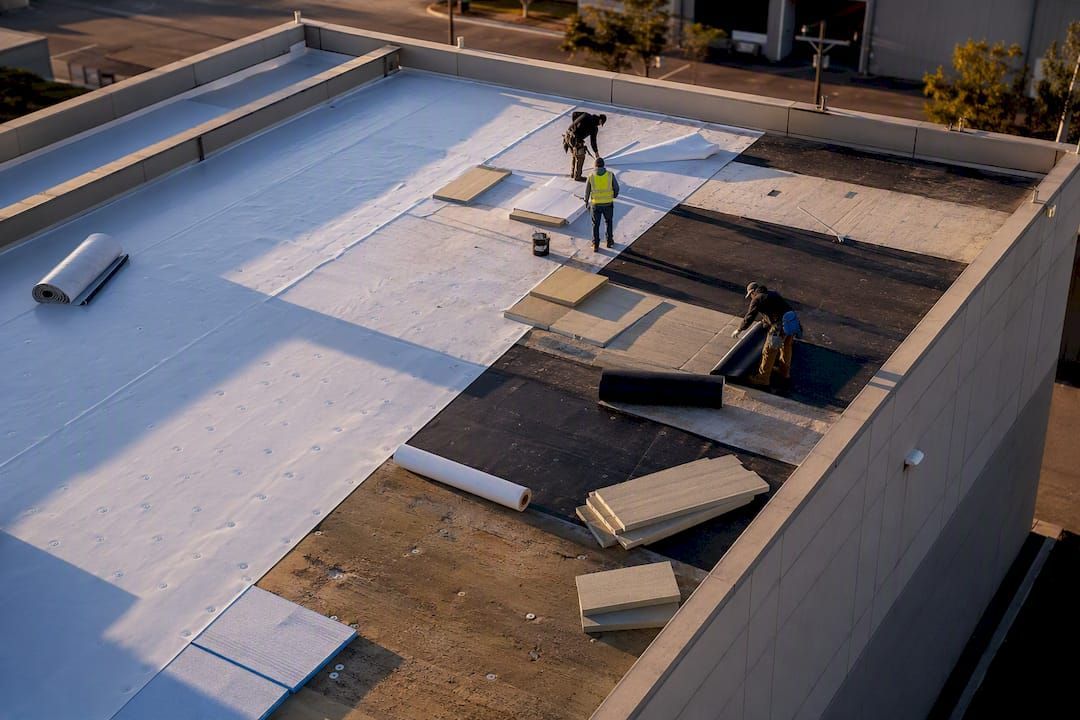
  • Scuppers and overflow drains on flat or low-slope roofs
  • Downspouts that may run inside the building structure

Understanding what type of system you have before scheduling any maintenance is the first step. A commercial roofing system on a flat-roof warehouse operates very differently from a sloped-roof office building with exposed gutters.

Most commercial properties require gutter cleaning at least twice per year, with buildings under heavy tree cover or with flat roofs needing quarterly service to prevent drainage failure. Before any work begins, confirm you have the right access equipment. Boom lifts, scissor lifts, and OSHA-certified fall protection markedly reduce injury risk and enable efficient cleaning at scale.

Pro Tip: Before your first maintenance cycle, create a drainage map of your property. Locate every scupper, roof drain, downspout outlet, and cleanout. This map will save significant time during every future inspection and will be invaluable if you ever need to diagnose a drainage failure quickly.

Gutter type Common use Key maintenance concern
K-style (fascia-mounted) Sloped-roof commercial buildings Debris buildup, hanger failure
Box gutter Older commercial and industrial buildings Rust, seam separation, ponding
Internal roof drain Flat and low-slope roofs Clogged strainers, slow drainage
Scupper Parapet wall flat roofs Blockage from debris and nesting

How to clean and inspect commercial gutters safely

Safety comes first. This is not a general caution. OSHA requires comprehensive fall protection plans for commercial gutter work above 15 feet, including training records, equipment inspection documentation, and emergency protocols. If you are hiring a contractor, confirm their fall protection compliance before they step onto the property. If your team is doing the work, written safety plans and equipment checks are mandatory before anyone gets on a lift or a ladder.

Step-by-step cleaning process for commercial gutters:

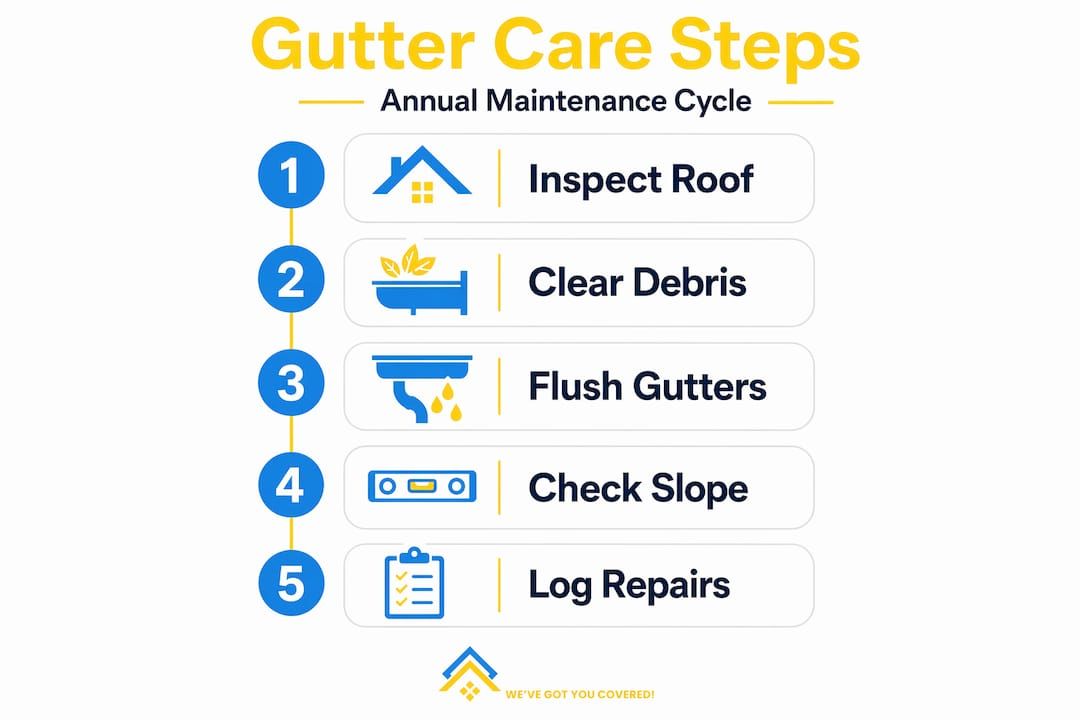
  1. Set up safety perimeters. Barricade ground-level areas below the work zone. Falling debris is a liability. Post signage and restrict access for the duration of the work.
  2. Position access equipment. Use a boom lift or scissor lift for multi-story buildings. Ladders are acceptable for single-story sections but require a second person as a spotter.
  3. Remove loose debris by hand or scoop. Start at the high end of each gutter run and work toward the downspout. Bagging debris as you go prevents it from washing into the downspout during flushing.
  4. Flush with water. Use a pressure washer or high-volume garden hose to push remaining sediment toward the downspout. Watch the flow speed. Slow movement signals a partial blockage.
  5. Clear the downspouts. Feed a plumber's snake or high-pressure nozzle down each downspout. If a downspout is completely blocked, apply water pressure from the bottom up to dislodge the clog.
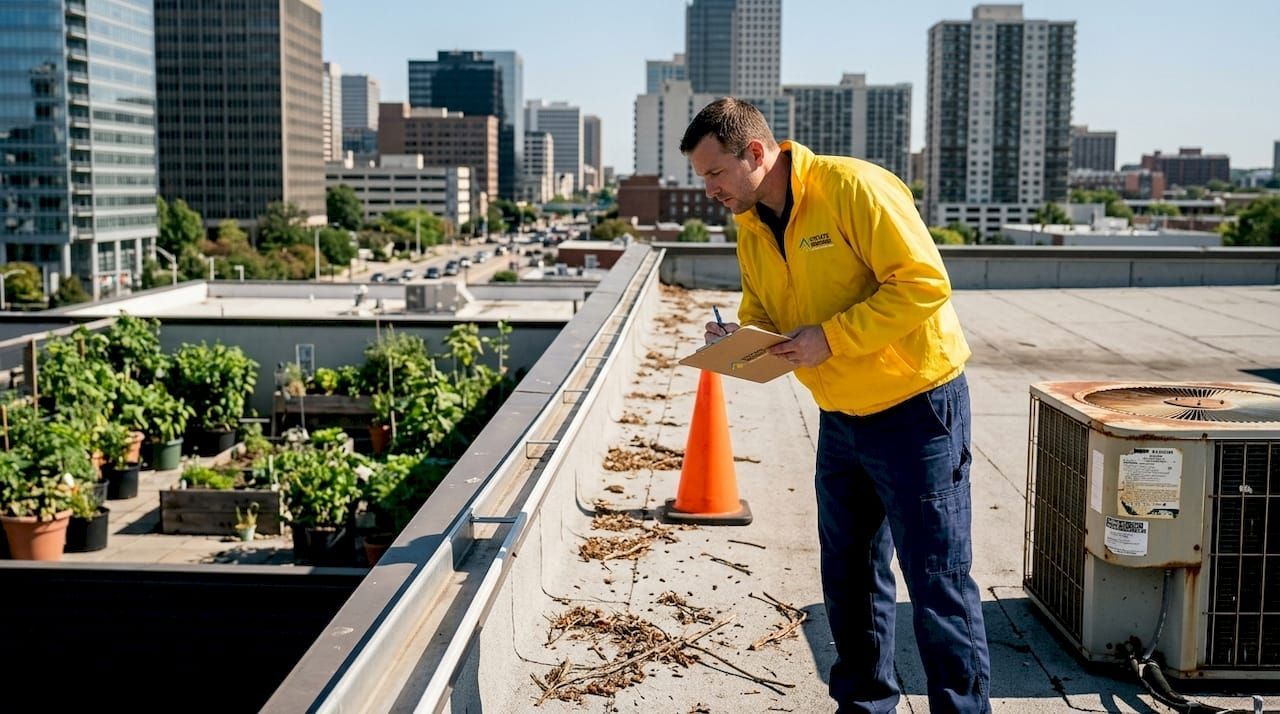
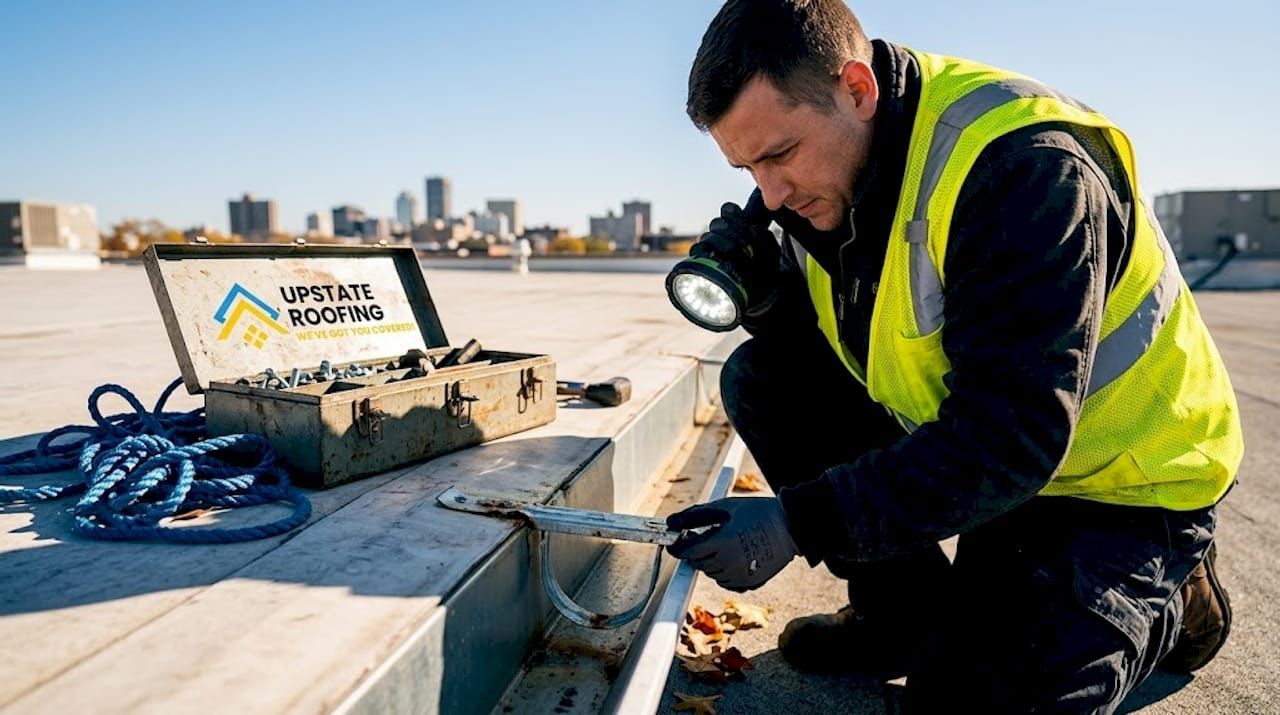
  6. Inspect as you clean. This is the part most crews rush. While you are at gutter height, look for rust spots, cracks, open seams, loose hangers, and separation from the fascia.
  7. Document everything you find. Photographs with time stamps and a written condition report for each section create the maintenance record your insurance provider may eventually require.

What to look for during the inspection:

  • Rust staining or discoloration inside the gutter channel
  • Sections pulling away from the fascia or leaning outward
  • Open seams, cracks, or holes, even small ones
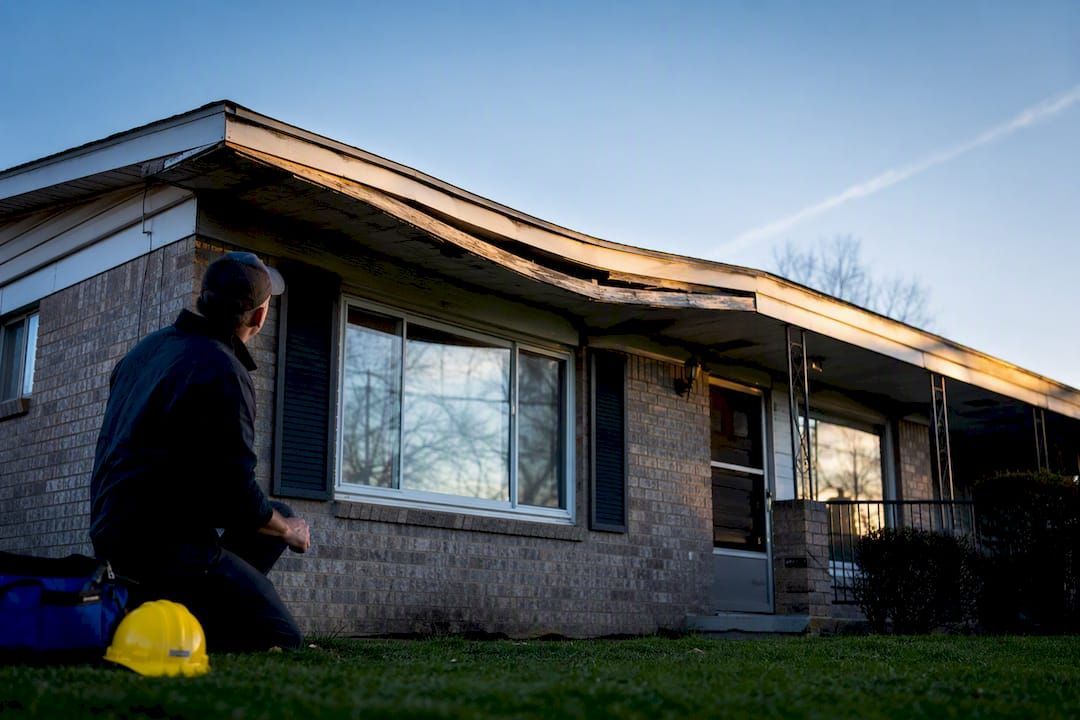
  • Staining on the exterior wall below the gutter, which indicates overflow
  • Soft or rotting fascia board behind the gutter mounting points

Sagging or pulling gutters often point to undersized or failing hangers. Hangers spaced too far apart, or older spike-and-ferrule systems, fail under the weight of wet debris and standing water. Catching this early costs a fraction of what it costs after a section collapses and pulls the fascia with it.

Pro Tip: After flushing, stand at ground level and watch where the water exits each downspout. It should discharge several feet away from the building foundation. If it pools near the base of the wall, the underground connection or splash block needs attention before the next rain season.

Troubleshooting common issues and costly mistakes

Even well-maintained commercial gutter systems develop problems. Knowing what you are looking at, and when to stop and call a professional, prevents small issues from becoming major water damage events.

Signs that require professional intervention:

  • Multiple sections sagging simultaneously, which suggests a systemic hanger failure
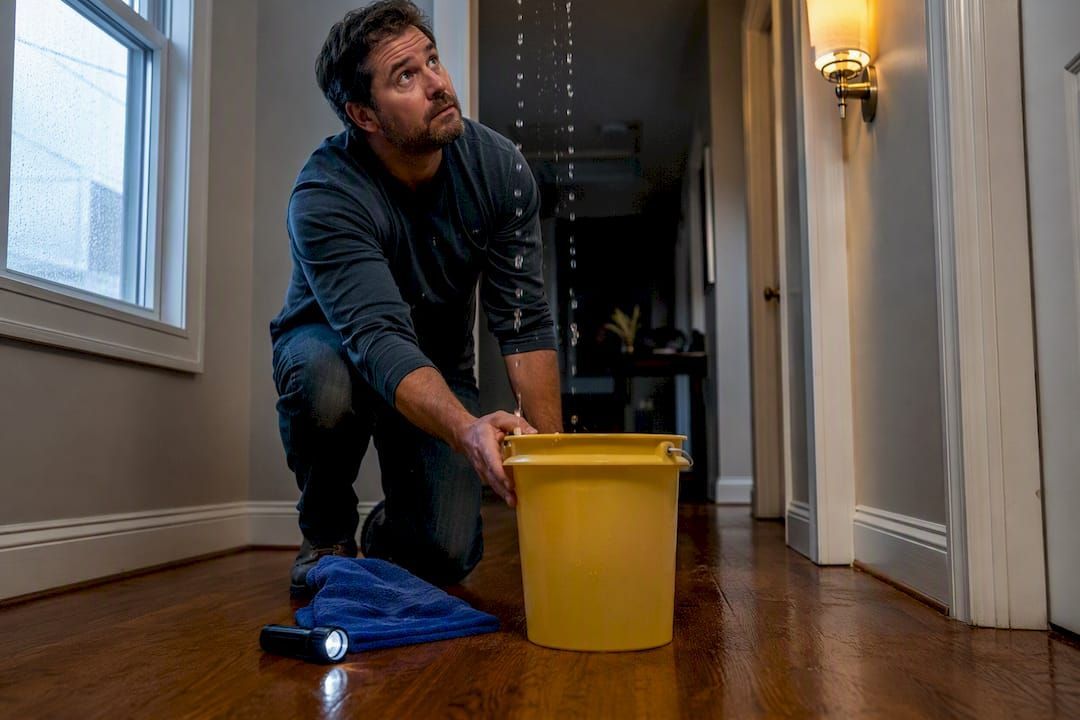
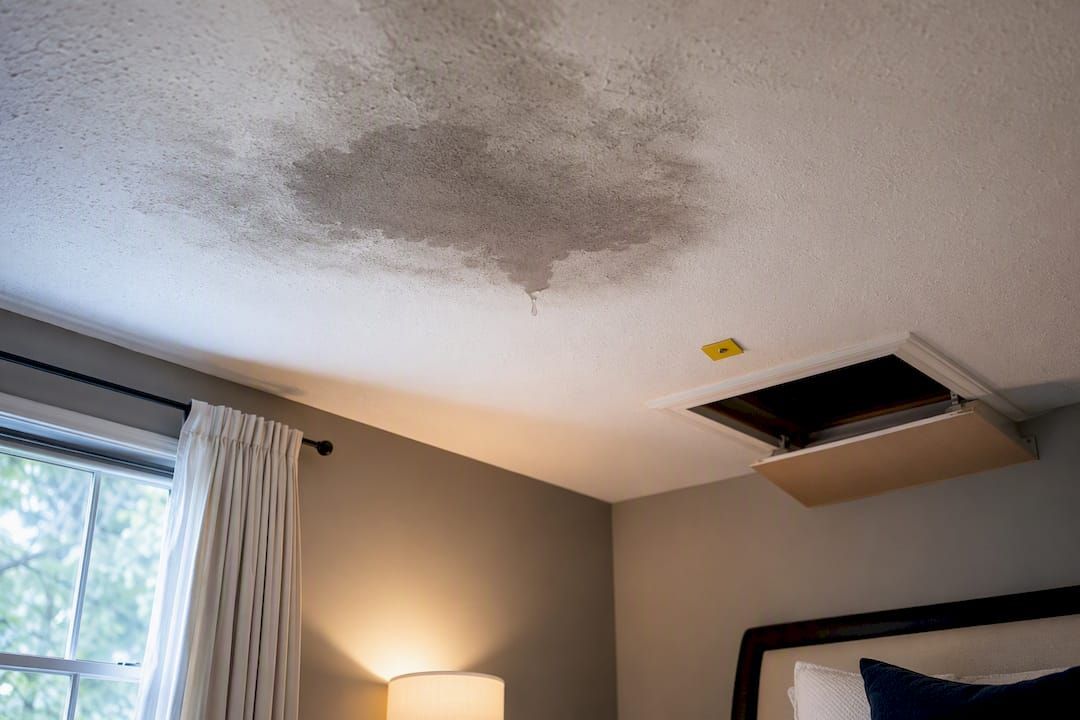
  • Water staining on interior ceilings or walls directly below roof drainage lines
  • Visible separation between the gutter and the building at multiple points
  • Downspouts that drain slowly even after cleaning, pointing to a failed underground connection
  • Any gutter section showing extensive rust through or holes larger than a few inches

The single most common mistake property managers make during commercial gutter upkeep is treating it as a one-time correction rather than a scheduled program. One cleaning after a visible problem does not constitute a maintenance program, and it will not satisfy an insurance adjuster. Insurance claims can be denied if the property owner cannot provide documented proof of regular professional maintenance in the six months before a water damage event.

Maintenance frequency is not one size fits all. A retail strip center surrounded by oak trees in a region with heavy fall leaf drop needs cleaning in October, November, and again after the last freeze. A concrete industrial building with minimal landscaping may genuinely be fine with two cleanings per year. Calibrate your schedule to the actual conditions on your property, not a generic recommendation.

Gutter guards are worth addressing directly because they generate a lot of confusion. They do reduce how quickly debris accumulates. However, gutter guards still require periodic inspection and cleaning to stay effective. Fine debris, pine needles, and seed pods work through or under most guard systems. Guards extend the interval between cleanings. They do not eliminate the need for gutter cleaning services entirely.

One more area property managers often overlook: lease responsibilities. In multi-tenant commercial buildings, the maintenance obligation may sit with the property owner, the tenant, or be split. Ambiguity here creates finger-pointing when water damage occurs. Get it in writing before a problem surfaces.

Optimizing your gutter system's long-term performance

Reactive maintenance keeps gutters functional. Proactive optimization keeps the whole building protected. The difference shows up in your repair costs over a five to ten year period.

Optimization action Benefit Timing
Verify gutter slope annually Prevents ponding and corrosion Spring inspection
Inspect after every major storm Catches debris and damage before next rain Within 48 hours of event
Coordinate with roof maintenance Catches membrane and flashing issues together Semi-annual
Review hanger spacing and type Prevents systemic sagging failure Every 3 years or after storm
Update maintenance logs consistently Protects insurance coverage After every service visit

Proper gutter slope is critical for water flow, with the ideal pitch sitting at one quarter inch per ten feet toward the downspout. When slope is insufficient, water sits in the channel. Standing water accelerates corrosion, creates breeding conditions for mosquitoes, and adds structural load to the hangers.

After storms or heavy rain, immediate gutter inspection prevents debris accumulation and overflow risk during the next weather event. This does not mean a full cleaning every time it rains. It means a visual check from ground level or a quick walkthrough of roof drains to confirm nothing is blocking flow.

Integrating your gutter inspection checklist with your roof maintenance plan is one of the highest-value changes you can make to your building maintenance program. Gutters and roofing systems fail together more often than they fail independently. A clogged gutter causes water to back up under the roof membrane. A failing membrane lets water bypass the gutter entirely. Addressing both in a single scheduled visit saves time and surfaces the full picture faster.

Pro Tip: Keep a physical or digital maintenance log organized by gutter section, not just by visit date. When a specific section develops repeat problems, the section-level history tells you whether you need a repair, a replacement, or a drainage redesign. Visit-date logs hide this pattern.

My honest take on commercial gutter maintenance

I have seen the same scenario play out more times than I can count. A property manager inherits a building, gets through the first year without major issues, and starts viewing gutter cleaning as a line item to cut when the budget gets tight. Then a single wet winter produces a ceiling collapse in a tenant space, and the repair cost exceeds what ten years of preventive maintenance would have cost.

What I have learned is that commercial systems have a deceptive quality. They look fine from the ground. You cannot see a clogged internal drain from the parking lot. You cannot see a hanger pulling loose from inside the building. By the time the problem is visible from ground level, it is already expensive.

The complexity also surprises people. I have worked with property managers who managed residential portfolios for years and genuinely did not realize that their new commercial flat roof had internal drains with no exterior gutters at all. That completely changes the maintenance approach. Knowing your system type is not optional.

My practical advice: treat your first maintenance cycle as a diagnostic. Hire professionals with commercial experience, not a residential gutter cleaning service that occasionally takes commercial jobs. The difference in knowledge and equipment is significant. Professionals cleaning at commercial scale bring the right lifts, document findings properly, and can tell you whether what they found is a cleaning issue or a repair issue. That distinction matters enormously for your budget planning and for your coverage with your insurance carrier.

— Cesar

Keep your building protected year-round

If you manage a commercial property in the Sacramento or Roseville area and want gutter maintenance handled by a team that understands both the safety requirements and the documentation standards your insurance carrier expects, Upstateroofingpros has you covered.

Upstateroofingpros provides commercial gutter cleaning and repair services backed by licensed professionals who work on commercial roofing systems daily. From routine seasonal cleanings to gutter repair and replacement , the team handles the full scope of commercial gutter upkeep. And because gutters and roofing systems are closely connected, scheduling a professional roof inspection alongside your gutter service gives you a complete picture of your building's drainage health. Annual maintenance contracts are available and reduce the per-visit cost significantly compared to one-time calls.

FAQ

How often should commercial gutters be cleaned?

Commercial properties require cleaning at least twice per year, typically in late spring and late fall. Buildings with heavy tree coverage or flat roof drainage systems may need quarterly service.

What safety equipment is required for commercial gutter work?

OSHA mandates fall protection for any commercial gutter maintenance on buildings above 15 feet, including harnesses, guardrails, and aerial lift equipment. A written safety plan and trained personnel are required by law.

Will gutter guards eliminate the need for cleaning?

No. Gutter guards reduce debris accumulation but do not eliminate the need for inspection and periodic cleaning. Fine debris and seed pods still pass through most guard systems over time.

How much does commercial gutter cleaning cost?

Professional cleaning typically runs between $0.75 and $1.50 per linear foot depending on building height and system complexity. Annual maintenance contracts reduce the per-visit cost compared to one-time calls.

Why do documented maintenance records matter for insurance?

Insurance claims for water damage can be denied if the property owner cannot prove regular professional maintenance in the preceding six months. Detailed logs with dates, photos, and service notes are your primary protection.

Recommended

Recent Posts

men working on a residential roof
May 26, 2026
Discover how residential roof layers explained can save you money. Understand your roof's components for smarter repairs and lasting protection!
Woman holding a clipboard in front of a flower-filled house with a blue roof and bicycle nearby
May 24, 2026
Discover what a GAF roofing system truly is. This guide reveals essential components, warranty benefits, and tips for homeowners.
May 22, 2026
Discover the critical role of building manager roof inspection. Learn how proactive checks save money and protect your property.
upstate roofing inspection of roof
May 21, 2026
Discover the vital role of gutters on your roof and home. Learn how proper gutter systems protect your property from water damage and maintain its integrity.
May 17, 2026
Discover essential strategies for an effective industrial facility roof inspection. Prevent costly repairs and protect your assets today!
tpo roof experts in sacramento
May 16, 2026
Discover what TPO roofing is and how it benefits your property. Learn about its durability, energy efficiency, and installation tips here!
gutter cleaning and installation in sacramento
May 15, 2026
Discover how gutter cleaning works to protect your home. Learn the essential tools and methods to prevent costly repairs and leaks!
commercial roofing company in sacramento
May 13, 2026
Discover essential roofing system components commercial buildings need. Ensure longevity and compliance with our comprehensive guide!
Leafguard guter service , installaion and maintenance
May 13, 2026
Discover our essential gutter repair DIY guide to prevent costly water damage. Act fast and safeguard your home from expensive repairs!
Man in a yellow shirt using a long-handled tool to clean house gutters beside a garden
May 12, 2026
Discover the role of a roof restoration program in extending your roof's life and saving money. Learn to protect your home today!
Show More