
What Does Roof Replacement Involve: A Homeowner's Guide
Roof replacement is the complete process of removing your existing roofing system down to the deck, repairing any structural damage, and installing new layers of underlayment, flashing, shingles, and ventilation components to restore full weather protection. Understanding what does roof replacement involve helps you avoid surprises, ask the right questions, and protect one of your largest investments. The industry term for this scope is a full roof system replacement, and it covers far more than swapping out shingles. Upstateroofingpros breaks down every stage so you can make a confident, informed decision.
What are the core steps in a roof replacement process?
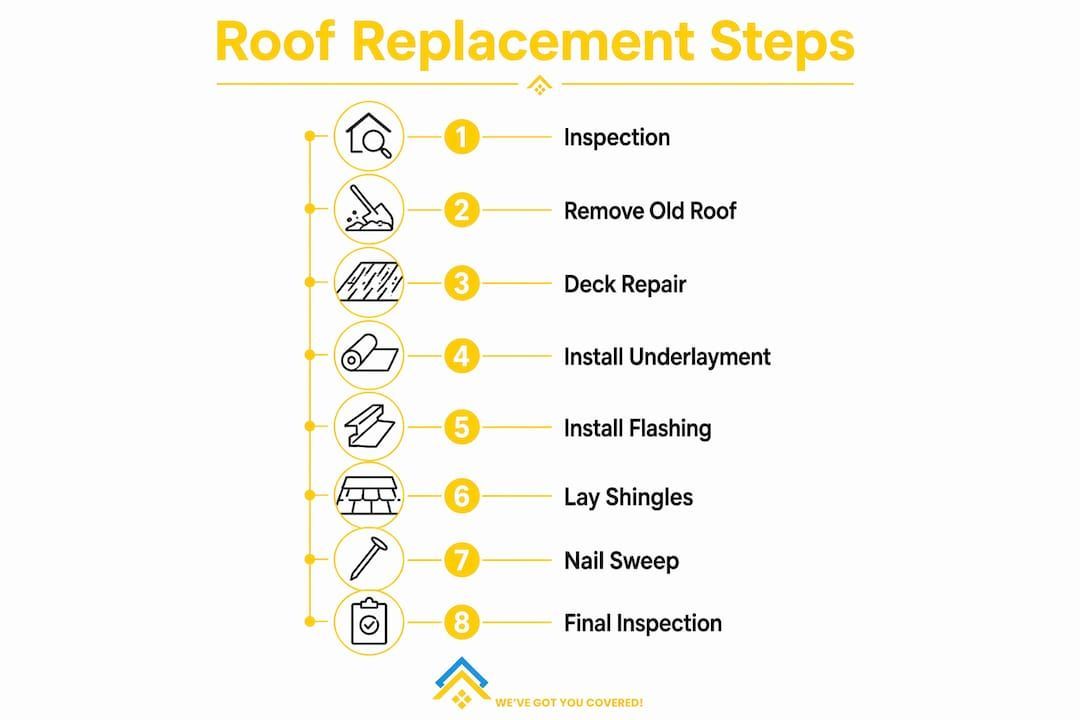
A full roof replacement follows a specific sequence, and skipping any step creates problems that show up years later. Here is exactly what happens from start to finish.
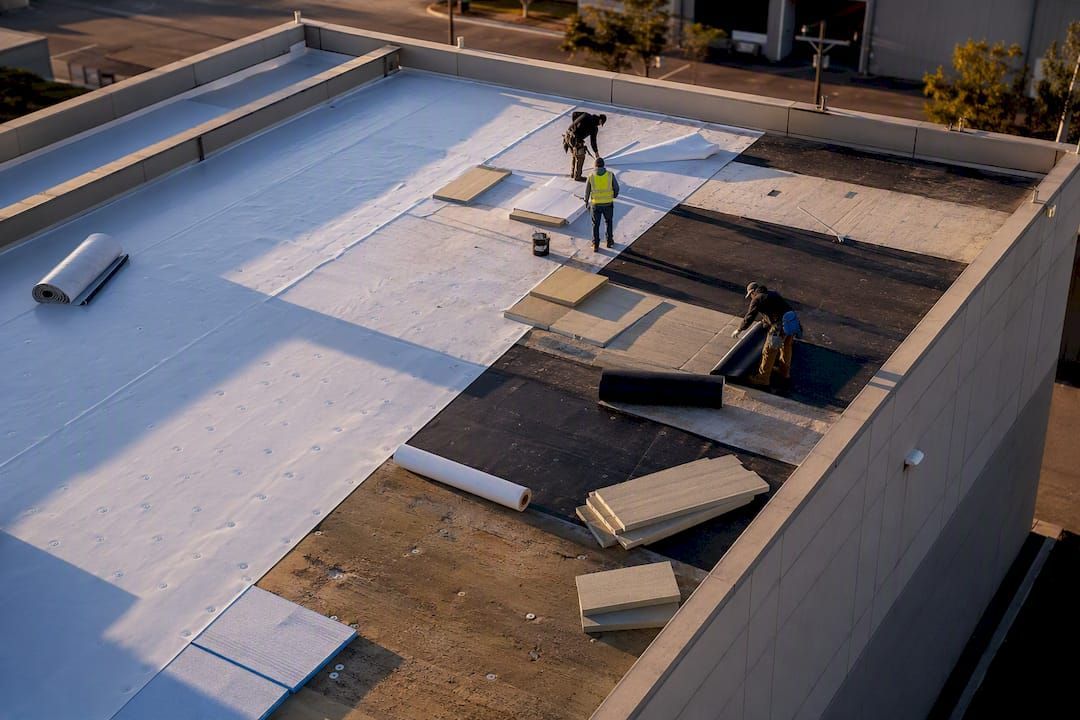
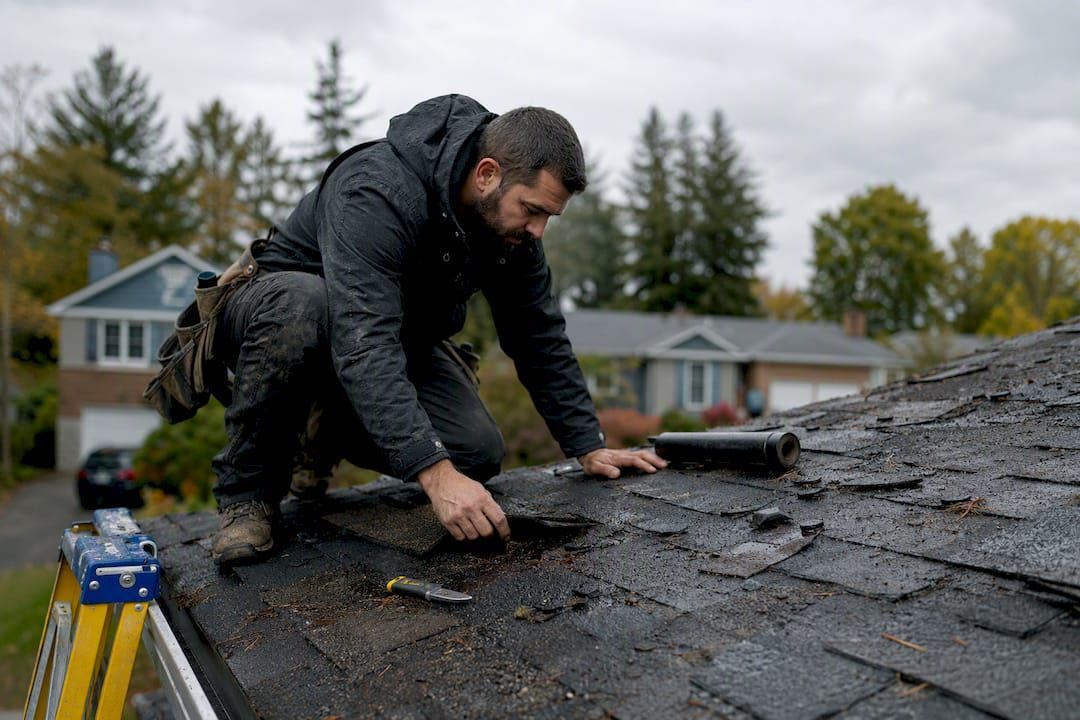
- Tear-off of old materials. Crews remove all existing shingles, underlayment, and flashing down to the bare deck. This is not optional on most homes. Building codes limit roofs to a maximum of two shingle layers, and full tear-off is required beyond that threshold. Even when a second layer is technically allowed, tear-off exposes the deck for inspection, which prevents hidden rot from becoming a structural failure.
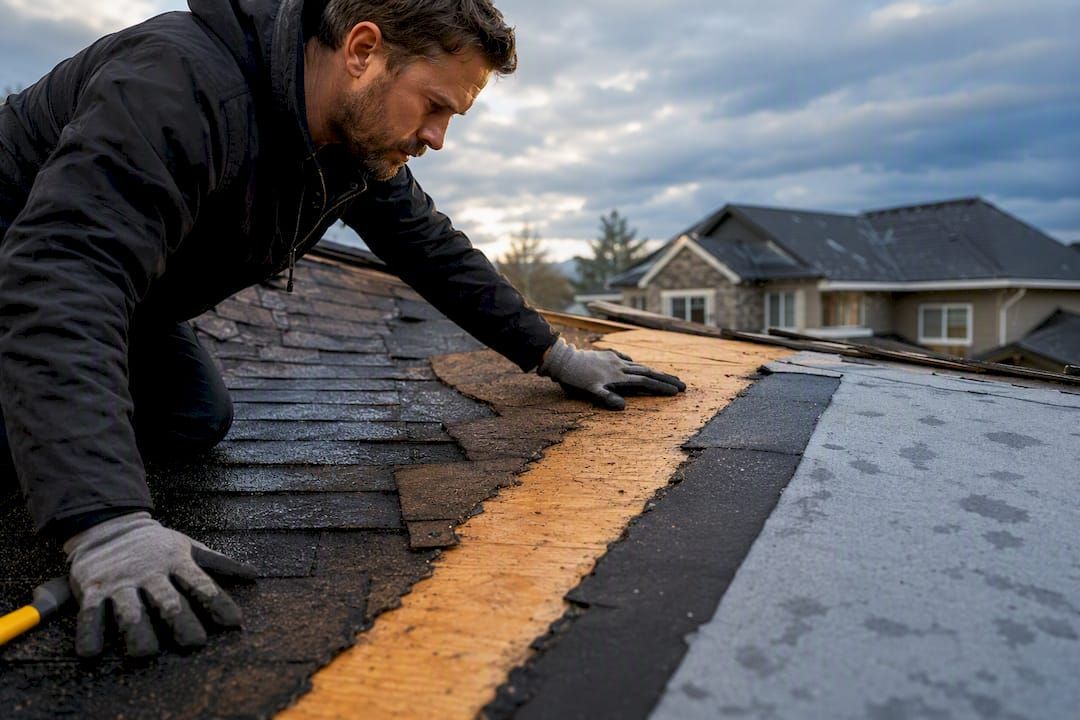
- Nail removal and deck inspection. Every old nail gets pulled or hammered flush. The deck, typically oriented strand board (OSB) or plywood, is checked for soft spots, rot, and water damage. Damaged sheets are replaced before any new material goes down.
- Drip edge installation. Metal drip edge is fastened along the eaves and rakes first. This directs water away from the fascia and into the gutters, preventing rot at the roof's edges.
- Synthetic underlayment installation. Modern synthetic underlayment replaces traditional felt paper on most quality installations. It is lighter, more tear-resistant, and provides a better moisture barrier during the installation window.
- Shingle installation. Shingles are laid in overlapping rows from the eave upward. Proper nail placement and overlap depth are specified by the manufacturer and affect both wind resistance and warranty validity.
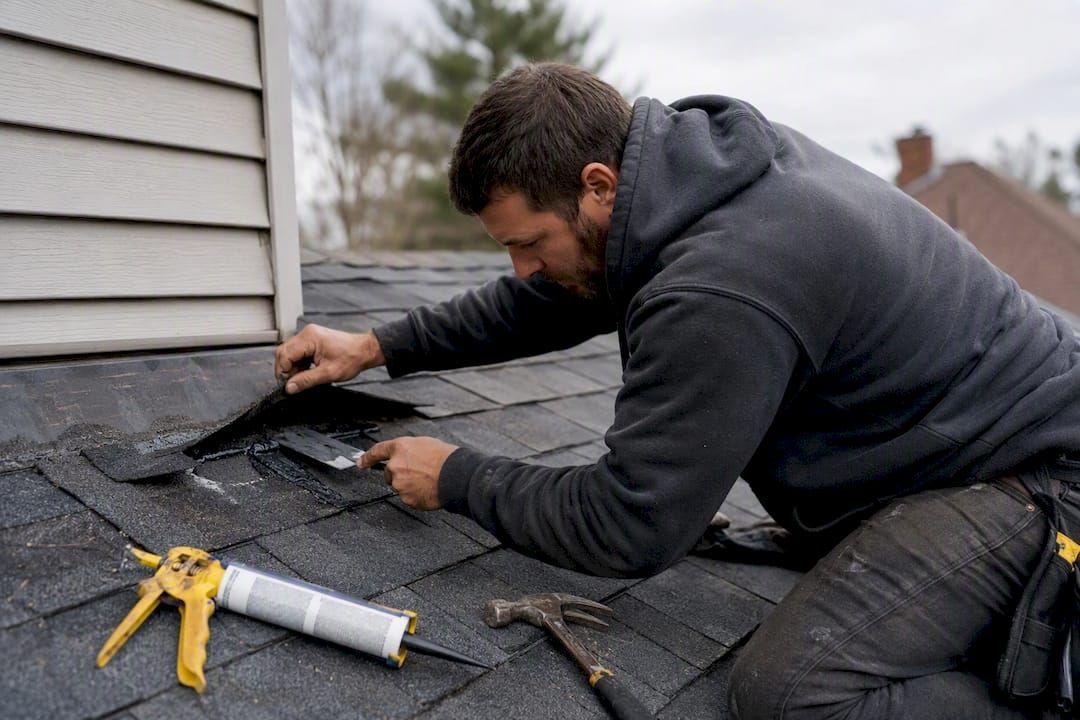
- Flashing integration. Step flashing, valley flashing, and pipe boot flashing are installed around every penetration and transition point. Proper flashing installation is one of the most critical technical steps to prevent leaks, yet it is also one of the most commonly cut short by low-bid contractors.
- Ridge cap and ventilation. Ridge caps seal the peak of the roof. Ridge vents, combined with soffit vents, create the airflow that prevents heat and moisture buildup in the attic, which directly extends shingle life.
- Magnetic nail sweep. After cleanup, a magnetic roller sweeps the yard, driveway, and landscaping for stray nails. Magnetic nail sweep is mandatory to protect vehicles, pets, and bare feet. Ask your contractor to confirm this step is in the written scope before signing anything.
Pro Tip: Request a written checklist from your contractor that mirrors these eight steps. Any scope that omits the nail sweep or deck inspection is a red flag worth addressing before work begins.
When does repair cost more than replacement?
The decision between patching and replacing comes down to three factors: roof age, damage percentage, and the math on future repair costs.
Most asphalt shingles last about 20 years. A roof at year 18 with a leaking section is not a repair candidate. You are paying to extend the life of a system that is already near the end of its service window, and the next storm will find a new weak point.
The damage threshold matters just as much as age. Experts recommend replacing roofs with more than 20 to 25% damage rather than pursuing repeated repairs. At that coverage level, the cost of patching multiple zones approaches the cost of full replacement, without the warranty or the peace of mind.
The national cost data reinforces this logic. The average U.S. roof replacement cost in 2025 was $17,631, a 33% increase over recent years. Repair costs averaged $4,699 over the same period. That gap narrows fast when a homeowner needs two or three repair visits in a single year.
| Scenario | Recommended action |
|---|---|
| Roof under 15 years, isolated damage under 20% | Repair and monitor |
| Roof 15 to 20 years, damage between 20 and 25% | Get a replacement estimate for comparison |
| Roof over 20 years, any significant damage | Full replacement |
| Active leak with unknown deck damage | Inspection first, then replacement likely |
Insurance coverage adds another layer of complexity. ACV policies (Actual Cash Value) can cover as little as 25% of replacement costs due to depreciation on older roofs. Replacement Cost Value (RCV) policies cover the full replacement cost minus your deductible. Knowing which policy you hold before you file a claim changes your out-of-pocket calculation entirely.
Pro Tip: Pull out your insurance declarations page right now and look for "ACV" or "RCV" next to your roof coverage. If it says ACV and your roof is over 10 years old, start budgeting for a larger out-of-pocket share before you ever need to file.
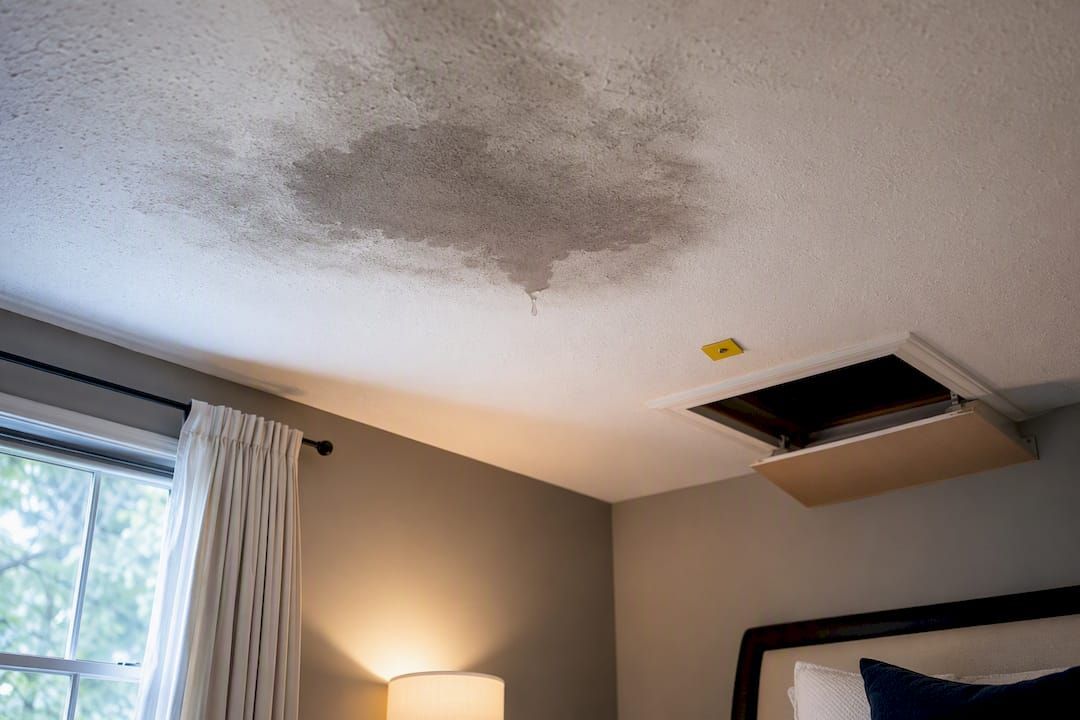
Also note that insurance typically excludes wear, tear, and gradual deterioration. Only sudden accidental damage qualifies for coverage. A roof that has been slowly failing for years is the homeowner's financial responsibility, not the insurer's.
What materials and components go into a full roof replacement?
A roof system is not just shingles. Every layer serves a specific function, and the quality of each component affects how long the finished roof performs.
Underlayment is the moisture barrier installed directly on the deck. Synthetic underlayment outperforms traditional 15-pound or 30-pound felt in tear resistance and water repellency. It also stays in place better during installation, which matters when weather changes mid-project.
Shingles come in three main grades. Three-tab shingles are the entry-level option, rated for winds around 60 mph. Architectural (dimensional) shingles are the industry standard for residential roofing, rated for 110 to 130 mph winds and carrying 30-year warranties from manufacturers like GAF and Owens Corning. Premium designer shingles mimic slate or wood shake and carry the longest warranties, often 50 years.
| Component | Standard option | Premium option |
|---|---|---|
| Underlayment | 30-lb felt | Synthetic (e.g., GAF FeltBuster) |
| Shingles | 3-tab, 25-year | Architectural, 30-50 year |
| Flashing | Galvanized steel | Copper or aluminum |
| Ridge cap | Standard shingle cut | Purpose-made ridge cap shingles |
Flashing seals every joint and penetration. Step flashing runs along walls and dormers. Valley flashing protects the channels where two roof planes meet. Drip edge flashing guards the eaves. Reusing old flashing is a common cost-cutting shortcut that leads to leaks within a few years. Any reputable contractor installs new flashing on every replacement.
Ventilation is the component homeowners most often overlook. Ridge vents paired with continuous soffit vents create balanced airflow that keeps attic temperatures stable. Poor ventilation voids shingle warranties and accelerates deck deterioration. Confirm the ventilation plan is part of your roof replacement scope before work starts.
What should you know about contractors and permits?
Choosing the wrong contractor costs more than choosing the right one at a higher price. Here is what to verify before signing a contract.
- Licensing and insurance. Confirm the contractor holds a current state contractor's license and carries both general liability and workers' compensation insurance. Ask for certificates, not just verbal confirmation.
- Detailed written scope. The contract should list every component: underlayment type, shingle brand and grade, flashing replacement, permit fees, and the magnetic nail sweep. Vague scopes protect the contractor, not you.
- Permit requirements. Most jurisdictions require a building permit for full roof replacement. Permit fees typically run $150 to $500 depending on location. A contractor who suggests skipping the permit is exposing you to liability and potential issues when you sell the home.
- Deck repair budget. OSB sheet replacement costs $75 to $150 per sheet and is common once the deck is exposed. Budget a contingency of 5 to 10% of your total project cost for deck repairs discovered after tear-off.
- Insurance supplement process. Insurance adjusters frequently omit critical line items like drip edge, ice and water shield, and permit fees from their initial scope. A contractor experienced with insurance claims will submit supplement requests to recover those costs. Ask directly whether they handle supplements.
Pro Tip: Have your contractor present during the insurance adjuster's inspection. Adjusters move fast and miss items that an experienced roofer will catch on the spot. That presence can add thousands of dollars to your approved claim.
A roof maintenance plan after installation protects the warranty and catches minor issues before they become major ones. Build that into your post-replacement budget from day one.
Key takeaways
A full roof replacement involves eight sequential steps, specific material layers, and careful contractor vetting. Skipping any one of them creates costs that exceed the original savings.
| Point | Details |
|---|---|
| Full tear-off is standard | Removing all old layers allows deck inspection and prevents trapped moisture. |
| Damage threshold drives the decision | Replace when damage exceeds 20 to 25% or the roof is near 20 years old. |
| Policy type changes your costs | RCV policies cover full replacement cost; ACV policies can leave you paying 75% out of pocket. |
| Flashing and nail sweep are non-negotiable | Both steps prevent leaks and safety hazards and must appear in the written contract. |
| Deck repairs are expected | Budget $75 to $150 per OSB sheet for repairs discovered after tear-off. |
What I've learned after years of watching roofs go wrong
I have seen homeowners make the same two mistakes repeatedly. The first is choosing a contractor based on the lowest bid without reading the scope. The second is assuming their insurance adjuster's initial estimate covers everything it should.
On the first point: a scope that omits new flashing or skips the magnetic nail sweep is not a deal. It is a deferred problem. Reused flashing fails within three to five years. A stray nail in a tire costs more than the nail sweep would have.
On the second point: insurance adjusters under-scope replacement components more often than not. Drip edge, ice and water shield, and permit fees disappear from scopes regularly. I have watched homeowners accept those initial numbers and then pay out of pocket for items that should have been covered. Having a contractor who knows how to read an adjuster's scope and submit supplements is not a luxury. It is a financial necessity.
The overlay question also comes up constantly. Some contractors offer to install new shingles over the existing layer to save on tear-off labor. Building codes may allow it once. But you lose the deck inspection, you add weight to the structure, and you void most manufacturer warranties. Full tear-off is almost always the right call, even when the upfront cost is higher.
— Cesar
Get your roof replaced right the first time
Upstateroofingpros handles every stage of the roof replacement process, from the initial roof inspection and permit filing through tear-off, deck repair, and final nail sweep. The team uses GAF-certified materials, provides detailed written scopes, and manages insurance supplement requests on your behalf. Upstateroofingpros serves Sacramento, Roseville, and surrounding areas with fully licensed and insured crews. If you are weighing your options or ready to move forward, get a transparent estimate from the roof replacement specialists at Upstateroofingpros and know exactly what your project covers before work begins.
FAQ
What does a full roof replacement include?
A full roof replacement includes tear-off of all existing materials, deck inspection and repair, installation of drip edge, synthetic underlayment, flashing, shingles, ridge caps, ventilation components, and a final magnetic nail sweep for safety.
How long does a typical roof replacement take?
Most residential roof replacements take one to three days depending on roof size, pitch, and the extent of deck repairs discovered after tear-off.
When should I replace instead of repair my roof?
Replace your roof when damage covers more than 20 to 25% of the surface or when the roof is approaching 20 years old, since repeated repairs on an aging system cost more than replacement over time.
Does homeowners insurance cover roof replacement?
Insurance covers sudden accidental damage but excludes wear and tear and gradual deterioration. RCV policies pay full replacement cost minus your deductible, while ACV policies depreciate the payout based on roof age.
Do I need a permit for roof replacement?
Most jurisdictions require a building permit for full roof replacement. Skipping the permit creates liability for the homeowner and can complicate a future home sale.