Commercial roofing system components: Parts that last
Commercial roofing system components: Parts that last

Selecting the right roofing system components commercial buildings require is far more complex than picking a membrane and calling it done. Every layer, from vapor retarders to drainage outlets, carries specific code obligations, performance thresholds, and interdependencies that can make or break your roof's lifespan. Get one component wrong and you risk condensation within the assembly, failed inspections, voided warranties, and leaks that cost far more to fix than they would have cost to prevent. This guide walks you through each critical component, what the codes actually require, how to compare your options, and how to make decisions your building will reward for decades.
Key Takeaways
| Point | Details |
|---|---|
| Critical component selection | Choosing roofing components requires balancing durability, code compliance, and moisture control to extend commercial roof life. |
| Vapor retarder importance | Proper vapor retarder class and placement prevent costly condensation and maintain insulation effectiveness. |
| Flashing quality matters | Effective flashing installation is essential to prevent leaks at transitions and penetrations in commercial roofs. |
| Code-compliant insulation | Commercial roof insulation must meet climate-specific R-value requirements and often requires permits and inspections. |
| Drainage system design | Properly sized and fabricated drains and scuppers are vital for preventing water damage and roof failures. |
Key criteria for evaluating commercial roofing system components
Before you compare any specific commercial roofing materials, you need a decision framework. Every roofing component selection should be filtered through four non-negotiable criteria: moisture control, thermal performance, structural integrity at transitions, and drainage capacity.
Moisture control is the most technically demanding. Vapor retarder requirements are defined in model codes and governed by measurable properties, specifically permeance ratings expressed in "perms" per ASTM E96. A component that works in Virginia's Zone 4 climate may actively cause condensation problems in a colder zone if the vapor retarder class is wrong.
Thermal performance connects directly to your energy costs and code compliance. R-value requirements vary by climate zone, and failing to meet minimums during a re-roof can trigger failed inspections.
Flashing integrity at transitions is where most roofs actually fail. The connection points between roof planes, parapet walls, and penetrations are high-risk zones that demand precision installation and code-specified dimensional minimums.
Drainage efficiency prevents ponding water, which accelerates membrane degradation and adds dead load to your deck. Secondary overflow drainage is not optional under current codes.
Key evaluation criteria at a glance:
- Vapor retarder permeance class (Class I, II, or III per ASTM E96)
- Insulation R-value meeting climate zone minimums
- Flashing material gauge and leg dimensions per IRC
- Primary and secondary drainage capacity per square foot of roof area
- Compatibility between components to prevent galvanic corrosion or adhesion failure
- Contractor licensing and permit requirements for each component type
A solid commercial roof inspection checklist can help you audit existing components against these criteria before any work begins.
Underlayment and vapor retarders: Protecting your roof from moisture damage
Underlayment acts as your secondary moisture barrier. If the primary membrane fails or lifts at a seam, underlayment is what stands between your deck and water intrusion. On commercial roofs, this layer typically consists of self-adhered or mechanically fastened synthetic sheets rated for the specific membrane system above them.
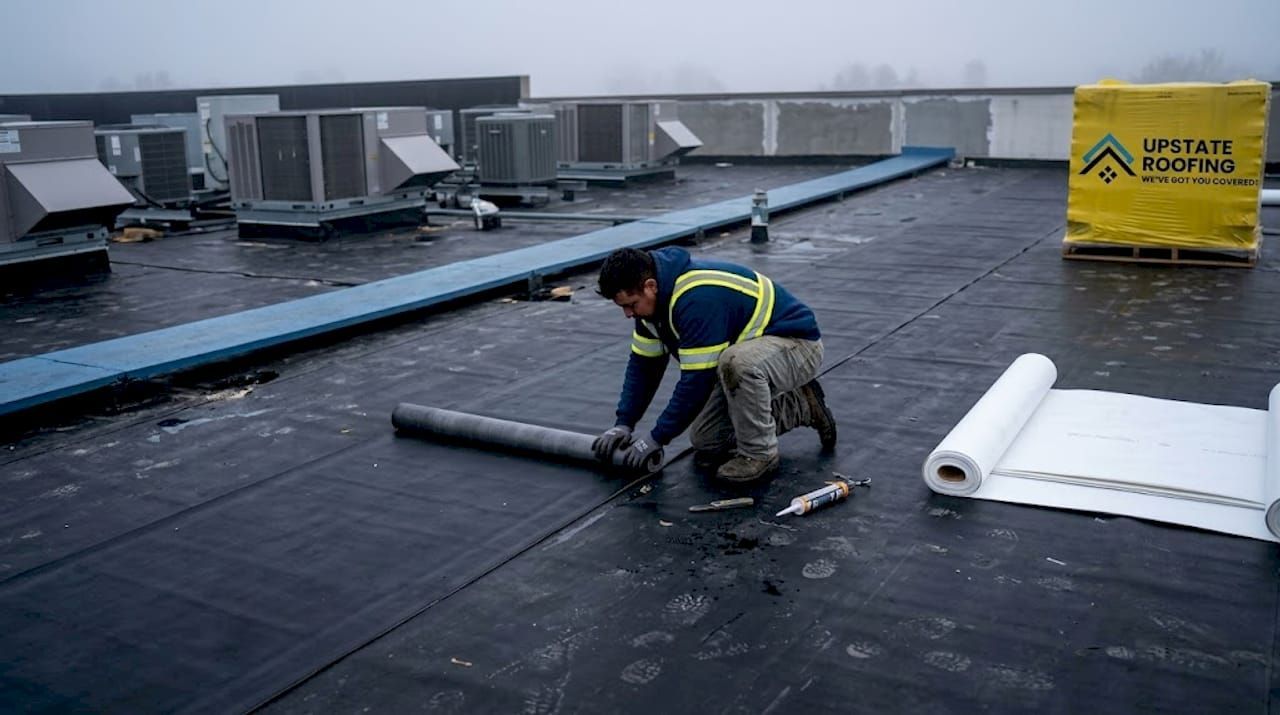
Vapor retarders serve a different but equally critical function. They limit water vapor diffusion through the roof assembly. Per ASTM E96 permeance ratings, the correct placement avoids condensation forming within the assembly where it would compromise insulation and structural performance. Misplace a Class I retarder on the wrong side of the insulation and you can trap moisture rather than stop it.
The three vapor retarder classes break down as follows:
- Class I (0.1 perms or less): Polyethylene sheets, foil-faced insulation facers. Best for very cold climates where vapor drive is consistently inward.
- Class II (0.1 to 1.0 perms): Kraft-faced insulation, some coated sheathings. Suitable for mixed climates with moderate vapor drive.
- Class III (1.0 to 10 perms): Latex-painted drywall, some building wraps. Only appropriate in warm, humid climates.
Climate zone is the deciding variable. A building in Virginia's Zone 4 has different vapor dynamics than one in Texas. Your roofing materials selection must account for this or you are designing for the wrong building.
Sealing at penetrations matters as much as the material itself. An unsealed pipe penetration through a Class I retarder negates the entire assembly's vapor control. Every cut needs a compatible sealant or accessory flashing collar.
Pro Tip: Variable-permeance "smart" membranes shift their perm rating seasonally, resisting vapor in winter and allowing drying in summer. For buildings in mixed or transitional climate zones, they remove a lot of the guesswork from vapor retarder class selection and pair well with a commercial roof coating system above them.
Flashing components: The frontline defense against leaks
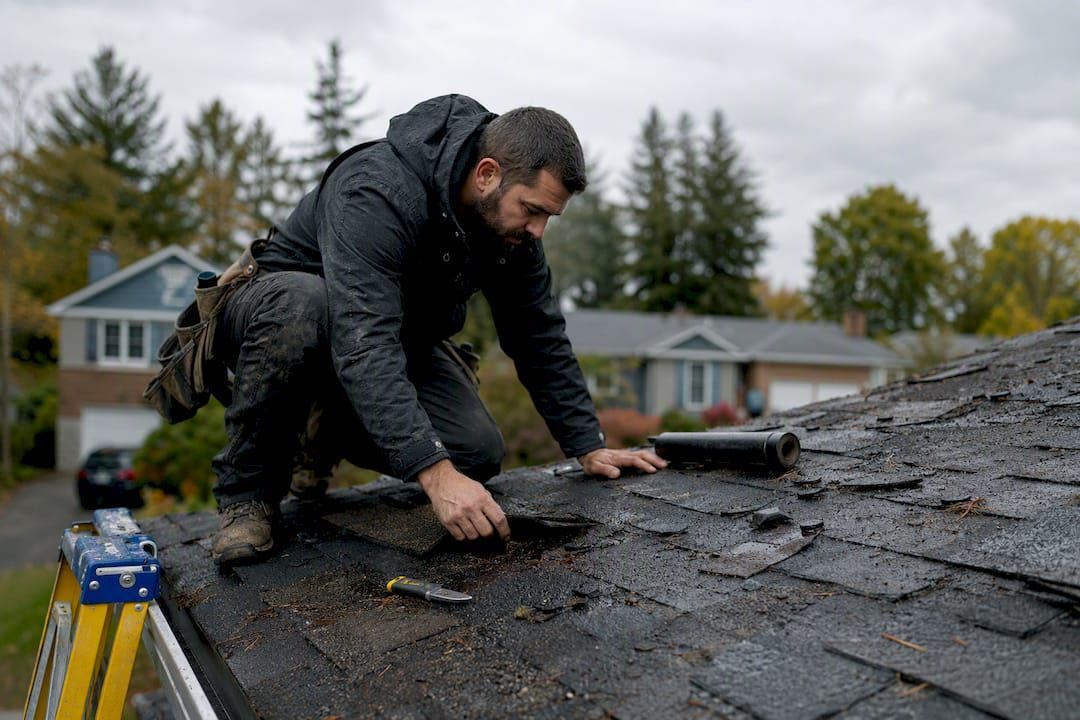
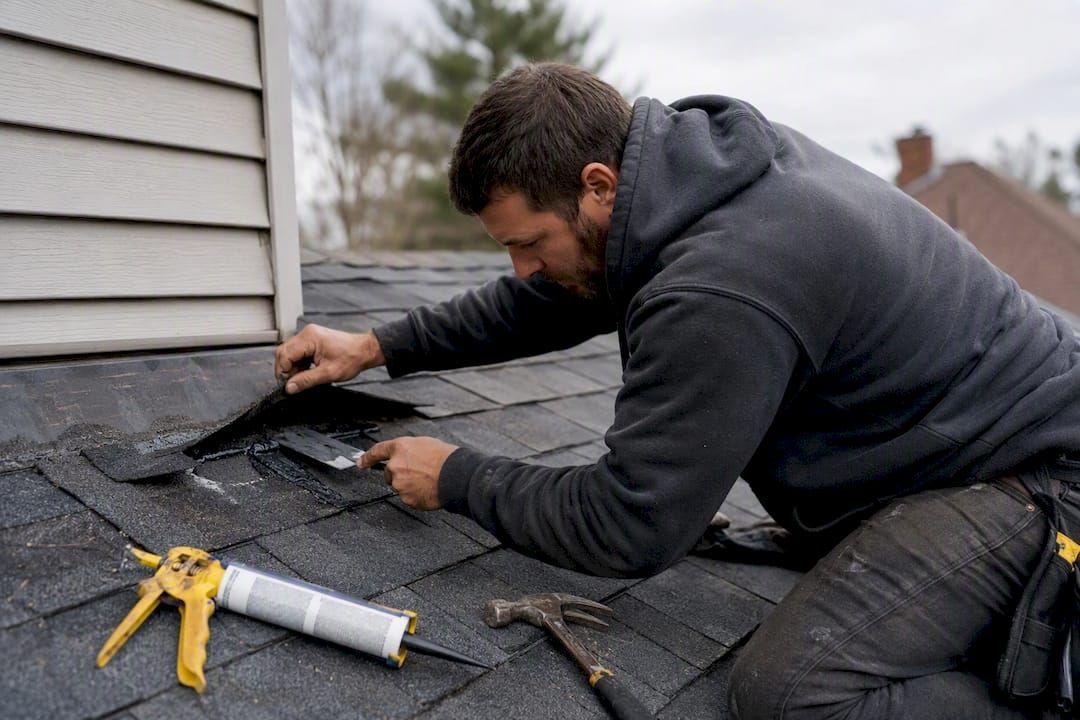
If you want to understand why a commercial roof is leaking, start with the flashing. It is consistently the first place water finds a path inside.
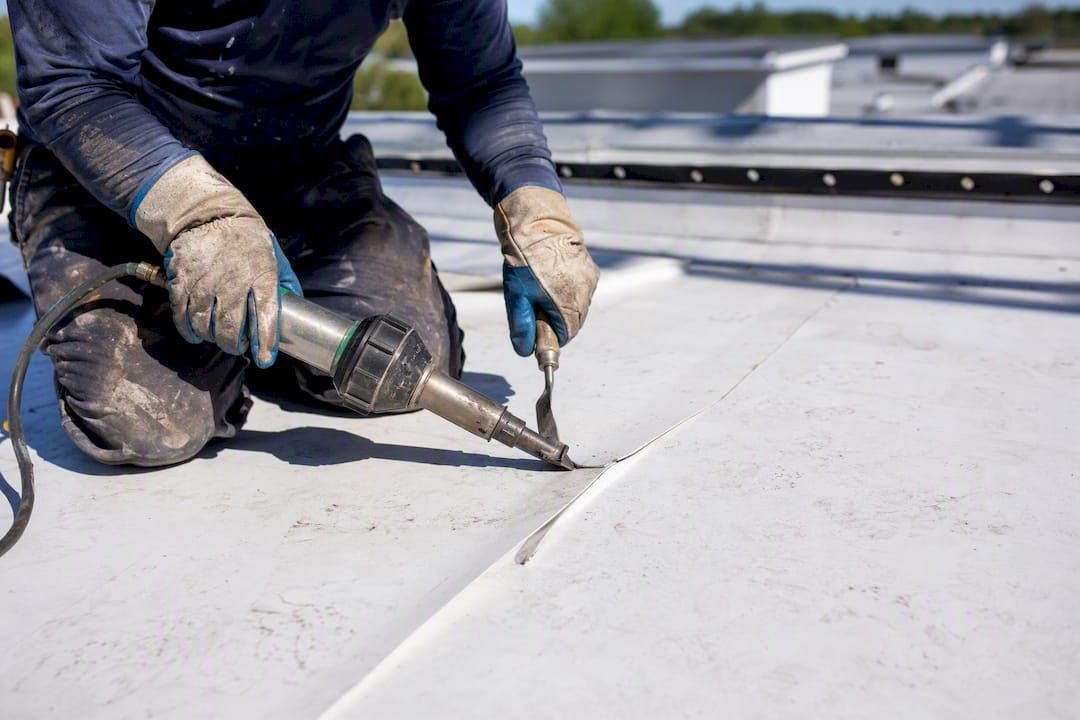
Flashing seals the critical transitions: where the roof meets a parapet wall, where a pipe or HVAC unit penetrates the membrane, where two roof planes intersect. These components are required at every penetration and transition, with categories including step flashing, counter flashing, valley flashing, pipe boot flashing, and drip edge, each governed by IRC prescriptive leg dimension requirements.
The IRC sets minimums for a reason. Most flashing types require at least 4 inches of horizontal and vertical coverage to maintain a watertight seal over thermal expansion and contraction cycles. Use less and the flashing will gap open within a few freeze-thaw seasons.
Common flashing types and their primary roles:
- Step flashing: Interlocking L-shaped pieces installed at the junction of a roof plane and vertical wall
- Counter flashing: Overlaps step flashing from above, typically embedded in masonry or wall cladding
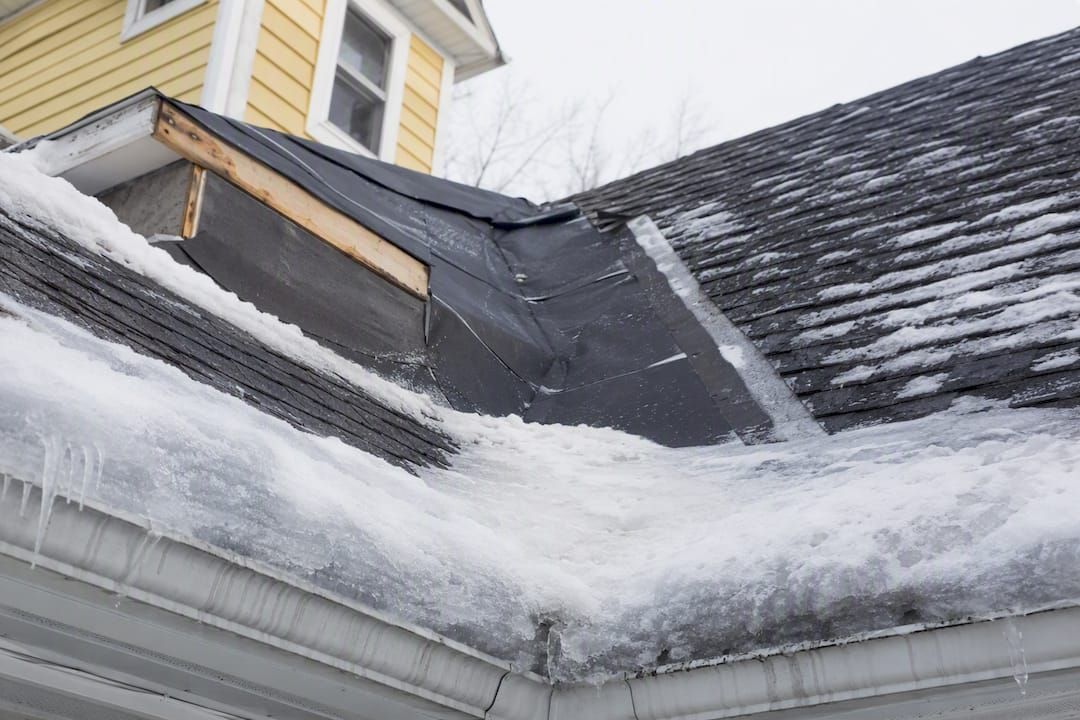
- Valley flashing: Runs the length of a roof valley to direct water away from the seam
- Pipe boot flashing: Seals around round penetrations like plumbing vents and conduit
- Drip edge: Directs water off the eave and into the gutter rather than underneath the membrane
Galvanized steel is the code-standard material, with 26-gauge as a common minimum thickness. Heavier gauges resist oil-canning and maintain their shape longer under thermal movement.
"Watertight continuity at penetrations is the roof's primary defense against leaks." — National Roof Authority
Pro Tip: Factory-fabricated flashing units for standard pipe sizes and HVAC curbs are worth the small premium. Field-fabricated flashings rely entirely on the installer's skill and available materials on the day of installation. Prefabricated components eliminate that variable and are easier to inspect during a commercial roof inspection.
Roof insulation: Meeting performance and code standards for energy efficiency
Insulation is where energy code compliance becomes very specific and very enforceable. It is also where the most common permit oversights occur.
Virginia Energy Code Zone 4 requires a minimum continuous insulation R-value of R-20 for commercial low-slope roof assemblies. Similar minimums exist in every climate zone, and they apply to re-roofing projects, not just new construction. Replacing a membrane without addressing insulation compliance can result in a failed inspection.
Permit and inspection requirements for insulation changes are non-negotiable. Licensed contractors must handle the work, and post-installation inspection is standard. Skipping this process puts your warranty and legal compliance at risk simultaneously.
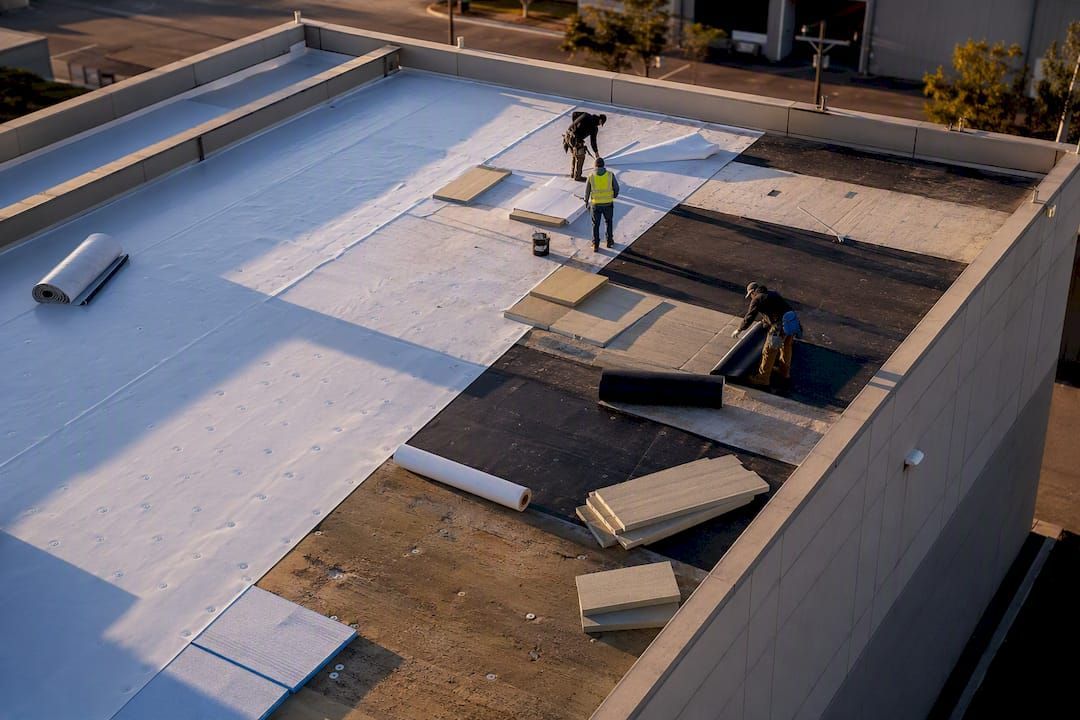
Common commercial roof insulation types and installation steps:
- Deck preparation: Clean, dry, and structurally sound substrate required before any insulation layer
- Vapor retarder placement: Install beneath insulation per climate zone requirements
- Primary insulation layer: Mechanically fasten or adhere the first layer to the deck
- Second layer offset: Install a second layer with staggered joints to eliminate thermal bridging at seams
- Tapered insulation for drainage slope: Apply tapered boards to achieve minimum 1/4-inch-per-foot slope toward drains
- Cover board installation: Protect insulation from foot traffic and membrane adhesive incompatibility
| Insulation type | R-value per inch | Key advantage | Main limitation |
|---|---|---|---|
| Polyisocyanurate (polyiso) | ~5.7 | Highest R-value per inch | R-value degrades in cold temps |
| Extruded polystyrene (XPS) | ~5.0 | Moisture resistant | Environmental concerns with blowing agents |
| Expanded polystyrene (EPS) | ~3.8 | Cost-effective, stable R-value | Lower R per inch than polyiso or XPS |
| Mineral wool | ~4.2 | Fire resistant, vapor open | Heavier, higher cost |
Pro Tip: Polyiso's R-value drops noticeably in cold temperatures, a phenomenon called thermal drift. In northern climate zones, design your assembly to meet R-value requirements at cold-weather performance values, not the lab-rated number. Review commercial roof insulation standards for your region before specifying.
Drainage components: Ensuring effective water removal and roof longevity
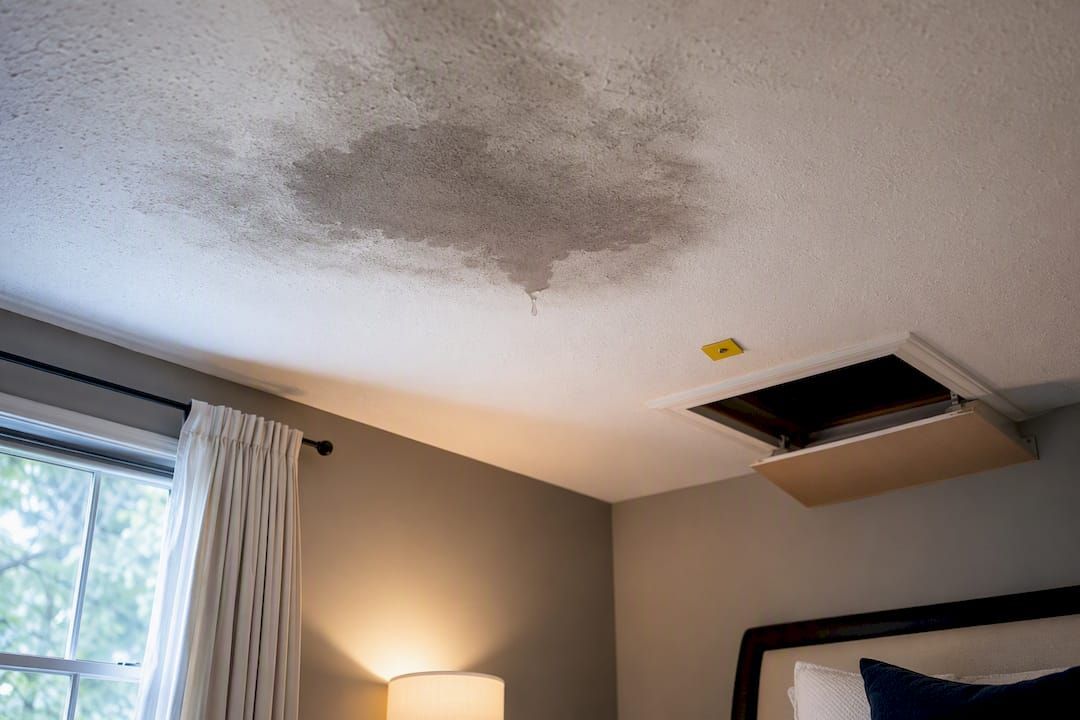
Ponding water is one of the leading causes of early membrane failure on commercial roofs. Every hour water sits on your roof, it stresses the membrane, adds load to the structure, and increases the chance of finding a seam or crack to exploit.
Roof drains and scuppers each handle water removal differently. Drains connect internally to the building's plumbing system and efficiently handle large water volumes, but they require properly welded membrane flashings at the drain bowl to prevent leaks. Scuppers are openings cut through parapet walls that allow gravity-driven runoff without any internal plumbing connection, but they depend heavily on proper sizing and flashing quality.
Key drainage considerations for property managers:
- Undersized drains or scuppers cause ponding faster than membrane degradation does
- Clogged drains are the most common maintenance failure on commercial flat roofs
- Secondary overflow drainage is required by code to protect against structural overload if primary drains fail
- Scupper openings must be sized to handle peak rainfall intensity for your geographic area, not average annual rainfall
| Feature | Roof drains | Scuppers |
|---|---|---|
| Water volume capacity | High, connected to plumbing | Moderate, gravity-driven |
| Installation complexity | Higher, requires plumbing connection | Lower, opening in parapet wall |
| Maintenance frequency | More frequent (debris clogging) | Less frequent if oversized |
| Common failure mode | Blocked strainer, poor membrane weld | Undersizing, inadequate flashing |
| Best use case | Large flat roofs with interior drainage | Low-rise buildings with parapet walls |
A scheduled commercial roof inspection should include checking drain strainers, scupper openings, and the membrane flashing condition around every drain bowl as a standard item. Drainage failures are almost always preventable with routine attention.
Comparing commercial roofing system components: Making the right choice
With all major components on the table, the practical question is how to weigh them against your building's specific profile.
| Component category | Primary selection factor | Cost tier | Lifespan | Code sensitivity |
|---|---|---|---|---|
| Vapor retarder | Climate zone and vapor drive | Low | 20+ years | High |
| Underlayment | Membrane system compatibility | Low-medium | 15-25 years | Medium |
| Flashing | Material gauge and joint continuity | Medium | 20-30 years | High |
| Insulation | R-value and moisture resistance | Medium-high | 25-30 years | Very high |
| Drainage (drains) | Roof size and slope | Medium-high | 20-25 years | High |
| Drainage (scuppers) | Parapet design and rainfall intensity | Low-medium | 25+ years | High |
Key decision factors when selecting roofing materials for a commercial assembly:
- Building use: A refrigerated warehouse has radically different vapor drive than an office building
- Climate zone: Dictates insulation R-values and vapor retarder class simultaneously
- Existing conditions: Re-roofing over existing insulation has different compliance requirements than new construction
- Maintenance capacity: Roof drains require more maintenance than scuppers if staffing is limited
- Warranty requirements: Many membrane manufacturers require specific compatible components throughout the assembly
Pro Tip: Components that meet or exceed local code minimums typically qualify for longer manufacturer warranties. Choosing minimum-compliant materials to save money upfront often costs more when warranty claims arise. Review the commercial roofing overview for your region before finalizing a specification.
Why typical commercial roofing advice misses the mark: A fresh perspective
Most commercial roofing guides focus on the membrane and treat everything else as a supporting detail. That framing is backward. The membrane is the most visible component and often the last thing that fails. It is the flashing, vapor retarder placement, and drainage sizing that determine whether a roof lasts 15 years or 30.
Property managers are frequently surprised to learn that insulation upgrades require permits, licensed contractors, and post-installation inspections. This is not optional. Skipping it puts your manufacturer warranty at risk and exposes you to code non-compliance liability. We see this regularly in the field: a building owner replaced insulation during a re-roof, did not pull a permit, and later could not make a warranty claim because the work was undocumented.
Flashing failures are treated as installation errors in most post-mortem analyses, and that is accurate. But the deeper problem is that flashing is rarely specified with enough detail in the contract documents. When a contractor is handed vague flashing requirements, they default to minimum-gauge material and field-fabricated shapes. The result is a connection that looks complete at inspection but begins separating within a few seasonal cycles.
The other mistake we see consistently is treating moisture control as an afterthought. Property managers in mixed climates sometimes install Class I vapor retarders because they are the "most protective" without accounting for the fact that a Class I retarder on the wrong side of the insulation traps moisture rather than blocking it. Vapor retarder class selection is a hygrothermal design decision, not a product selection from a catalog.
Review commercial roof inspection insights before your next re-roof project and ask your contractor to document the vapor retarder class, flashing gauge, and insulation R-value in writing. That documentation protects you at every future inspection, sale, or warranty claim.
Professional roofing services to protect your commercial investment
Understanding each roofing system component is valuable. Having a licensed team that specifies, installs, and documents every one of them correctly is what actually protects your building.
At Upstate Roofing, our commercial roofing team handles the full scope: roof repairs targeting flashing failures, membrane damage, and moisture intrusion, through to complete replacements with properly specified insulation and vapor retarder assemblies. We pull permits, coordinate inspections, and provide the documentation your roof warranty requires. Our drainage system installations are sized for your roof area and local rainfall intensity, not generic defaults. When you work with a licensed contractor who documents every component decision, you eliminate the gaps where most commercial roofing failures start.
Frequently asked questions
What is a vapor retarder and why is it important in commercial roofing?
A vapor retarder limits water vapor diffusion through the roof assembly to prevent condensation from forming within the insulation layer. Correct placement per ASTM E96 permeance ratings is critical because a misplaced retarder can trap moisture and compromise insulation performance.
What types of flashing are used in commercial roofing?
Common types include step, counter, valley, pipe boot, and drip edge flashing. Each type seals transitions and penetrations to maintain watertight integrity across the roof assembly.
Why are roof drainage components like drains and scuppers important?
They remove water from flat and low-slope roofs before ponding accelerates membrane degradation. Proper sizing and membrane flashing quality around each component determines whether your drainage system performs or fails during heavy rain events.
Do commercial roof insulation upgrades require permits?
Yes. Insulation changes require permits, licensed contractors, and inspections to confirm code compliance and protect manufacturer warranty coverage.
How can a property manager ensure roofing components comply with local codes?
Verify climate zone-specific R-value and vapor retarder requirements, follow IRC and IBC standards for material specifications, and confirm that model code underlayment requirements are met by using licensed contractors who pull and close permits for all work.
Recommended
Recent Posts