Commercial roofing materials: Durability, cost, and best uses
Commercial roofing materials: Durability, cost, and best uses
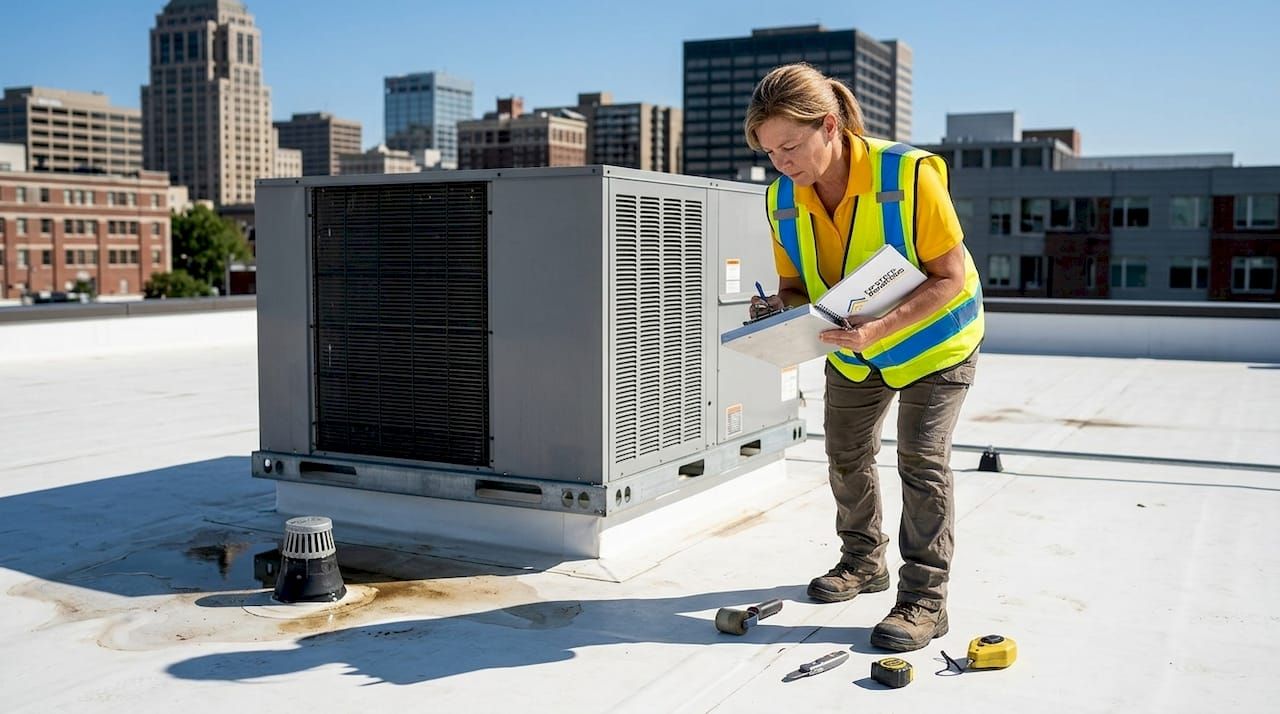
Choosing the wrong roofing material for a commercial property is an expensive mistake that plays out over years, not days. A poor choice can mean premature failures, ballooning maintenance costs, warranty disputes, and weather-related leaks that interrupt your tenants or operations. The stakes are real: a commercial roof covers your largest asset, often spanning tens of thousands of square feet. This guide breaks down the leading commercial roofing material types, explains how to evaluate them against your specific building, and gives you the side-by-side comparison you need to protect your investment and make a confident decision.
Key Takeaways
| Point | Details |
|---|---|
| Factor in total system | The best roofing material choice balances membrane type and assembly method for your building's needs. |
| Single-ply dominates for flat roofs | TPO, PVC, and EPDM offer great flexibility, fast install and strong waterproofing for most commercial flat roofs. |
| SPF eliminates seams | Spray polyurethane foam roofs are seamless, reducing leak risk from traditional joints and seams. |
| ModBit and BUR excel in durability | Modified bitumen and built-up roofs are the most robust options for high-traffic and highest durability sites. |
| Plan for code and climate | Always consider dead load, wind codes, and local weather when choosing attachment and material. |
How to evaluate commercial roofing materials
Before you compare materials, you need a consistent framework. Every roofing decision involves tradeoffs, and owners who skip this step often fixate on upfront cost while ignoring long-term lifecycle value. Here are the key factors to weigh for any commercial roofing options you consider:
- Durability and lifespan: How many years will the system last under your climate conditions before requiring replacement?
- Initial versus total cost: Lower installation costs can mean higher maintenance and shorter lifespan. Calculate the full 20-year cost, not just the bid price.
- Maintenance demands: Some systems need annual inspections and coating renewals. Others are virtually hands-off for years.
- Weather and climate resistance: Hail, UV exposure, high winds, and standing water all affect material performance differently.
- Installation complexity: Complex systems require more skilled labor and take longer, which affects both cost and disruption to your operations.
- Aesthetics: For mixed-use or retail properties, curb appeal and visible roofline matter. For industrial facilities, performance outweighs appearance.
- Integration with building systems: Proper planning for HVAC system integration on your rooftop affects both energy performance and long-term material wear.
One factor that surprises many owners: attachment methods matter as much as membrane selection. Single-ply roofing attachment methods typically include mechanical, induction-welded, adhered, and ballasted systems. The right choice depends on building type, local climate, and the full roof assembly. Two buildings using the same membrane but different attachment systems can have vastly different outcomes over a 15-year period.
Pro Tip: Ask every contractor to specify the attachment method and insulation assembly in their bid, not just the membrane brand. The details below the surface layer make or break long-term performance.
Single-ply membranes: Versatility and popularity
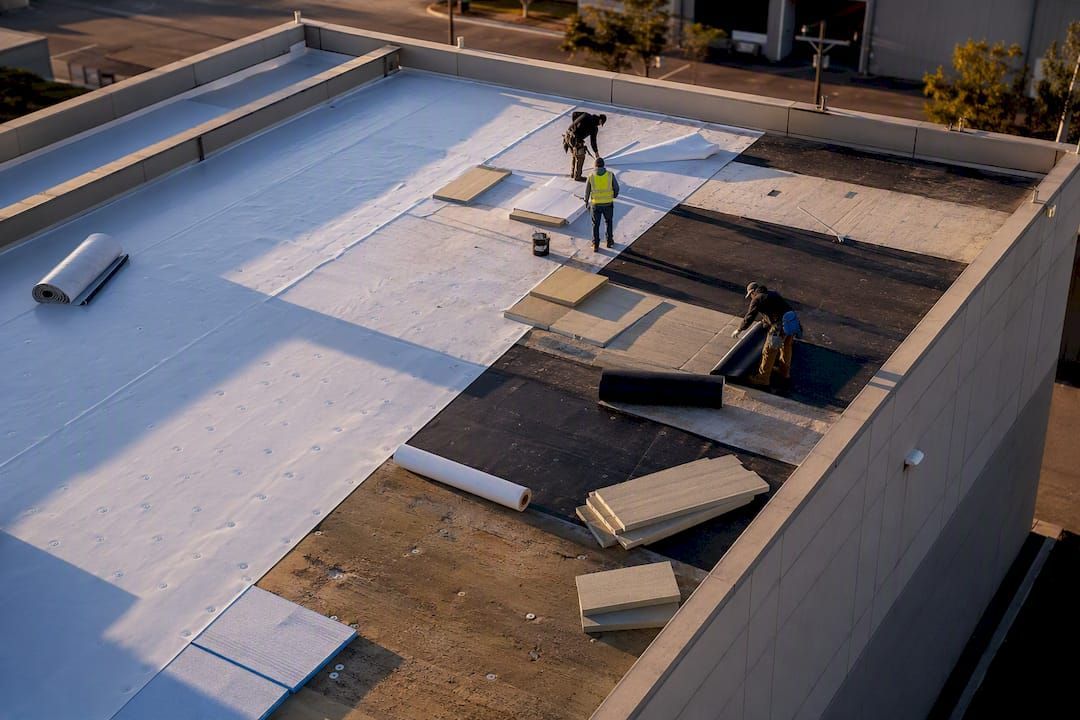
Single-ply membranes are the dominant choice in commercial roofing today, and for good reason. They install faster than multi-layer systems, come in a range of formulations, and offer solid performance across a wide variety of building types. The three main types are TPO, PVC, and EPDM.
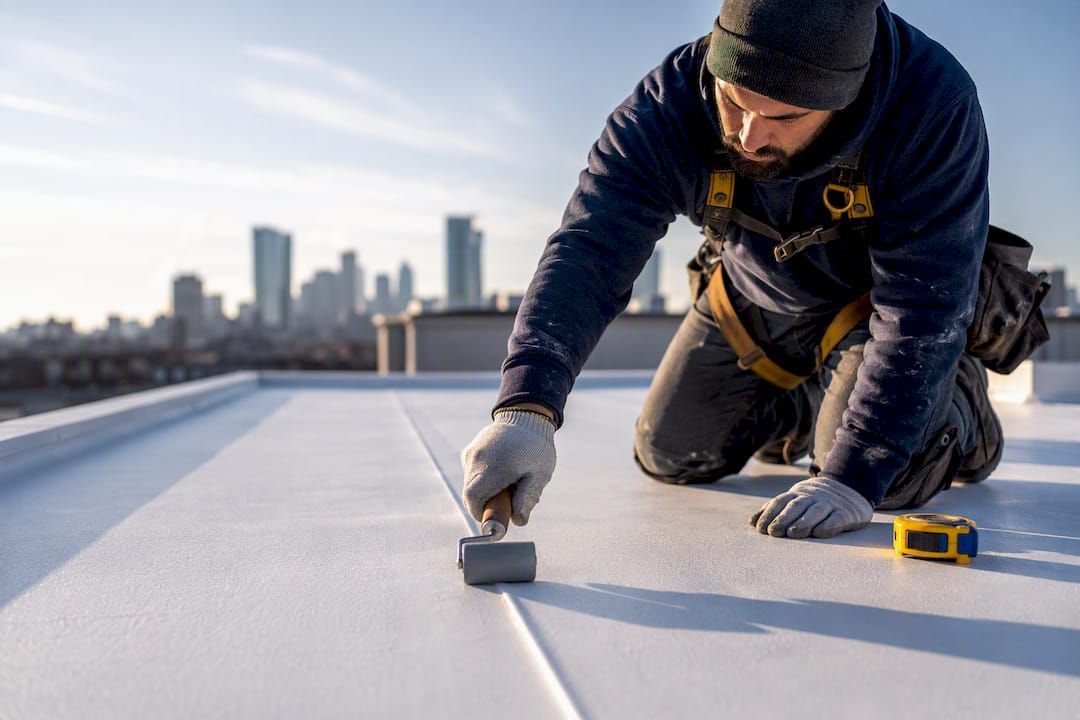
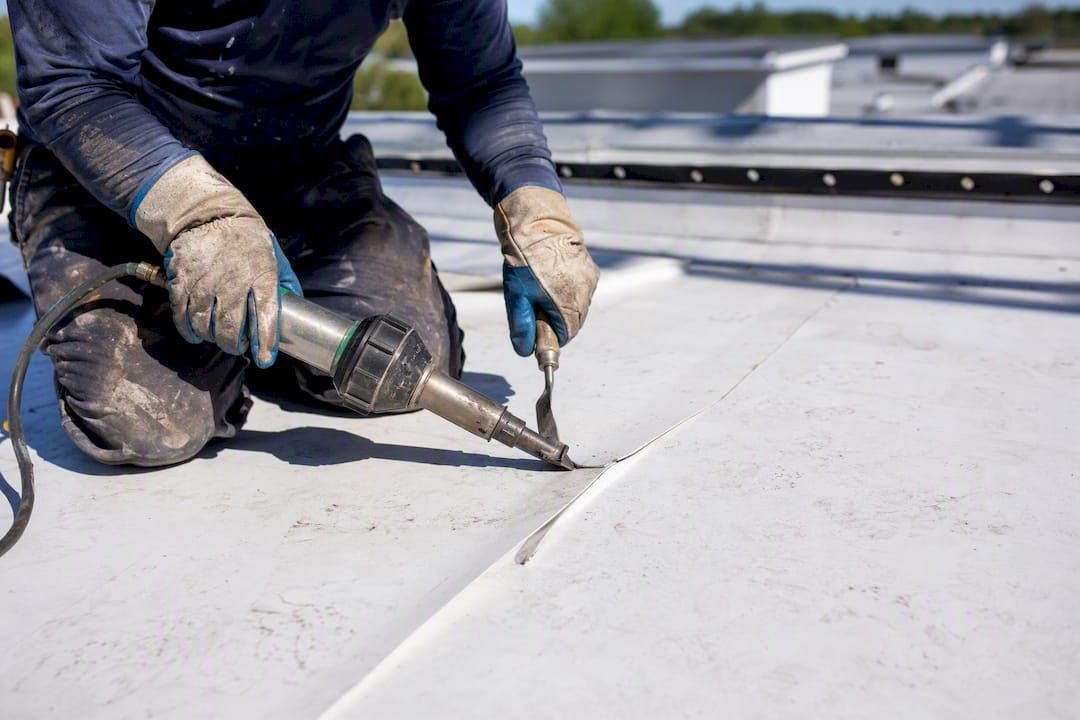
TPO (Thermoplastic Polyolefin) is currently the most popular commercial membrane in North America. It reflects UV radiation effectively, resists algae and mold growth, and heat-welds at seams for strong waterproofing. It performs particularly well on flat or low-slope roofs in warm, sunny climates.
PVC (Polyvinyl Chloride) shares many of TPO's characteristics but adds superior chemical resistance. This makes PVC the preferred choice for restaurants, food processing facilities, or any commercial building where grease or industrial chemicals might contact the roof. It tends to cost slightly more than TPO but lasts longer under chemical exposure.
EPDM (Ethylene Propylene Diene Monomer) is a synthetic rubber membrane that has been used in commercial roofing for decades. Its flexibility in cold temperatures is unmatched, and it stands up well to UV aging and ozone. However, it is typically black, which absorbs heat and can increase cooling costs unless a reflective coating is applied.
Key features across single-ply membranes:
- Cost-effective installation with relatively short project timelines
- Lightweight, with minimal added load on the building structure
- Available in a range of thicknesses (45 mil, 60 mil, 80 mil) for tiered durability
- Strong seam-welded connections (heat-welded for TPO/PVC; adhesive or tape for EPDM)
- Compatible with most flat and low-slope commercial deck types
Attachment methods for single-ply systems fall into four main categories: mechanical fastening (screws anchored through insulation into the deck), induction welding (using electromagnetic tools to activate fasteners beneath the membrane), fully adhered (bonded directly to the substrate with adhesive), and ballasted (held in place by gravel or concrete pavers). Each has specific tradeoffs.
"The roof assembly and attachment method can be as critical as the membrane material itself. A premium membrane poorly attached in a high-wind region will fail faster than a mid-grade membrane installed correctly with the right fastening pattern."
Fully adhered systems resist wind uplift exceptionally well and work great for high-wind regions, but they cost more in labor and adhesive. Ballasted systems are economical but require structural support for the added dead load, and they face wind-uplift limitations you must check against local building codes. Mechanical systems are fast and economical but leave fasteners that can become thermal bridges if not properly managed. Induction-welded systems offer a cleaner, more thermally efficient approach but require specialized equipment.
Understanding your roof warranties for single-ply systems is equally critical. Warranty terms often depend on the attachment method, membrane thickness, and installation contractor certification. Verify all three before signing a contract.
One more practical consideration: rooftop HVAC maintenance challenges can stress your membrane at pipe penetrations and equipment pads. Coordinate roofing and HVAC service plans to avoid voiding your membrane warranty through improper access or chemical spills.
Modified bitumen and built-up roofing: Time-tested durability
Some buildings need a roofing system that has proven itself over generations. Modified bitumen (ModBit) and built-up roofing (BUR) fill that role. Both systems layer asphaltic materials over reinforcing fabrics to create multi-ply, extremely waterproof assemblies that resist heavy foot traffic and mechanical abuse.
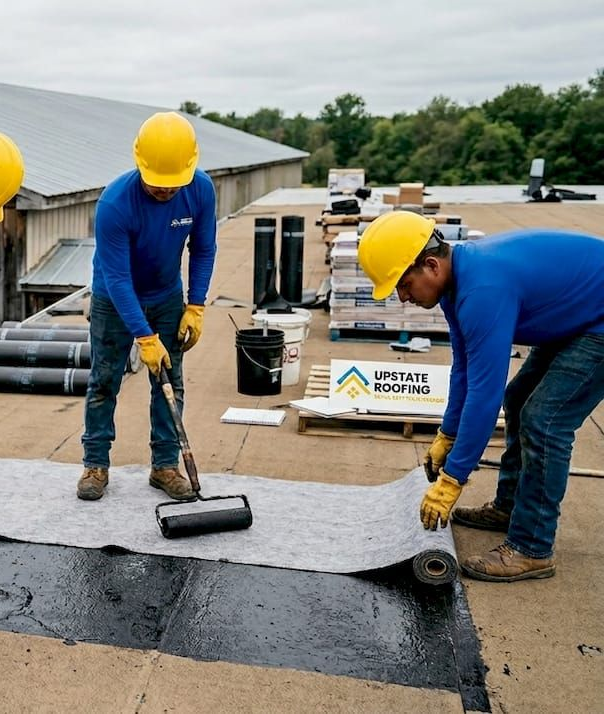
BUR (Built-Up Roofing) consists of alternating layers of bitumen (hot asphalt or cold-applied adhesive) and reinforcing felts, capped with a gravel or mineral surface. A traditional BUR system might have three to five plies, making it one of the most redundant waterproofing assemblies available. Even if one layer is compromised, the others protect the structure below.
Modified bitumen modernizes the BUR concept by incorporating polymer modifiers (APP or SBS) into the asphalt. APP-modified sheets are typically torch-applied and offer excellent UV resistance. SBS-modified sheets remain flexible in cold temperatures, similar to EPDM, and can be cold-applied, hot-mopped, or self-adhered. View completed commercial roof projects using these systems to see the quality difference that proper installation makes.
ModBit pros:
- High resistance to punctures and physical abuse from rooftop traffic
- Excellent long-term waterproofing redundancy
- SBS variants are cold-weather flexible, APP variants resist high UV exposure
- Proven track record of 20-plus-year service life with proper maintenance
ModBit cons:
- Heavier than single-ply, requiring adequate structural load capacity
- Installation is more labor-intensive and time-consuming
- Torch-applied systems require fire safety precautions during installation
- Higher upfront material and labor costs compared to single-ply
BUR pros:
- Maximum redundancy: multiple plies mean multiple lines of defense
- Handles heavy rooftop equipment loads and high foot traffic well
- Proven technology with decades of real-world performance data
BUR cons:
- Heaviest option, limiting use to buildings with sufficient dead-load capacity
- Longest installation timeline and highest installation cost
- Requires experienced, specialized crews for proper hot-mop application
As one resource notes, ballasted single-ply designs can be limited by roof-structure dead-load capacity and wind-uplift risk, and selection should consider building-code wind constraints and maintenance access. The same logic applies directly to BUR and ModBit. Before specifying either, confirm your structural engineer has reviewed the dead-load implications.
Spray polyurethane foam (SPF): Seamless insulation and waterproofing
Spray polyurethane foam roofing is the most technically distinct option in commercial roofing. Unlike any membrane-based system, SPF is spray-applied as a liquid that expands and cures into a rigid, seamless foam shell that conforms exactly to the roof substrate beneath it.
Spray foam roofing functions as a monolithic, seamless insulation and waterproofing layer when spray-applied over properly prepared substrates, and it is consistently cited for avoiding the seam failures that plague traditional membrane systems over time. Every other roofing type has seams. SPF does not. This distinction matters enormously for buildings that have had recurring leak problems at field seams, flashing transitions, or penetrations.
Unique strengths of SPF:
- Completely seamless application eliminates the most common failure point in commercial roofing
- Exceptional thermal insulation with R-values typically in the range of 6.5 per inch, reducing HVAC operating costs noticeably
- Conforms to irregular roof shapes, curbs, drains, and penetrations without added flashing complexity
- Lightweight addition to existing roofs, often applied directly over an existing membrane without tear-off
- Can be recoated every 10 to 15 years, extending service life indefinitely with proper maintenance
Limitations to plan for:
- Requires meticulous substrate preparation; moisture trapped beneath the foam causes blistering and adhesion failure
- Surface coating (typically silicone or acrylic) must be maintained to protect the foam from UV degradation
- Not as visually uniform as smooth-surface membranes, which matters on visible rooflines
- Requires specialized contractors with spray equipment and proper training
- Hail damage can pit the foam surface and compromise the protective coating
Pro Tip: SPF is the top pick when a building has a history of seam-related leaks that re-emerge despite repeated membrane repairs. If you keep patching the same areas, it is time to consider a seamless system instead.
Good roof maintenance planning is especially critical with SPF roofs. Scheduling regular coating inspections and recoating before the existing topcoat degrades protects your foam investment and prevents costly substrate damage.
Head-to-head comparison: Which commercial roofing type fits your priorities?
After reviewing each system in detail, here is how they compare across the most important performance categories:
| Criteria | TPO / PVC / EPDM | ModBit / BUR | SPF |
|---|---|---|---|
| Typical lifespan | 20 to 30 years | 20 to 40 years | 25 to 50+ years (with recoating) |
| Upfront cost | Low to moderate | Moderate to high | Moderate |
| Maintenance needs | Low to moderate | Moderate | Moderate (coating renewal) |
| Installation speed | Fast | Slow | Moderate |
| Insulation value | Low (membrane only) | Low (membrane only) | High (built-in R-value) |
| Seam risk | Moderate | Low to moderate | None |
| Structural load | Very low | High | Very low |
| Best climate fit | Any | Any | Any, with proper coating |
Here is how to match each system to a real-world scenario:
- Budget-conscious ownership with a large flat roof: TPO with mechanical attachment gives you the best cost-per-square-foot entry point and solid performance for most climates.
- High-traffic rooftop with equipment and frequent service access: ModBit or BUR provides the puncture resistance and redundancy that service technicians demand.
- Facility with recurring seam leaks and insulation concerns: SPF eliminates seams entirely and adds thermal performance in a single application.
- Chemical or grease exposure (restaurant, food processing): PVC is the clear winner, with superior resistance to oils and chemical runoff.
- Cold-climate building needing flexibility and UV durability: EPDM or SBS-modified bitumen both handle freeze-thaw cycles and sub-zero temperatures exceptionally well.
- Long-lifespan planning with minimal future tear-off: SPF with a consistent recoating schedule offers the longest potential service life of any system. Learn more about materials that fit your building type and climate zone.
The decision most owners overlook: Why assembly and attachment matter more than material alone
Most roofing comparison guides stop at the membrane level. They compare TPO versus EPDM or BUR versus SPF and call it complete. After working on commercial roofing projects across a wide range of building types, we consistently see that this framing misses the most important part of the equation.
The real-world failures we encounter rarely come from choosing the "wrong" membrane type. They come from mismatched assemblies: a mechanically fastened system installed in a high-wind coastal zone without adequate fastener density, a ballasted system placed on a deck not designed for the added load, or an adhered system applied over a substrate that still had trapped moisture. These are assembly and attachment failures, not membrane failures.
Attachment method and roof-assembly context, including deck type, insulation and vapor barrier, fastening pattern, and local wind and hail conditions, can be as important as the membrane material in achieving durability and leak resistance. This is a principle we apply on every project.
When you sit down with a roofing contractor, do not only ask what membrane they recommend. Ask them why that attachment method. Ask them what insulation board and thickness. Ask what deck preparation is required. Ask how the assembly performs against your local wind codes. If they cannot answer these questions in detail, that is a warning sign.
Protecting your roof long-term means preventing roof leaks at every layer, not just at the surface membrane. The owners who get the longest roof life are the ones who treat the roof as a complete system, from deck to finish coat.
Pro Tip: Insist on a detailed, written assembly specification in every project bid. This document should list every layer from deck to surface, including insulation type and R-value, fastening pattern, and membrane thickness. If a contractor only gives you a one-line description and a price, ask for more.
Ready to choose and protect your commercial roof?
You now have a clear picture of your options, the tradeoffs, and what separates good decisions from great ones. The next step is matching that knowledge to your specific building, climate, and budget.
At Upstate Roofing, our team of licensed professionals evaluates every project as a complete roofing system, not just a membrane specification. We work with property managers and building owners to match the right material, attachment method, and assembly to your exact situation. Whether you need to schedule a roof inspection to assess your current system, want to get a roof replacement quote for a full upgrade, or are ready to explore roof maintenance plans that protect your investment year after year, we are here to help you make the right call with confidence.
Frequently asked questions
What is the most durable commercial roofing material?
Modified bitumen and built-up roofing (BUR) are typically considered among the most durable options due to their multi-layer construction and built-in redundancy. That said, SPF with regular recoating can outlast both when properly maintained.
Which commercial roof type is best for flat roofs?
Single-ply membranes like TPO, PVC, and EPDM are the most widely used for flat commercial roofs because of their flexibility, cost efficiency, and installation speed. The right attachment method depends on your climate and building structure.
How does spray foam roofing prevent leaks?
Spray polyurethane foam creates a seamless, jointless membrane that eliminates the seam failures common in all membrane-based roofing systems, providing superior waterproofing continuity across the entire roof surface.
Are ballasted roof systems a good option for all buildings?
No. Ballasted systems can be limited by dead-load capacity and wind uplift risks, making them unsuitable for lighter structures or buildings in high-wind zones without a careful engineering review.
What factors should impact my commercial roofing choice?
Durability, total lifecycle cost, climate exposure, and roof assembly context, including deck type, insulation, fastening pattern, and local wind and hail conditions, should all play a defining role in your material selection.
Recommended
Recent Posts